Data Analytics Courses
Data analytics courses can help you learn data visualization, statistical analysis, and data cleaning techniques. You can build skills in interpreting complex datasets, making data-driven decisions, and communicating insights effectively. Many courses introduce tools like Excel, SQL, and Tableau, that support analyzing data and presenting findings. You'll also explore methods such as regression analysis and A/B testing, which are crucial for evaluating performance and optimizing strategies.
Popular Data Analytics Courses and Certifications
Skills you'll gain: Microsoft Excel, Excel Formulas, Pivot Tables And Charts, Data Analysis, Data Manipulation, Microsoft Office, Data Mining
Skills you'll gain: Power BI, Data Transformation, Data Preprocessing, Data Manipulation, Data Cleansing, Data Integration, Data Wrangling, Predictive Modeling
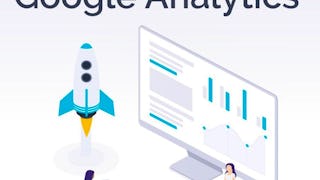
Skills you'll gain: Google Analytics, Web Analytics and SEO, Statistical Reporting, Data-Driven Marketing, Analytics, Data Analysis, User Accounts
Coursera
Skills you'll gain: SQL, Data Manipulation, Relational Databases, Database Management, Database Software, Database Design, Databases, Data Integrity, Database Management Systems, Debugging, Data Management
Skills you'll gain: Dashboard, Dashboard Creation, Interactive Data Visualization, Tableau Software, Data Presentation, Data Import/Export, Data Visualization, Data Literacy, Data Visualization Software, Business Intelligence, Data Analysis, Data Integration, Data Modeling

What brings you to Coursera today?
Skills you'll gain: Data Analysis, Statistical Reporting, Data Cleansing, Data Wrangling, Microsoft Excel, Data Analysis Software, Data Manipulation, Data Preprocessing, Data Quality, Excel Formulas
Skills you'll gain: Google Analytics, Ad Hoc Reporting, Performance Reporting, Web Analytics, Marketing, Web Development
Skills you'll gain: Prompt Engineering, OpenAI API, Generative AI, Exploratory Data Analysis, Analysis, OpenAI, ChatGPT, Data Analysis, Analytics, Data-Driven Decision-Making, E-Commerce, Data Manipulation, Python Programming

Duke University
Skills you'll gain: MySQL, Bash (Scripting Language), Scripting, Database Management, Relational Databases, Shell Script, Data Maintenance, Database Administration, Command-Line Interface, SQL, Databases, Data Import/Export, Database Application, Data Pipelines, Data Manipulation, Python Programming, Data Processing, Linux
Skills you'll gain: Google Analytics, Data-Driven Marketing, Marketing Analytics, Email Automation, Dashboard Creation, Data-Driven Decision-Making, Web Analytics, Dashboard, Content Scheduling, Geospatial Information and Technology, Marketing, Data Analysis

Skills you'll gain: Pandas (Python Package), Data Analysis, Data Manipulation, Python Programming

Skills you'll gain: Data Storytelling, Data Presentation, Customer Analysis, Data Integration, Interactive Data Visualization, Data Visualization, Data Analysis, Customer Insights, Data-Driven Decision-Making, Data Analysis Software, Exploratory Data Analysis, Customer Retention
What brings you to Coursera today?
Best free Data Analytics courses
High-quality free Data Analytics courses you can start today.
- Introduction to Data Analysis using Microsoft ExcelCourseraIntermediateLess Than 2 HoursFree
- Getting Started in Google AnalyticsCourseraBeginnerLess Than 2 HoursFree
- Custom Reports in Google AnalyticsCourseraIntermediateLess Than 2 HoursFree
Best Data Analytics courses from Coursera
Top-rated Data Analytics courses offered by Coursera on Coursera.
- PowerBI for Beginners: Data transformationCourseraBeginnerLess Than 2 HoursCoursera
- Manipulating Data with SQLCourseraIntermediateLess Than 2 HoursCoursera
- Multi-Table data analysis with Tableau: Customer AnalysisCourseraIntermediateLess Than 2 HoursCoursera
Best Data Analytics courses for beginners
Top-rated beginner-friendly Data Analytics courses with no prerequisites.
- MySQL-for-Data-EngineeringDuke UniversityBeginnerLess Than 2 HoursNo prerequisites
- Building Custom Regional Reports with Google AnalyticsCourseraBeginnerLess Than 2 HoursNo prerequisites
- Mastering Data Analysis with PandasCourseraBeginnerLess Than 2 HoursNo prerequisites
Best short Data Analytics courses
Quick Data Analytics courses you can complete in a few hours or less.
- Data Cleaning in Excel: Techniques to Clean Messy DataCourseraIntermediateLess Than 2 HoursQuick completion
- Data Analysis with OpenAI API: Save time with GenAICourseraIntermediateLess Than 2 HoursQuick completion
- Qlik Sense for Beginners: Analyze and Visualize DataCourseraIntermediateLess Than 2 HoursQuick completion










