When you enroll in this course, you'll also be enrolled in this Specialization.
Learn new concepts from industry experts
Gain a foundational understanding of a subject or tool
Develop job-relevant skills with hands-on projects
Earn a shareable career certificate
There are 8 modules in this course
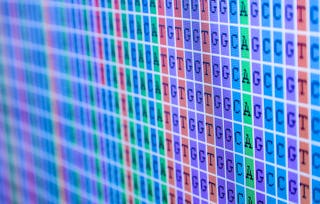
Large-scale biology projects such as the sequencing of the human genome and gene expression surveys using RNA-seq, microarrays and other technologies have created a wealth of data for biologists. However, the challenge facing scientists is analyzing and even accessing these data to extract useful information pertaining to the system being studied. This course focuses on employing existing bioinformatic resources – mainly web-based programs and databases – to access the wealth of data to answer questions relevant to the average biologist, and is highly hands-on.
Topics covered include multiple sequence alignments, phylogenetics, gene expression data analysis, and protein interaction networks, in two separate parts.
The first part, Bioinformatic Methods I, dealt with databases, Blast, multiple sequence alignments, phylogenetics, selection analysis and metagenomics.
This, the second part, Bioinformatic Methods II, will cover motif searching, protein-protein interactions, structural bioinformatics, gene expression data analysis, and cis-element predictions.
This pair of courses is useful to any student considering graduate school in the biological sciences, as well as students considering molecular medicine.
These courses are based on one taught at the University of Toronto to upper-level undergraduates who have some understanding of basic molecular biology. If you're not familiar with this, something like https://learn.saylor.org/course/view.php?id=889 might be helpful. No programming is required for this course although some command line work (though within a web browser) occurs in the 5th module.
Bioinformatic Methods II is regularly updated, and was last updated for February 2026.
In this module we'll be exploring conserved regions within protein families. Such regions can help us understand the biology of a sequence, in that they are likely important for biological function, and also be used to help ascribe function to sequences where we can't identify any homologs in the databases. There are various ways of describing the conserved regions from simple regular expressions to profiles to profile hidden Markov models (HMMs).
What's included
4 videos4 readings1 assignment
Show info about module content
4 videos•Total 36 minutes
Introduction•2 minutes
Lecture•22 minutes
Lab Discussion•11 minutes
Summary•2 minutes
4 readings•Total 120 minutes
Acknowledgements•10 minutes
Course Logistics•10 minutes
Lecture Materials•10 minutes
Lab 1 -- Protein Domain, Motif and Profile Analysis•90 minutes
1 assignment•Total 30 minutes
Lab 1 Quiz•30 minutes
Protein-Protein Interactions
Module 2•3 hours to complete
Module details
In this module we'll be exploring protein-protein interactions (PPIs). Protein-protein interactions are important as proteins don't act in isolation, and often an examination of the interaction partners (determined in an unbiased, perhaps high throughput way) of a given protein can tell us a lot about its biology. We'll talk about some different methods used to determine PPIs and go over their strengths and weaknesses. In the lab we'll use 3 different tools and two different databases to examine interaction partners of BRCA2, a protein that we examined in last module's lab. Finally, we'll touch on a "foundational" concept, Gene Ontology (GO) term enrichment analysis, to help us understand in an overview way the proteins interacting with our example.
What's included
4 videos2 readings1 assignment
Show info about module content
4 videos•Total 37 minutes
Introduction•2 minutes
Lecture•23 minutes
Lab Discussion•11 minutes
Summary•1 minute
2 readings•Total 100 minutes
Lecture Materials•10 minutes
Lab 2 -- Protein-Protein Interactions•90 minutes
1 assignment•Total 30 minutes
Lab 2 Quiz •30 minutes
Protein Structure
Module 3•3 hours to complete
Module details
The determination of a protein's tertiary structure in three dimensions can tell us a lot about the biology of that protein. In this module's mini-lecture, we'll talk about some different methods used to determine a protein's tertiary structure and cover the main database for protein structure data, the PDB. In the lab we'll explore the PDB and an online tool for searching for structural (as opposed to sequence) similarity, VAST. We'll then use a nice piece of stand-alone software, PyMOL, to explore several protein structures in more detail.
What's included
4 videos2 readings1 assignment
Show info about module content
4 videos•Total 33 minutes
Introduction•2 minutes
Lecture•14 minutes
Lab Discussion•16 minutes
Summary•2 minutes
2 readings•Total 100 minutes
Lecture Materials•10 minutes
Lab 3 -- Structural Bioinformatics•90 minutes
1 assignment•Total 30 minutes
Lab 3 Quiz •30 minutes
Review: Protein Motifs, Protein-Protein Interactions, and Protein Structure
Module 4•1 hour to complete
Module details
What's included
1 assignment
Show info about module content
1 assignment•Total 30 minutes
Quiz: Protein Motifs, Protein-Protein Interactions, and Protein Structure•30 minutes
Gene Expression Analysis I
Module 5•3 hours to complete
Module details
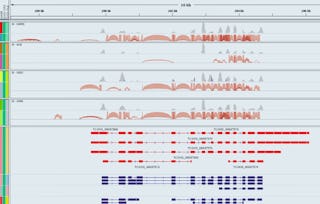
When and where genes are expressed (active) in tissues or cells is one of the main determinants of what makes that tissue or cell the way it is, both in terms of morphology and in terms of response to external stimuli. Several different methods exist for generating gene expression levels for all of the genes in the genome in tissues or even at cell-type-specific resolution. In this class we'll be processing and then examining some gene expression data generated using RNA-seq. We'll explore one of the main databases for RNA-seq expression data, the Sequence Read Archive (SRA), and then use an open-source suite of programs in R called BioConductor to process the raw reads from 4 RNA-seq data sets, to summarize their expression levels, to select significantly differentially expressed genes, and finally to visualize these as a heat map.
What's included
4 videos2 readings1 assignment
Show info about module content
4 videos•Total 50 minutes
Introduction•2 minutes
Lecture•27 minutes
Lab Discusssion•19 minutes
Summary•2 minutes
2 readings•Total 100 minutes
Lecture Materials•10 minutes
Lab 4 -- Gene Expression Analysis I•90 minutes
1 assignment•Total 30 minutes
Lab 4 Quiz•30 minutes
Gene Expression Analysis II
Module 6•3 hours to complete
Module details
When and where genes are expressed (active) in tissues or cells is one of the main determinants of what makes that tissue or cell the way it is, both in terms of morphology and in terms of response to external stimuli. Several different methods exist for generating gene expression levels for all of the genes in the genome in tissues or even at cell-type-specific resolution. In this class we'll be hierarchically clustering our significantly differentially expressed genes from last time using BioConductor and the built-in function of an online tool, called Expression Browser. Then we'll be using another online tool that uses a similarity metric, the Pearson correlation coefficient, to identify genes responding in a similar manner to our gene of interest, in this case AP3. We'll use a second tool, ATTED-II to corroborate our gene list. We'll also be exploring some online databases of gene expression and an online tool for doing a Gene Ontology enrichment analysis.
What's included
4 videos2 readings1 assignment
Show info about module content
4 videos•Total 42 minutes
Introduction•2 minutes
Lecture•28 minutes
Lab Discussion•12 minutes
Summary•1 minute
2 readings•Total 100 minutes
Lecture Materials•10 minutes
Lab 5 -- Gene Expression Data Analysis II•90 minutes
1 assignment•Total 30 minutes
Lab 5 Quiz•30 minutes
Cis Regulatory Systems
Module 7•3 hours to complete
Module details
When and where genes are expressed in tissues or cells is one of the main determinants of what makes that tissue or cell the way it is, both in terms of morphology and in terms of response to external stimuli. Gene expression is controlled in part by the presence of short sequences in the promoters (and other parts) of genes, called cis-elements, which permit transcription factors and other regulatory proteins to bind to direct the patterns of expression in certain tissues or cells or in response to environmental stimuli: We'll explore a couple of sets of promoters of genes that are coexpressed with AP3 from Arabidopsis, and with INSULIN from human, for the presence of known cis-elements, and we'll also try to predict some new ones using a couple of different methods.
What's included
4 videos2 readings1 assignment
Show info about module content
4 videos•Total 41 minutes
Introduction•2 minutes
Lecture•23 minutes
Lab Discussion•15 minutes
Summary•1 minute
2 readings•Total 100 minutes
Lecture Materials•10 minutes
Lab 6 -- Cis Regulatory Element Mapping and Prediction•90 minutes
1 assignment•Total 30 minutes
Lab 6 Quiz •30 minutes
Review: Gene Expression Analysis and Cis Regulatory Systems + Final Assignment
Module 8•1 hour to complete
Module details
What's included
1 reading2 assignments
Show info about module content
1 reading•Total 10 minutes
Final Assignment Instructions•10 minutes
2 assignments•Total 60 minutes
Quiz: Modules 5-7•30 minutes
Final Assignment•30 minutes
Earn a career certificate
Add this credential to your LinkedIn profile, resume, or CV. Share it on social media and in your performance review.
Instructor
Instructor ratings
Instructor ratings
We asked all learners to give feedback on our instructors based on the quality of their teaching style.
Established in 1827, the University of Toronto is one of the world’s leading universities, renowned for its excellence in teaching, research, innovation and entrepreneurship, as well as its impact on economic prosperity and social well-being around the globe.
"To be able to take courses at my own pace and rhythm has been an amazing experience. I can learn whenever it fits my schedule and mood."
Jennifer J.
Learner since 2020
"I directly applied the concepts and skills I learned from my courses to an exciting new project at work."
Larry W.
Learner since 2021
"When I need courses on topics that my university doesn't offer, Coursera is one of the best places to go."
Chaitanya A.
"Learning isn't just about being better at your job: it's so much more than that. Coursera allows me to learn without limits."
Learner reviews
4.8
488 reviews
5 stars
77.66%
4 stars
20.28%
3 stars
1.43%
2 stars
0.61%
1 star
0%
Showing 3 of 488
H
HD
5·
Reviewed on May 5, 2020
Well organized and easy to learn with good laboratory practice.
M
MA
5·
Reviewed on Jan 29, 2016
I really appreciate these series of courses, I want to thank Prof. Provart and his coligues for their great job on preparing and presenting these series. Thanks a lot!
M
MM
5·
Reviewed on Oct 26, 2015
I use this course as a good resource it has been very helpfull for me the explanation of Dr Provart are incredibly good.
When will I have access to the lectures and assignments?
To access the course materials, assignments and to earn a Certificate, you will need to purchase the Certificate experience when you enroll in a course. You can try a Free Trial instead, or apply for Financial Aid. The course may offer 'Full Course, No Certificate' instead. This option lets you see all course materials, submit required assessments, and get a final grade. This also means that you will not be able to purchase a Certificate experience.
What will I get if I subscribe to this Specialization?
When you enroll in the course, you get access to all of the courses in the Specialization, and you earn a certificate when you complete the work. Your electronic Certificate will be added to your Accomplishments page - from there, you can print your Certificate or add it to your LinkedIn profile.
Is financial aid available?
Yes. In select learning programs, you can apply for financial aid or a scholarship if you can’t afford the enrollment fee. If fin aid or scholarship is available for your learning program selection, you’ll find a link to apply on the description page.