When you enroll in this course, you'll also be enrolled in this Specialization.
Learn new concepts from industry experts
Gain a foundational understanding of a subject or tool
Develop job-relevant skills with hands-on projects
Earn a shareable career certificate
There are 3 modules in this course
Hydrocarbon Exploration and Production is a comprehensive course that provides insight into the methods and techniques involved in the exploration, drilling and production of hydrocarbon resources. This course is designed to equip the learners with the necessary knowledge and skills to pursue a career in the oil and gas industry, specifically focusing on three key modules: Exploration Methods, Upstream Equipment and Platforms; Drilling Methods and Systems and Methods of Oil Recovery.
Exploration Methods delve into the various techniques and strategies employed to identify potential hydrocarbon reserves focusing on geological and geophysical surveys, seismic data interpretation and remote sensing technologies used to map subsurface structures to enable learners to make informed decisions regarding the economic viability of exploration projects.
Drilling Methods and Systems gives a comprehensive understanding of the equipment and technologies utilized in upstream operations, including drilling rigs, wellheads and production platforms. It explores different drilling techniques such as rotary drilling, directional drilling and offshore drilling, along with the associated systems for well control and safety. Additional topics, such as well completion, casing and cementing procedures ensure a solid foundation in the practical aspects of drilling operations.
Methods of Oil Recovery, emphasizes the techniques employed to maximize hydrocarbon extraction from reservoirs such as primary, secondary and tertiary recovery methods, including water flooding, gas injection and enhanced oil recovery (EOR) techniques. It explores the principles of reservoir engineering, reservoir characterization and well stimulation that are required to optimize oil recovery and production rates. Environmental considerations and sustainability practices in oil recovery will also be highlighted.
By the end of the course, the learners will be well-prepared to contribute effectively to the hydrocarbon industry, equipped with the knowledge and technical expertise necessary for successful exploration and production operations.
Target learners:
Students pursuing Diploma / UG / PG Programs in Chemical/ Petroleum/ Oil and Gas Engineering.
Faculties / Working Professionals in the above domain & other aspiring learners.
Prerequisite: Basic Chemical/ Petroleum/ Oil and Gas Engineering
This module provides a fundamental understanding of the oil and gas industry, with a specific focus on exploration techniques and upstream operations. Learners will gain insight into the complete life cycle of oil and gas fields, starting from exploration to production.
The module begins by introducing learners to the various exploration methods employed in the industry, highlighting their significance in identifying potential oil and gas reserves. Learners will delve into offshore seismic data acquisition and processing, learning how to interpret and analyze geological data to locate hydrocarbon reservoirs accurately.
Furthermore, different types of reservoirs and their impact on production is covered. Learners will examine the characteristics of reservoirs and understand how these factors influence the extraction process.
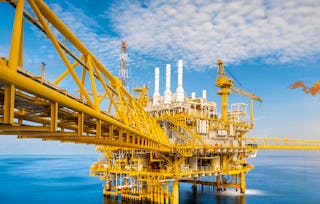
An in-depth study of upstream equipment and platforms is also included in this module. Learners will become familiar with the equipment used in upstream oil and gas production and gain a comprehensive understanding of subsea fabrication, installation and modular erection techniques. It also covers stimulation operations, water and other injection methods and compression systems.
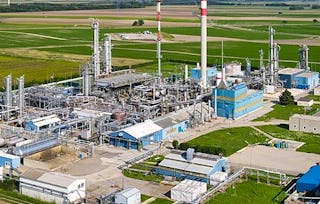
Moreover, this module provides an overview of both onshore production processes and offshore platforms. Learners will gain valuable insights into the operational aspects and challenges associated with these production environments.
What's included
15 videos1 assignment
Show info about module content
15 videos•Total 143 minutes
About the Specialization•3 minutes
About the Course•2 minutes
Introduction to Oil and Gas Field Life Cycle•8 minutes
Introduction to Oil and Gas Exploration Methods•11 minutes
Offshore Seismic Data Acquisition and Processing - Part 1•9 minutes
Offshore Seismic Data Acquisition and Processing - Part 2•9 minutes
Types of Reservoirs and their Effect on Production•13 minutes
Equipment in Upstream Oil and Gas Production •12 minutes
Subsea Fabrication, Installation and Modular Erection•12 minutes
Stimulation Operations•10 minutes
Water and other Injection methods•12 minutes
Compression System•13 minutes
Overview of Onshore Production Process•12 minutes
Overview of Offshore Platforms - Part 1•11 minutes
Overview of Offshore Platforms - Part 2•7 minutes
1 assignment•Total 30 minutes
Assignment on Exploration Methods, Upstream Equipment and Platforms•30 minutes
Drilling Methods and Systems
Module 2•2 hours to complete
Module details
Drilling Methods and Systems is a module designed to provide learners with a solid understanding of the oil and gas drilling process, along with the technological advancements and challenges associated with it. This course covers various aspects of drilling operations, from the initial site preparation to the analysis of reservoir pressure transients.
This module begins with an introduction to the oil and gas drilling process, providing learners with an overview of the key steps involved. Learners will understand about the servicing structures, hoisting systems, rotary equipment and downhole motors used in drilling operations.
Site preparation and drilling techniques are explored in detail, including computer-based analysis and design methods. It delves into important components of drilling operations, such as wellhead, Christmas tree, single and dual completion, and casing and cementing. Learners will understand about their functions, types and properties, along with the testing, change in characteristics and additives used in drilling fluids. Drilling mud hydraulics and the treatment of drilling mud are also extensively covered.
Furthermore, the course includes a comprehensive study of pressure transient analysis of reservoirs. Learners will gain insights into the behavior of reservoir fluids under changing pressures and learn how to interpret pressure data for reservoir characterization.
It explores the latest technological advances and challenges in oil and gas drilling. Learners will be exposed to cutting-edge drilling technologies, such as directional drilling, automation, and real-time monitoring systems and gain an understanding of the associated challenges and opportunities.
What's included
11 videos1 assignment
Show info about module content
11 videos•Total 112 minutes
Introduction to Oil and Gas Drilling Process.•6 minutes
Servicing Structures, Hoisting Systems, Rotary Equipment and Downhole Motors•11 minutes
Site Preparation and Drilling Techniques •9 minutes
Computer-based Analysis and Design Methods in Drilling•11 minutes
Wellhead, Christmas Tree, Single and Dual Completion, Casing and Cementing•9 minutes
Functions, Types and Properties of Drilling Fluids•12 minutes
Testing, Change in Characteristics and Additives of Drilling Fluids•9 minutes
Drilling Mud Hydraulics•13 minutes
Treatment of Drilling mud•11 minutes
Pressure Transient Analysis of Reservoirs•11 minutes
Technological Advances and Challenges for Oil and Gas Drilling •11 minutes
1 assignment•Total 30 minutes
Assignment on Drilling Methods and Systems•30 minutes
Methods of Oil Recovery
Module 3•3 hours to complete
Module details
Oil Recovery Methods is a comprehensive module that provides learners with a solid foundation in various techniques employed to recover oil from reservoirs. This module covers conventional methods of oil recovery, primary recovery, secondary recovery, enhanced oil recovery (EOR) and emerging technologies in the field.
It begins with an introduction to oil recovery, highlighting the importance of efficient extraction methods in maximizing oil production. Learners will gain an understanding of the challenges and considerations involved in the recovery process.
Conventional methods of oil recovery are explored, including primary recovery, which utilizes the natural reservoir energy to extract oil. Learners will understand the mechanisms involved in primary recovery and the factors that affect its efficiency.
Secondary recovery techniques, such as increasing reservoir pressure and implementing mechanical lift systems, are extensively covered. Learners will gain insights into the methods used to enhance reservoir pressure and the various mechanical lift systems employed in the industry.
It delves into enhanced oil recovery, which involves advanced techniques to further increase oil production. Chemical methods, including the use of complex polymers and surfactants, are discussed in detail. Thermal methods and acidizing techniques used in enhanced oil recovery are also explored. Learners will gain an understanding of the processes involved in thermal methods, such as steam injection, and the principles behind acidizing to improve reservoir permeability. Additionally, it also covers other emerging methods of enhanced oil recovery, including microbial techniques.
Larsen & Toubro popularly known as L&T is an Indian Multinational conglomerate. L&T has over 8 decades of expertise in executing some of the most complex projects including the World's tallest statue - the Statue of Unity. L&T has a wide portfolio that includes engineering, construction, manufacturing, realty, ship building, defense, aerospace, IT & financial services. L&T EduTech is a e learning platform within the L&T Group, that offers courses that are curated & delivered by industry experts.
In the world of engineering and technology, change and advancements are happening at the speed of light. Academia needs to keep pace with this change and career professionals need to adapt. This is the need gap L&T EduTech will fill. The vision for L&T EduTech is to be the bridge between academia and industry, between career professionals and ever-changing technology. L&T EduTech firmly believes that, only when these need gaps are filled, will we have truly empowered and knowledgeable workforce that will lead India in the future.
When will I have access to the lectures and assignments?
To access the course materials, assignments and to earn a Certificate, you will need to purchase the Certificate experience when you enroll in a course. You can try a Free Trial instead, or apply for Financial Aid. The course may offer 'Full Course, No Certificate' instead. This option lets you see all course materials, submit required assessments, and get a final grade. This also means that you will not be able to purchase a Certificate experience.
What will I get if I subscribe to this Specialization?
When you enroll in the course, you get access to all of the courses in the Specialization, and you earn a certificate when you complete the work. Your electronic Certificate will be added to your Accomplishments page - from there, you can print your Certificate or add it to your LinkedIn profile.
Is financial aid available?
Yes. In select learning programs, you can apply for financial aid or a scholarship if you can’t afford the enrollment fee. If fin aid or scholarship is available for your learning program selection, you’ll find a link to apply on the description page.