Statistics Courses
Statistics courses can help you learn data analysis, probability theory, hypothesis testing, and regression techniques. You can build skills in interpreting data sets, making informed predictions, and conducting surveys. Many courses introduce tools like R, Python, and Excel, that support performing statistical analyses and visualizing results. You'll also explore key topics such as descriptive statistics, inferential statistics, and experimental design, equipping you with the knowledge to tackle real-world data challenges.
Popular Statistics Courses and Certifications

University of Huddersfield
Skills you'll gain: Linear Algebra, Graph Theory, Statistical Software, Computational Logic, Integral Calculus, Matplotlib, Data Visualization, Probability & Statistics, Statistical Programming, Plot (Graphics), Calculus, R Programming, Data Presentation, Differential Equations, Applied Mathematics, Theoretical Computer Science, Logical Reasoning, Mathematics and Mathematical Modeling, General Mathematics, Mathematical Modeling

University of Illinois at Urbana-Champaign
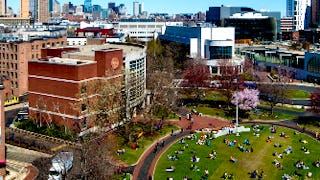
Northeastern University
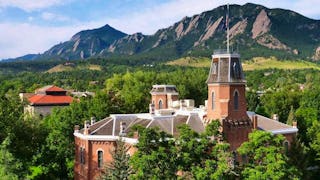
University of Colorado Boulder
Skills you'll gain: Model Evaluation, Data Mining, Supervised Learning, Unsupervised Learning, Service Level, Dimensionality Reduction, Deep Learning, Statistical Modeling, Probability, Applied Machine Learning, Anomaly Detection, Machine Learning Algorithms, Statistical Inference, Statistical Hypothesis Testing, Statistical Machine Learning, Model Training, Data Warehousing, Performance Testing, Bash (Scripting Language), Data Science
In summary, here are 4 of our most popular statistics courses
- BSc Data Science: University of Huddersfield
- Master of Computer Science (feat. Data Science Track): University of Illinois at Urbana-Champaign
- Engineering Management Graduate Certificate: Northeastern University
- Data Science Graduate Certificate: University of Colorado Boulder










