Archeology Courses
Archaeology courses can help you learn excavation techniques, artifact analysis, site documentation, and historical interpretation. You can build skills in critical thinking, research methodologies, and the use of geographic information systems (GIS) for mapping archaeological sites. Many courses introduce tools like 3D modeling software for reconstructing ancient structures and databases for cataloging finds, allowing you to engage with both the practical and theoretical aspects of archaeological work.
Popular Archeology Courses and Certifications
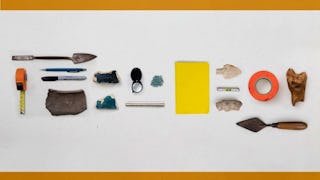
Rice University
Skills you'll gain: Ancient History, Timelines, Social Impact, Public History, Social Justice, Anthropology, Scientific Methods, World History, Social Sciences, Culture, Social Studies, Peer Review, Science and Research, Environment, Case Studies, Environmental Science, Liberal Arts, Community Development, Investigation, Data Analysis

Universitat Autònoma de Barcelona
Skills you'll gain: Art History, Ancient History, Case Studies, Public History, Anthropology, Community Development, Sustainable Development, Surveys, Research, Research Methodologies, Social Sciences, Culture, Economic Development, Cultural Diversity

University of Cambridge
Skills you'll gain: Scientific Methods, Physics, Physical Science, Mathematical Modeling, Science and Research, Environment, Life Sciences, Geometry, Differential Equations, Research, Data Analysis, Applied Mathematics, Quantitative Research, General Mathematics, Spatial Analysis, General Science and Research, Taxonomy, Mathematical Theory & Analysis, electromagnetics, Scientific Visualization

Rice University
Skills you'll gain: Public History, Ancient History, Anthropology, Scientific Methods, Peer Review, Liberal Arts, Social Studies, Investigation, Social Sciences, Research, Science and Research, World History, Culture, Research Methodologies, Data Collection, Ethical Standards And Conduct

Rice University
Skills you'll gain: Ancient History, Anthropology, Culture, Social Studies, Case Studies, Social Sciences, World History, Human Development, Cultural Diversity, Research, Environment, Biology, Environmental Science

What brings you to Coursera today?
Universitat Autònoma de Barcelona
Skills you'll gain: Ancient History, Art History, Anthropology, World History, Social Studies, Writing, Liberal Arts, Cultural Diversity, Timelines, Economic Development

Rice University
Skills you'll gain: Timelines, Ancient History, Scientific Methods, World History, Anthropology, Science and Research, Environmental Science, Investigation, Social Sciences, Environment, Spatial Analysis, Geographic Information Systems, Research, Culture, Geospatial Information and Technology, Data Collection, Biology

Rice University
Skills you'll gain: Timelines, Social Impact, Social Justice, Social Sciences, Ancient History, Environment, Case Studies, Community Development, Climate Change Programs, Community Outreach, Culture, Diversity Awareness, World History, Cultural Diversity, Ethical Standards And Conduct
Sapienza University of Rome
Skills you'll gain: Ancient History, Public History, Political Sciences, European History, Social Studies, World History, Research, Investigation, Culture, Governance, Scientific Methods, Storytelling
University of Pennsylvania
Skills you'll gain: Ancient History, Art History, Anthropology, Social Studies, Timelines, World History, Public History, Liberal Arts, Writing

University of Alberta
Skills you'll gain: Biology, Physical Science, Life Sciences, Taxonomy, Environment, Scientific Methods, Research, Timelines, Environmental Science


University of Alberta
Skills you'll gain: Cultural Diversity, Environmental Issue, Environmental Science, Social Studies, Culture, Environment, Advocacy, Environmental Policy, Anthropology, Economic Development, Petroleum Industry, Natural Resource Management, Economics, Climate Change Adaptation, Energy and Utilities, World History
What brings you to Coursera today?
Best free Archeology courses
High-quality free Archeology courses you can start today.
- Archaeology and Heritage of AfricaUniversitat Autònoma de BarcelonaBeginner1 - 3 MonthsFree
- The Changing Landscape of Ancient Rome. Archaeology and History of the Palatine HillSapienza University of RomeBeginner1 - 3 MonthsFree
- Introduction to Ancient Egypt and Its CivilizationUniversity of PennsylvaniaIntermediate1 - 3 MonthsFree
Best Archeology courses from Rice University
Top-rated Archeology courses offered by Rice University on Coursera.
- Introduction to ArchaeologyRice UniversityBeginner3 - 6 MonthsRice University
- Introduction to Archaeology: Knowing The PastRice UniversityBeginner1 - 4 WeeksRice University
- Introduction to Archaeology: Reconstruction of The PastRice UniversityBeginner1 - 3 MonthsRice University
Best Archeology courses for beginners
Top-rated beginner-friendly Archeology courses with no prerequisites.
- Astronomy and Cosmology: Exploring the UniverseUniversity of CambridgeBeginner3 - 6 MonthsNo prerequisites
- Egiptología (Egyptology)Universitat Autònoma de BarcelonaBeginner1 - 3 MonthsNo prerequisites
- Introduction to Archaeology : Archaeology as ScienceRice UniversityBeginner1 - 3 MonthsNo prerequisites










