Veterinary Courses
Veterinary courses can help you learn animal anatomy, physiology, diagnostics, and treatment protocols. You can build skills in surgical techniques, anesthesia management, and client communication. Many courses introduce tools like diagnostic imaging equipment, laboratory analysis software, and electronic health records, that support effective veterinary practice and patient care.
Popular Veterinary Courses and Certifications

The University of Edinburgh
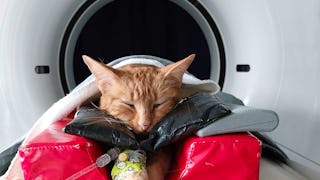
The University of Edinburgh
Skills you'll gain: Anesthesiology, Pain Management, Stress Management, Perioperative Care, Operating Room (OR), Clinical Practices

The University of Edinburgh
Skills you'll gain: Scientific Methods
Imperial College London
Skills you'll gain: Immunology, Infectious Diseases, Infection Control, Public Health and Disease Prevention, Molecular Biology, Epidemiology, Microbiology, Public Health, Biotechnology, Biology, Clinical Trials, Manufacturing and Production
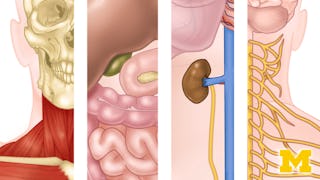
University of Michigan
Skills you'll gain: Anatomy, Neurology, Medical Terminology, Cardiology, Mechanics, Pulmonology, Biology
What brings you to Coursera today?

University of Illinois Urbana-Champaign
Skills you'll gain: Nutritional Assessment, Predictive Analytics, Machine Learning Methods, Child Health, Diagnostic Tests, Health Assessment, Health Systems, Operating Cost, Nutrition and Diet, Market Dynamics, Water Resources, Food Safety and Sanitation, Manufacturing and Production, Behavioral Economics, Business Economics, Environment, Molecular Biology, Production Management, Consumer Behaviour, Molecular, Cellular, and Microbiology

Rice University
Skills you'll gain: Medical Terminology, Pulmonology, Cardiology, Medical Records, Electronic Medical Record System, Endocrinology, Human Musculoskeletal System, Orthopedics, Obstetrics And Gynecology, Neurology, Gynecology, Urology, Hematology, Anatomy, Immunology, Diagnostic Tests, Patient Treatment, Psychiatry, Communication

University of Florida
Skills you'll gain: Nutrition and Diet, Nutritional Assessment, Preventative Care, Care Management, Anatomy, Vital Signs, Physiology, First Aid

Skills you'll gain: Biochemistry, Molecular Biology, Endocrinology, Cell Biology, Physiology, Clinical Nutrition, Pharmacology, Hematology, Oncology, Nutrition and Diet, Pharmacotherapy, Chemistry, Pharmaceuticals, Respiration, Pathology, Biology, Mathematical Modeling

University of Colorado System
Skills you'll gain: Medical Emergency, Cardiopulmonary Resuscitation (CPR), Automated External Defibrillator, Patient Advocacy, Patient Evaluation, Clinical Assessment, Substance Abuse

The University of Edinburgh
Skills you'll gain: Ethical Standards And Conduct, Sensory Systems Analysis

Best free Veterinary courses
High-quality free Veterinary courses you can start today.
- Animal Behaviour and WelfareThe University of EdinburghMixed1 - 3 MonthsFree
- The Horse Course: Introduction to Basic Care and ManagementUniversity of FloridaMixed1 - 3 MonthsFree
- Chicken Behaviour and WelfareThe University of EdinburghMixed1 - 3 MonthsFree
Best Veterinary courses from The University of Edinburgh
Top-rated Veterinary courses offered by The University of Edinburgh on Coursera.
- EDIVET: Do you have what it takes to be a veterinarian?The University of EdinburghMixedThe University of Edinburgh
- Animal Welfare in the ClinicThe University of EdinburghIntermediate1 - 4 WeeksThe University of Edinburgh
Best Veterinary certificate programs
Earn a certificate in Veterinary from top universities and companies.
- Foundations in Virology and VaccinologyImperial College LondonIntermediate3 - 6 MonthsSpecialization
- AnatomyUniversity of MichiganBeginner3 - 6 MonthsSpecialization
- Dairy Nutrition for Udder SuccessUniversity of Illinois Urbana-ChampaignIntermediate3 - 6 MonthsSpecialization
Best Veterinary courses for beginners
Top-rated beginner-friendly Veterinary courses with no prerequisites.
- Medical TerminologyRice UniversityBeginner3 - 6 MonthsNo prerequisites
- Medical Emergencies: CPR, Toxicology, and WildernessUniversity of Colorado SystemBeginner1 - 4 WeeksNo prerequisites










