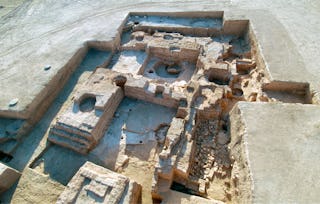
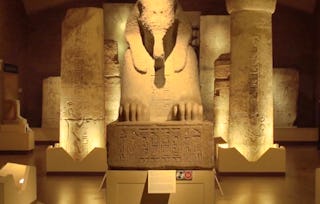
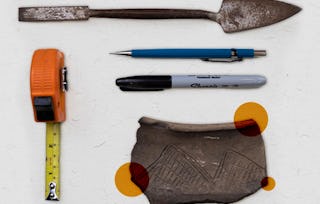
Which are the deepest roots of that mix of cultures that we use to call ‘Mediterranean Civilization’? Which are comminglings and exchanges which produced its most complete fruit, i.e. the city, a place for landscape-modelling communities? And which elements did contribute to build up that baulk of customs, ideas, and innovations which compelled to confrontation and hybridizations different peoples for millennia? What did it made, from pottery to metallurgy, from gastronomy to architecture, from art to religion, of a sea a cradle of civilization? Archaeology may help in disentangling such questions, seeking unexpected answers , by tinkering what ancient Mediterranean peoples left buried in the ground. A privileged point of view of our course is the ancient Phoenician city of Motya, located exactly at the centre of the “sea in the middle”. Throughout the live experience of excavation, with images taken on the field, this course will let you touch the many tesserae of the great mosaic of the Mediterranean Civilization. The field diary of the archaeologist, and the handpick will be the two tools, which will lead us across the sea to discover what such early cities actually were, and how their contribute is still a major part of our shared memory.
Das ist alles enthalten
4 Videos1 Lektüre1 Aufgabe
Infos zu Modulinhalt anzeigen
4 Videos•Insgesamt 36 Minuten
1 Introduction•1 Minute
1.1 On the routes of Phoenicians•5 Minuten
1.2 Crossing the Middle Sea•14 Minuten
1.3 Concept of the city•16 Minuten
1 Lektüre•Insgesamt 10 Minuten
Suggested readings•10 Minuten
1 Aufgabe•Insgesamt 30 Minuten
Into the West•30 Minuten
Concept of the city
Modul 2•1 Stunde abzuschließen
Moduldetails
Das ist alles enthalten
3 Videos1 Lektüre1 Aufgabe
Infos zu Modulinhalt anzeigen
3 Videos•Insgesamt 34 Minuten
2.1 Jericho and the Levantine city•8 Minuten
2.2 The Palace the heart of the city•12 Minuten
2.3 A society in a network•15 Minuten
1 Lektüre•Insgesamt 10 Minuten
Suggested readings•10 Minuten
1 Aufgabe•Insgesamt 30 Minuten
The idea of the city•30 Minuten
Discovering Motya
Modul 3•1 Stunde abzuschließen
Moduldetails
Das ist alles enthalten
3 Videos1 Lektüre1 Aufgabe
Infos zu Modulinhalt anzeigen
3 Videos•Insgesamt 17 Minuten
3.1 Landing on Motya•4 Minuten
3.2 Prehistoric Motya from Levantines to Myceneans•7 Minuten
3.3 Phoenicians’ arrival•7 Minuten
1 Lektüre•Insgesamt 10 Minuten
Suggested readings•10 Minuten
1 Aufgabe•Insgesamt 30 Minuten
Discovering Motya•30 Minuten
Life and Ideology
Modul 4•1 Stunde abzuschließen
Moduldetails
Das ist alles enthalten
3 Videos1 Lektüre1 Aufgabe
Infos zu Modulinhalt anzeigen
3 Videos•Insgesamt 38 Minuten
4.1 Water for life•12 Minuten
4.2 The sacred waters and the inferior world•9 Minuten
4.3 The Temple of the Kothon•16 Minuten
1 Lektüre•Insgesamt 10 Minuten
Suggested readings•10 Minuten
1 Aufgabe•Insgesamt 30 Minuten
Ideology and Life•30 Minuten
Stars sparkling in the waters
Modul 5•2 Stunden abzuschließen
Moduldetails
Das ist alles enthalten
4 Videos1 Lektüre1 Aufgabe
Infos zu Modulinhalt anzeigen
4 Videos•Insgesamt 53 Minuten
5.1 The sacred pool•18 Minuten
5.2 Astarte: the thousand faces of the goddess•17 Minuten
5.3 The sacred precint•11 Minuten
5.4 Ancient anchors•8 Minuten
1 Lektüre•Insgesamt 10 Minuten
Suggested readings•10 Minuten
1 Aufgabe•Insgesamt 30 Minuten
Stars sparkling in the water•30 Minuten
An Identity to share
Modul 6•1 Stunde abzuschließen
Moduldetails
Das ist alles enthalten
3 Videos1 Lektüre1 Aufgabe
Infos zu Modulinhalt anzeigen
3 Videos•Insgesamt 34 Minuten
6.1 The necropolis: life reflected in death•12 Minuten
6.2 The Tophet•15 Minuten
6.3 The Tophet and the city•7 Minuten
1 Lektüre•Insgesamt 10 Minuten
Suggested readings•10 Minuten
1 Aufgabe•Insgesamt 30 Minuten
An identity to share•30 Minuten
A changing society
Modul 7•1 Stunde abzuschließen
Moduldetails
Das ist alles enthalten
3 Videos1 Lektüre1 Aufgabe
Infos zu Modulinhalt anzeigen
3 Videos•Insgesamt 39 Minuten
7.1: Dwelling quarter•12 Minuten
7.2: Finds and colour of the daily life•12 Minuten
7.3 Dwelling quarter•15 Minuten
1 Lektüre•Insgesamt 10 Minuten
Suggested readings•10 Minuten
1 Aufgabe•Insgesamt 30 Minuten
A changing society•30 Minuten
Portrait of an harbour city
Modul 8•2 Stunden abzuschließen
Moduldetails
Das ist alles enthalten
3 Videos1 Lektüre2 Aufgaben
Infos zu Modulinhalt anzeigen
3 Videos•Insgesamt 30 Minuten
8.1: The City-walls•9 Minuten
8.2: War and defences•8 Minuten
8.3: Integration and destruction: the Motya charioteer•13 Minuten
1 Lektüre•Insgesamt 10 Minuten
Suggested readings•10 Minuten
2 Aufgaben•Insgesamt 60 Minuten
Picture of a city•30 Minuten
Final Quiz•30 Minuten
Dozent
Lehrkraftbewertungen
Wir haben alle Lernenden um Feedback zu unseren Dozenten gebeten, ausgehend von der Qualität ihres Unterrichtsstils.
Sapienza University of Rome, founded in 1303 by Pope Boniface VIII, is the oldest University in Rome and the largest in Europe.
Since its founding over 700 years ago, Sapienza has played an important role in Italian history and has been directly involved in key changes and developments in society, economics and politics. It has contributed to the development of Italian and European science and culture in all areas of knowledge.
The main campus, designed by Marcello Piacentini, was opened in 1935. It is situated close to the city centre, and is the largest in Europe - a real city within a city where teaching activities are integrated with libraries and museums as well as comprehensive student services. Faculties and Departments also carry out their activities in decentralized locations in different parts of the city. There are two other university campuses elsewhere in Lazio.
Sapienza offers a vast array of courses including degree programmes, PhD courses, one to two year professional courses, and Specialization Schools in many disciplines, run by 63 Departments and 11 Faculties.
Warum entscheiden sich Menschen für Coursera für ihre Karriere?
Felipe M.
Lernender seit 2018
„Es ist eine großartige Erfahrung, in meinem eigenen Tempo zu lernen. Ich kann lernen, wenn ich Zeit und Nerven dazu habe.“
Jennifer J.
Lernender seit 2020
„Bei einem spannenden neuen Projekt konnte ich die neuen Kenntnisse und Kompetenzen aus den Kursen direkt bei der Arbeit anwenden.“
Larry W.
Lernender seit 2021
„Wenn mir Kurse zu Themen fehlen, die meine Universität nicht anbietet, ist Coursera mit die beste Alternative.“
Chaitanya A.
„Man lernt nicht nur, um bei der Arbeit besser zu werden. Es geht noch um viel mehr. Bei Coursera kann ich ohne Grenzen lernen.“
Bewertungen von Lernenden
4.5
428 Bewertungen
5 stars
66,58 %
4 stars
23,83 %
3 stars
6,54 %
2 stars
2,10 %
1 star
0,93 %
Zeigt 3 von 428 an
E
EG
4·
Geprüft am 13. Apr. 2020
Some of the lectures were difficult to understand ( names and places) and the translation texts were incorrect. Good course otherwise, enjoyed it!
H
HC
4·
Geprüft am 5. Jan. 2021
I really enjoyed this hands on approach to teaching. the professor was enlightening and entertaining and passionate about the subject. loved it being on site most of the time8
K
KS
4·
Geprüft am 28. Apr. 2021
A fascinating course. I had to work hard to understand the material, but I enjoyed the challenge. I intend to review the course materials - I'm sure I will learn even more the second time through.
When will I have access to the lectures and assignments?
To access the course materials, assignments and to earn a Certificate, you will need to purchase the Certificate experience when you enroll in a course. You can try a Free Trial instead, or apply for Financial Aid. The course may offer 'Full Course, No Certificate' instead. This option lets you see all course materials, submit required assessments, and get a final grade. This also means that you will not be able to purchase a Certificate experience.
What will I get if I purchase the Certificate?
When you purchase a Certificate you get access to all course materials, including graded assignments. Upon completing the course, your electronic Certificate will be added to your Accomplishments page - from there, you can print your Certificate or add it to your LinkedIn profile.
Is financial aid available?
Yes. In select learning programs, you can apply for financial aid or a scholarship if you can’t afford the enrollment fee. If fin aid or scholarship is available for your learning program selection, you’ll find a link to apply on the description page.