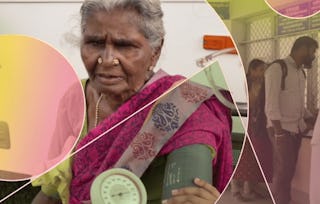
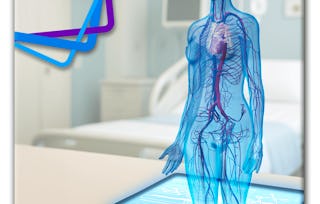
Cardiovascular diseases are – according to the (World Health Organization (WHO) – the number one cause of death globally. Myocardial infarction (heart attack) is the most prominent under the Cardiovascular diseases. In Switzerland alone, the risk to develop a coronary heart disease during life time is around 25% for men and 18% for women.
Most cardiovascular diseases can be prevented by addressing behavioral risk factors, the understanding of these risk factors, their mechanisms and impact on the cardiovascular system.
In this context our course aims to approach the complex field of myocardial infarction in two respects: medical education and awareness of a broader audience.
This first module of this course focuses on the heart and the cardiovascular system. The first lecture covers the anatomy and function of the heart, explaining the basic glossary which you will encounter during this course. The second lecture displays the various types of blood vessels and arteries. This is helpful to understand the final lecture of this module: the sympathetic nervous system. This lecture will discuss the external influences that have a direct impact on our nervous system, including the physiological effects and clinical consequences.
What's included
3 videos1 reading4 assignments1 discussion prompt
Show info about module content
3 videos•Total 23 minutes
The Heart - Anatomy and Function•8 minutes
Blood Vessels and Coronary Arteries•7 minutes
Sympathetic Nervous System•8 minutes
1 reading•Total 30 minutes
Further Readings•30 minutes
4 assignments•Total 120 minutes
Anatomy and Function•30 minutes
Blood Vessels and Coronary Arteries•30 minutes
Sympathetic Nervous System•30 minutes
Assessment Module 1•30 minutes
1 discussion prompt•Total 10 minutes
Innervation of vessels by sympathetic nervous system•10 minutes
Risk Factors and Prevention of Cardiovascular Diseases
Module 2•7 hours to complete
Module details
Whereas the first module focuses on different physiological aspects of the heart and the cardiovascular system, the second module considers several external risk factors which can cause a myocardial infarction. This module not only discusses the risks such as aging, smoking, hypertension, lipids and diabetes, but also explains which preventive measures can be employed to minimize the risk of a heart attack, for example, by focusing on physical exercise to increase life expectancy and the personal health.
What's included
8 videos5 readings7 assignments
Show info about module content
8 videos•Total 68 minutes
Aging•6 minutes
Myograph•5 minutes
Cycling Stretch Machine•5 minutes
Smoking•9 minutes
Hypertension/RAAS•12 minutes
Lipids•9 minutes
Diabetes•8 minutes
Sports Cardiology / Physical Exercise•13 minutes
5 readings•Total 120 minutes
Heart Disease and Stroke Statistics•20 minutes
Smoking Cessation•30 minutes
Aging, Acculturation, Salt Intake, and Hypertension in the Kuna of Panama•20 minutes
Further Reading•30 minutes
Further Reading•20 minutes
7 assignments•Total 210 minutes
Aging•30 minutes
Smoking•30 minutes
Hypertension•30 minutes
Lipids•30 minutes
Diabetes•30 minutes
Sports Cardiology / Physical Exercise•30 minutes
Assessment Module 2•30 minutes
Acute Coronary Syndrome: Diagnosis & Early Management
Module 3•6 hours to complete
Module details
This module focuses on different methods and approaches to deal with acute coronary syndrome, which in the worst case can lead to an acute heart attack. To provide you with a clearer idea of what can lead to myocardial infarction, this module concentrates on a variety of specific cardiac diseases, their mechanisms, the medical tools used to detect them, as well as on the appropriate therapeutic approach to prevent cardiac events.
What's included
6 videos3 readings7 assignments
Show info about module content
6 videos•Total 54 minutes
Diagnosis Emergency measures in Acute Coronary Syndrome•12 minutes
Early Medical Treatment•6 minutes
The Role of Imaging•7 minutes
Percutaneous Intervention•12 minutes
Takotsubo Syndrome•8 minutes
Acute Myocarditis•8 minutes
3 readings•Total 105 minutes
Further Readings•45 minutes
Further Reading•30 minutes
7 assignments•Total 210 minutes
Diagnosis Emergency measures in Acute Coronary Syndrome•30 minutes
Early Medical Treatment•30 minutes
The Role of Imaging•30 minutes
Percutaneous Intervention•30 minutes
Takotsubo Syndrome•30 minutes
Acute Myocarditis•30 minutes
Assessment Module 3•30 minutes
Acute Coronary Syndrome: Follow up and Rehabilitation
Module 4•4 hours to complete
Module details
Module four illustrates the methods employed to improve cardiac rehabilitation. Moreover, this module focuses on the secondary prevention to avoid the risk of myocardial infarction. This involves the analysis of external and biological factors which can cause cardiac diseases and explains the mechanisms needed to change bad behavioral patterns. There are several factors in life which can be easily altered to improve the personal wellbeing and those are discussed in this section.
What's included
3 videos3 readings3 assignments
Show info about module content
3 videos•Total 39 minutes
Rehabilitation•11 minutes
Secondary Prevention•14 minutes
Outcome after Acute Coronary Syndromes•14 minutes
3 readings•Total 90 minutes
Further Reading•30 minutes
Impact of Inflammation•30 minutes
3 assignments•Total 90 minutes
Rehabilitation•30 minutes
Secondary Prevention•30 minutes
Assessment Module 4•30 minutes
Heart Failure: Final Stage of Coronary Heart Diseases
Module 5•6 hours to complete
Module details
The last module focuses on the pathophysiological aspect of heart diseases by illustrating the chain of cause of heart failure. The module also explains how we can diagnose a potential heart failure by correctly analyzing the clinical symptoms and signs. Echocardiography is the most important tool to identify the condition of the heart and to diagnose heart failure. To minimize the risk of heart failure, it is important to inform the patients about possible therapeutic approaches. Therefore, the last part of this module discusses both medical and device therapies and introduces assist devices in correlation with transplantation as last possible treatment method.
What's included
5 videos4 readings6 assignments
Show info about module content
5 videos•Total 38 minutes
Pathophysiology•9 minutes
Diagnosis•8 minutes
Medical Therapy•6 minutes
Device Therapy•8 minutes
Assist Devices and Transplantation•7 minutes
4 readings•Total 130 minutes
Guidelines for the Diagnosis and Treatment•20 minutes
Further Reading•30 minutes
Further Readings•50 minutes
6 assignments•Total 180 minutes
Pathophysiology•30 minutes
Diagnosis•30 minutes
Medical Therapy•30 minutes
Device Therapy•30 minutes
Assist Devices and Transplantation•30 minutes
Assessment Module 5•30 minutes
Instructor
Instructor ratings
Instructor ratings
We asked all learners to give feedback on our instructors based on the quality of their teaching style.
Founded in 1833, the University of Zurich (UZH) is Switzerland’s largest university, with a current enrollment of over 26,000 students. Made up of seven faculties covering approximately 100 different subject areas, UZH is proud to offer the most comprehensive academic program in the country.
"To be able to take courses at my own pace and rhythm has been an amazing experience. I can learn whenever it fits my schedule and mood."
Jennifer J.
Learner since 2020
"I directly applied the concepts and skills I learned from my courses to an exciting new project at work."
Larry W.
Learner since 2021
"When I need courses on topics that my university doesn't offer, Coursera is one of the best places to go."
Chaitanya A.
"Learning isn't just about being better at your job: it's so much more than that. Coursera allows me to learn without limits."
Learner reviews
4.8
469 reviews
5 stars
84.64%
4 stars
11.94%
3 stars
2.34%
2 stars
0.63%
1 star
0.42%
Showing 3 of 469
M
MB
5·
Reviewed on Sep 9, 2020
Excellent content delivered through experts in cardiology.Had a great time learning diagnosis and treatment of Myocardial Infarction
Z
ZZ
5·
Reviewed on Apr 28, 2022
The course was really effective. It's just that the formatting of the quizzes needs sme adjustment.
W
WA
5·
Reviewed on Feb 14, 2020
This course is very helpful for Medical and biological sciences people. The layout of the course is very interactive and easy to understand. Thanks, Coursera
When will I have access to the lectures and assignments?
To access the course materials, assignments and to earn a Certificate, you will need to purchase the Certificate experience when you enroll in a course. You can try a Free Trial instead, or apply for Financial Aid. The course may offer 'Full Course, No Certificate' instead. This option lets you see all course materials, submit required assessments, and get a final grade. This also means that you will not be able to purchase a Certificate experience.
What will I get if I purchase the Certificate?
When you purchase a Certificate you get access to all course materials, including graded assignments. Upon completing the course, your electronic Certificate will be added to your Accomplishments page - from there, you can print your Certificate or add it to your LinkedIn profile.
Is financial aid available?
Yes. In select learning programs, you can apply for financial aid or a scholarship if you can’t afford the enrollment fee. If fin aid or scholarship is available for your learning program selection, you’ll find a link to apply on the description page.