The abdomen houses the organs responsible for digestion, nutrient absorption, and metabolic processing, and this course builds a working map of that region from the outside in. The course opens with surface anatomy and the layers of the anterolateral abdominal wall, then works through the peritoneum and the reflections that organize the abdominal cavity into compartments.

Anatomy & Physiology: Abdomen and Gastrointestinal System
Labor Day starts with $70+ in savings on Coursera Plus. Save 40% for 3 months.

Anatomy & Physiology: Abdomen and Gastrointestinal System
This course is part of Medical School Anatomy and Physiology II Professional Certificate


Instructors: Thad Wilson, PhD
Included with Learn more
Gain insight into a topic and learn the fundamentals.
Intermediate level
Recommended experience
3 weeks to complete
at 10 hours a week
Flexible schedule
Learn at your own pace
What you'll learn
Identify the layers of the anterolateral and posterior abdominal wall and the peritoneal reflections that organize the cavity.
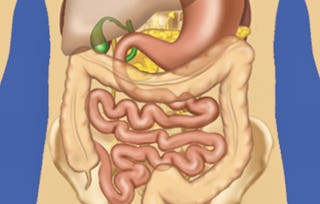
Trace the anatomy of the esophagus, stomach, small and large intestine, liver, gallbladder, pancreas, and spleen.
Map the arterial supply and venous drainage of the abdominal viscera.
Explain gastrointestinal motility, secretion, digestion, and absorption.
Details to know

Shareable certificate
Add to your LinkedIn profile
Recently updated!
September 2026
Assessments
95 assignments
Taught in English
See how employees at top companies are mastering in-demand skills

Build your Basic Science expertise
This course is part of the Medical School Anatomy and Physiology II Professional Certificate
When you enroll in this course, you'll also be enrolled in this Professional Certificate.
- Learn new concepts from industry experts
- Gain a foundational understanding of a subject or tool
- Develop job-relevant skills with hands-on projects
- Earn a shareable career certificate from Lecturio

There are 11 modules in this course
Earn a career certificate
Add this credential to your LinkedIn profile, resume, or CV. Share it on social media and in your performance review.
Instructors
Offered by

Explore more from Basic Science
Universiteit Leiden
University of Michigan

Rice University
Why people choose Coursera for their career

Felipe M.
Learner since 2018
"To be able to take courses at my own pace and rhythm has been an amazing experience. I can learn whenever it fits my schedule and mood."

Jennifer J.
Learner since 2020
"I directly applied the concepts and skills I learned from my courses to an exciting new project at work."

Larry W.
Learner since 2021
"When I need courses on topics that my university doesn't offer, Coursera is one of the best places to go."

Chaitanya A.
"Learning isn't just about being better at your job: it's so much more than that. Coursera allows me to learn without limits."