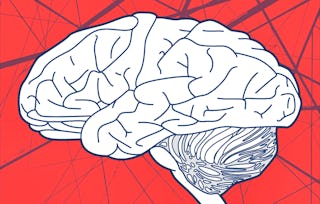
How do we make decisions as consumers? What do we pay attention to, and how do our initial responses predict our final choices? To what extent are these processes unconscious and cannot be reflected in overt reports? This course will provide you with an introduction to some of the most basic methods in the emerging fields of consumer neuroscience and neuromarketing. You will learn about the methods employed and what they mean. You will learn about the basic brain mechanisms in consumer choice, and how to stay updated on these topics. The course will give an overview of the current and future uses of neuroscience in business.
We first need to define the field – what are the key concepts, what are the key methods and reasons for employing neuroscience to study consumers and communication effects? In this module, we will introduce the topic and how some specific studies provide key insights into what neuroscience has to offer in relationship with more traditional methods.
What's included
4 videos2 readings1 assignment
Show info about module content
4 videos•Total 30 minutes
Introduction to this Course•7 minutes
An Overview of the Brain•8 minutes
Case: Knutson et al + Pessiglione et al, method = fMRI•11 minutes
PET and MR Scanners•5 minutes
2 readings•Total 200 minutes
Main Course Readings•10 minutes
Module 1 - What is Neuromarketing all About?•190 minutes
1 assignment•Total 10 minutes
What is Neuromarketing all About?•10 minutes
Attention & Consciousness
Module 2•5 hours to complete
Module details
In the second module of this course we are turning to the functions of the brain, and we will first focus on attention and consciousness. This module will focus on some key concepts in attention and consciousness.
In this module we will have contents filled on the topic of sensory neuromarketing. How are our senses affected differently as consumers? What can you do to organise your communications to better use all the senses? How does the brain actually use the senses? What tools do we have for assessing the use of senses, and how they affect consumers?
What's included
5 videos1 reading1 assignment
Show info about module content
5 videos•Total 65 minutes
Sensory Neuromarketing•13 minutes
Studies & Methods - Sensory Load Chart•10 minutes
iMotions - Interview with Peter Hartzbech•15 minutes
Interview with Per Møller part 1•19 minutes
Interview with Per Møller part 2•8 minutes
1 reading•Total 150 minutes
Module 3 - Sensory Neuromarketing•150 minutes
1 assignment•Total 30 minutes
Sensory Neuromarketing•30 minutes
Emotions & Feelings, Wanting & Liking
Module 4•5 hours to complete
Module details
In this module, everything is about emotions and feelings, and the relationship between emotions and preference.
As we will see, our minds have a dual side: a conscious and an unconscious response and motivation, which are crucial to understanding consumer preference and choice. Indeed, unconscious emotional responses may turn out to be driving consumer choice to the same - or even larger - degree than conscious feelings. Are conscious feelings a mere after-the-fact rationalization upon conscious choice?
What's included
4 videos1 reading1 assignment
Show info about module content
4 videos•Total 76 minutes
Emotions & Feelings, Wanting & Liking•12 minutes
Case: Kirk et al + Ramsøy EEG, metode = EEG•21 minutes
This module will focus on Learning & Memory. We will determine not only that there are multiple kinds of memory, but that they also serve multiple purposes. If anything, learning is the vehicle we need to understand the most in consumer behaviour. What causes memory, and can we be affected unconsciously by our memories? How can we measure memory effects, and what is the relationship between brand equity and the brain?
This module, we also have an interview with Prof. Richard Silberstein, who shares his view on neuromarketing and consumer neuroscience. Prof. Silberstein is the Founder and chairman of the neuromarketing company Neuro-Insight (http://www.neuro-insight.com/).
What's included
3 videos1 reading1 assignment
Show info about module content
3 videos•Total 87 minutes
Learning & Memory•14 minutes
Case: McClure et al + , metode = eye-tracking + memory test•16 minutes
Interview with Richard Silberstein•57 minutes
1 reading•Total 165 minutes
Module 5 - Learning & Memory•165 minutes
1 assignment•Total 10 minutes
Learning & Memory•10 minutes
Neuroethics and Consumer Aberrations
Module 6•5 hours to complete
Module details
This module, we will focus on both the ethics of neuromarketing, as well as aberrant consumer behaviours. We see that consumer choice can sometimes become the centre focus on a person's life, be it pathological gambling, "shopaholism" or digital dependencies. This module, we will focus on some of these issues, and combine them with the ethical aspects that we face when talking neuro. This module we also end off with two interviews: one with Prof. Jan Trzaskowksi at the CBS, who is working on marketing and the law, where we discuss what the ethical and legal aspects of neuromarketing is. As you will see, Jan has a very particular take on this that I am sure you will find interesting. Our second interview is with Carl Marci, who is the Co-Founder and Chief Science Officer of Innerscope Research (http://innerscoperesearch.com/) on his background and their take on neuromarketing and consumer neuroscience.
What's included
4 videos1 reading1 peer review
Show info about module content
4 videos•Total 82 minutes
Neuroethics and Consumer Aberrations•4 minutes
Interview with Jan Trzaskowksi•31 minutes
Interview with Carl Marci•42 minutes
Is Neuromarketing Unethical?•4 minutes
1 reading•Total 90 minutes
Module 6 - Neuroethics and Consumer Aberrations•90 minutes
1 peer review•Total 120 minutes
Final Assignment•120 minutes
Instructor
Instructor ratings
Instructor ratings
We asked all learners to give feedback on our instructors based on the quality of their teaching style.
Centrally located in Copenhagen, the capital of Denmark, Copenhagen Business School (CBS) is one of the largest business schools in Europe with close to 23,000 students. CBS offers world-class research-based degree programs at undergraduate, graduate, and PhD levels as well as executive and other post experience programs.
"To be able to take courses at my own pace and rhythm has been an amazing experience. I can learn whenever it fits my schedule and mood."
Jennifer J.
Learner since 2020
"I directly applied the concepts and skills I learned from my courses to an exciting new project at work."
Larry W.
Learner since 2021
"When I need courses on topics that my university doesn't offer, Coursera is one of the best places to go."
Chaitanya A.
"Learning isn't just about being better at your job: it's so much more than that. Coursera allows me to learn without limits."
Learner reviews
4.7
3,535 reviews
5 stars
74.56%
4 stars
20.16%
3 stars
3.59%
2 stars
1.07%
1 star
0.59%
Showing 3 of 3535
A
AS
4·
Reviewed on Mar 30, 2020
Thomas has the rare ability to explain the difficult concepts in relatively simple terms. I think that this course provides a good introduction on consumer neuroscience for beginners.
S
SP
5·
Reviewed on Nov 21, 2019
Very interesting and detailed study of consumer behavior. The concepts were understandable and many new things, methods and concepts were explained in this course. It was really helpful.
M
MP
5·
Reviewed on Jul 14, 2018
Great course if you are a beginner in the domain of neuromarketing. Explained in a very simple language. Will definitely recommend it to anyone who wants to start learning about neuromarketing
When will I have access to the lectures and assignments?
To access the course materials, assignments and to earn a Certificate, you will need to purchase the Certificate experience when you enroll in a course. You can try a Free Trial instead, or apply for Financial Aid. The course may offer 'Full Course, No Certificate' instead. This option lets you see all course materials, submit required assessments, and get a final grade. This also means that you will not be able to purchase a Certificate experience.
What will I get if I purchase the Certificate?
When you purchase a Certificate you get access to all course materials, including graded assignments. Upon completing the course, your electronic Certificate will be added to your Accomplishments page - from there, you can print your Certificate or add it to your LinkedIn profile.
Is financial aid available?
Yes. In select learning programs, you can apply for financial aid or a scholarship if you can’t afford the enrollment fee. If fin aid or scholarship is available for your learning program selection, you’ll find a link to apply on the description page.