Indian Institute for Human Settlements

Towards Safe Sanitation for All: Implementing the Full Chain

Build in-demand skills with a full year of Coursera Plus, now $239. Save now.

Indian Institute for Human Settlements

Towards Safe Sanitation for All: Implementing the Full Chain

Kavita Wankhade

Instructor: Kavita Wankhade

Gain insight into a topic and learn the fundamentals.
Intermediate level

Recommended experience

8 hours to complete
Flexible schedule
Learn at your own pace
Gain insight into a topic and learn the fundamentals.
Intermediate level

Recommended experience

8 hours to complete
Flexible schedule
Learn at your own pace

What you'll learn

  • Master the Full Chain: Navigate the operational complexities of emptying, transport, and treatment systems.

  • Champion Inclusion: Learn to design services that prioritize the urban poor, advance gender equity, and protect sanitation workers.

  • Build Sustainable Systems: Unpack the financial, regulatory, and institutional frameworks required to sustain large-scale operations.

Details to know

Recently updated!

November 2026

Assessments

1 assignment

Taught in English

See how employees at top companies are mastering in-demand skills

 logos of Petrobras, TATA, Danone, Capgemini, P&G and L'Oreal

There are 8 modules in this course

This introductory module sets the foundation for the course. You will be introduced to the course goals and meet the team who have developed this MOOC. This module also introduces sanitation as a critical public health and urban development priority and examines the role of Fecal Sludge Management (FSM) in meeting cities' sanitation needs. Moving beyond an infrastructure-centric view, it introduces the full sanitation chain and situates it within a wider system.

What's included

3 videos2 readings1 plugin

Drawing on implementation experiences from Tamil Nadu, this module explores different approaches to strengthening sanitation access. It examines community and public toilet management models, including community-led initiatives and public-private partnerships, as well as efforts to improve individual household toilet provision and last-mile sewer connectivity.

What's included

4 videos2 readings

This module introduces on-site sanitation systems (OSS), focusing on their design, siting, construction, operation and maintenance. Drawing on lessons from TNUSSP, it highlights why getting OSS right during initial construction is critical for public health, environmental protection and long-term efficiency.

What's included

5 videos2 readings

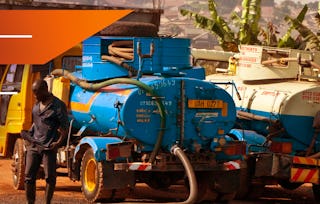
Drawing on Tamil Nadu's experience, the module examines approaches to strengthening and scaling E&T services, particularly by building on an existing private-sector-led service system. It explores choices around service delivery models, regulation, access to treatment facilities, and worker safety and inclusion. Through these experiences, learners will gain insights into the opportunities, challenges and trade-offs involved in strengthening E&T services.

What's included

5 videos4 readings

This module explores fecal sludge treatment as a critical link in the urban sanitation chain, drawing on lessons from TNUSSP. It covers planning, technology selection, design, operation and maintenance of treatment systems, including dedicated fecal sludge treatment plants (FSTPs) and co-treatment at sewage treatment plants (STPs).

What's included

4 videos3 readings

This module examines two important dimensions of inclusive sanitation: integrating gender into sanitation programmes and improving the well-being of sanitation workers. Drawing on experiences from Tamil Nadu, it explores how these priorities can be translated into action, from initial assessments and programme design to implementation and institutional strengthening. Note: This module focusses on TNUSSP's work on gender and sanitation workers. Initiatives on access with a focus on urban poor is covered in Module 2 of this MOOC.

What's included

6 videos3 readings

This concluding module provides an opportunity to reflect on the programme's journey, including the choices made, challenges encountered and lessons learnt. The module also brings together key lessons from across the sanitation chain and examines what it takes to sustain safe sanitation services at scale. It explores how policies, regulations, institutional arrangements and capacities can support the institutionalisation of sanitation initiatives, alongside the costing and financing considerations required for their long-term sustainability.

What's included

1 video2 readings

What's included

1 assignment

Instructor

Kavita Wankhade
Indian Institute for Human Settlements
1 Course2 learners

Explore more from Public Health

Why people choose Coursera for their career

Felipe M.

Learner since 2018
"To be able to take courses at my own pace and rhythm has been an amazing experience. I can learn whenever it fits my schedule and mood."

Jennifer J.

Learner since 2020
"I directly applied the concepts and skills I learned from my courses to an exciting new project at work."

Larry W.

Learner since 2021
"When I need courses on topics that my university doesn't offer, Coursera is one of the best places to go."

Chaitanya A.

"Learning isn't just about being better at your job: it's so much more than that. Coursera allows me to learn without limits."


What brings you to Coursera today?

Frequently asked questions