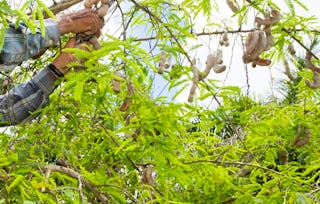
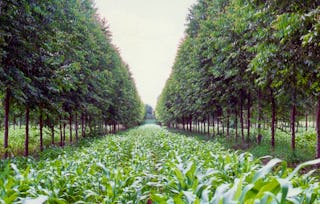
Conserving and restoring tropical forest landscapes offers an opportunity to address pressing environmental and social challenges. Effective conservation and restoration initiatives support multiple objectives, including ecosystem functioning, climate change mitigation and adaptation, food security, and economic growth.
This seven-week course explores the technical, social, and funding aspects of this timely topic. You will learn:
1. The importance of tropical forest landscapes and the actors and motivations driving restoration and conservation efforts.
2. How tropical forest ecosystems work, and how they relate to climate change and biodiversity.
3. Fundamental human dimensions to consider in any project, including human livelihoods and local property rights.
4. Conservation theory and dynamic aspects of conserving species and landscapes.
5. A spectrum of restoration strategies and key considerations for restoration, such as species selection and planting design.
6. How agroforestry systems can integrate trees and production to meet different goals.
7. Basic financial concepts and potential sources of conservation and restoration funding.
The materials in this course offer a selection of key content from the Yale School of the Environment and Yale Environmental Leadership & Training Initiative's yearlong Tropical Forest Landscapes: Conservation, Restoration & Sustainable Use online certificate program.
Welcome to the course! In this module, we will begin exploring what tropical forest landscapes are and why they are important. We will also discuss threats to forest landscapes and motivations for conserving and restoring them.
The important role of tropical forest landscapes•5 minutes
Threats to tropical forests and degradation drivers•4 minutes
Opportunities and priorities for conservation and restoration•2 minutes
Defining "forests"•7 minutes
How definitions and values shape management•8 minutes
Who conserves and restores, and why?•8 minutes
7 readings•Total 90 minutes
Course structure•10 minutes
Speaker introduction: Eva Garen•5 minutes
Forest and landscape restoration•45 minutes
Speaker introduction: Alicia Calle•5 minutes
What is a forest?•10 minutes
Conclusion and what's next•10 minutes
Pre-course Survey•5 minutes
2 assignments•Total 40 minutes
Importance, threats, and opportunities•20 minutes
Motivations for conservation and restoration•20 minutes
1 discussion prompt•Total 10 minutes
Forest management perspectives•10 minutes
Ecology of tropical forest landscapes
Module 2•3 hours to complete
Module details
In this module, we will examine tropical forests from an ecological lens. Understanding how natural ecological processes work will lay the groundwork for knowing how to develop effective conservation and restoration techniques, which we will cover in later modules.
Climate, history, and nutrients of tropical forests•9 minutes
What causes biological diversity?•5 minutes
Quantifying biodiversity•7 minutes
Theories on species coexistence•12 minutes
How forests influence climate•5 minutes
How climate change influences forests•8 minutes
Disturbance and equilibrium in forests•4 minutes
Documenting forest change - determing the baseline•2 minutes
Interactions between human and natural disturbances•7 minutes
4 readings•Total 30 minutes
Speaker introduction: Liza Comita•5 minutes
Climate change solutions•10 minutes
Drivers of degradation•10 minutes
Conclusion and what's next•5 minutes
4 assignments•Total 80 minutes
Characteristics of tropical forests•20 minutes
Biodiversity in tropical forests•20 minutes
Tropical forests and climate•20 minutes
Forest disturbance and degradation•20 minutes
1 discussion prompt•Total 10 minutes
Meet and greet•10 minutes
Social considerations for restoration and conservation
Module 3•3 hours to complete
Module details
Now that we have examined the ecological forces that shape tropical forest landscapes, we will shift our focus to people. In this module, we will consider how people are affected by and affect tropical forest landscapes and how considering local access to resources is a pivotal consideration when considering effective, equitable interventions.
Competition for resources and decision-making•4 minutes
Perspectives on livelihoods and conservation•6 minutes
Community forest management•8 minutes
Take home messages on livelihood considerations•2 minutes
Property rights vs. land tenure•6 minutes
Property rights as windows into society•7 minutes
Types of property•7 minutes
Key distinctions in different property rights•7 minutes
Hybrid systems of land tenure•5 minutes
Decoding multiple property relations in a landscape•3 minutes
Tenure security•8 minutes
6 readings•Total 45 minutes
Introduction to social considerations•10 minutes
Speaker introduction•5 minutes
Community forest management examples•10 minutes
Speaker introduction: Amity Doolittle•5 minutes
More on land tenure•10 minutes
Conclusion and what's next•5 minutes
2 assignments•Total 40 minutes
Livelihoods and conservation•20 minutes
Property rights•20 minutes
1 discussion prompt•Total 10 minutes
Share your experience with livelihoods and conservation•10 minutes
Conservation strategies
Module 4•3 hours to complete
Module details
In this module, we will look at some fundamental conservation concepts. At its core, conservation involves protecting existing habitat or forest cover, but selecting where to prioritize protection, is more complicated. Conservation decisions depend on a suite of considerations, such as how one measures biodiversity, how one considers changes in the landscape over time, and how conservation affects other goals, such as ecosystem function.
What's included
8 videos4 readings4 assignments
Show info about module content
8 videos•Total 56 minutes
Prioritizing areas to protect species•8 minutes
Biodiversity metrics•7 minutes
Species rarity•6 minutes
Diversity across landscapes•4 minutes
Dynamism across landscapes•10 minutes
Climate change and conservation•5 minutes
Conserving functional diversity•8 minutes
Animals and ecosystem services•8 minutes
4 readings•Total 65 minutes
Speaker introduction: Oswald Schmitz•5 minutes
Conservation practices•10 minutes
Climate and conservation•45 minutes
Conclusion and what's next•5 minutes
4 assignments•Total 80 minutes
Conservation fundamentals•20 minutes
Conserving biodiversity•20 minutes
Conservation and landscapes•20 minutes
Functional diversity and ecosystem services•20 minutes
Restoration fundamentals
Module 5•3 hours to complete
Module details
In this module, we will explore the process of restoration. As you will soon see, forest restoration encompasses a range of different practices. Selecting which practice to use will depend on a variety of considerations, starting with the level of degradation and the overall goals of the initiative.
What's included
12 videos7 readings3 assignments
Show info about module content
12 videos•Total 65 minutes
Definitions of restoration•5 minutes
Degradation levels and restoration treatments•6 minutes
Natural processes as the foundation for restoration•5 minutes
ANR: Reducing disturbance and competition•4 minutes
ANR: Facilitating growth and enrichment planting•5 minutes
ANR: Putting it all together•1 minute
Definitions of reforestation•5 minutes
Species selection•6 minutes
Tree planting design•10 minutes
Other approaches and putting it all together•4 minutes
In the last two modules, we looked at fundamental concepts for both conservation and restoration. Here, we will look at a third approach to sustainable land management, which integrates tree cover with other agricultural practices: agroforestry. Agroforestry systems have many different forms and applications - we will learn about several of them here.
Roles, adoption, and monitoring of AF systems•20 minutes
1 discussion prompt•Total 10 minutes
Selecting a strategy•10 minutes
Funding conservation and restoration
Module 7•4 hours to complete
Module details
In this last part of the course, we will learn about funding conservation and restoration initiatives. This module introduces some financial terminology and tools that are useful for communicating to investors, then discusses obtaining two different types of funding: philanthropic and public.
For more than 300 years, Yale University has inspired the minds that inspire the world. Based in New Haven, Connecticut, Yale brings people and ideas together for positive impact around the globe. A research university that focuses on students and encourages learning as an essential way of life, Yale is a place for connection, creativity, and innovation among cultures and across disciplines.
OK
Explore more from Environmental Science and Sustainability

When will I have access to the lectures and assignments?
To access the course materials, assignments and to earn a Certificate, you will need to purchase the Certificate experience when you enroll in a course. You can try a Free Trial instead, or apply for Financial Aid. The course may offer 'Full Course, No Certificate' instead. This option lets you see all course materials, submit required assessments, and get a final grade. This also means that you will not be able to purchase a Certificate experience.
What will I get if I purchase the Certificate?
When you purchase a Certificate you get access to all course materials, including graded assignments. Upon completing the course, your electronic Certificate will be added to your Accomplishments page - from there, you can print your Certificate or add it to your LinkedIn profile.
Is financial aid available?
Yes. In select learning programs, you can apply for financial aid or a scholarship if you can’t afford the enrollment fee. If fin aid or scholarship is available for your learning program selection, you’ll find a link to apply on the description page.