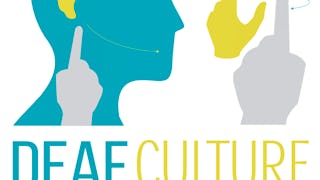
Sign Language courses can help you learn basic vocabulary, grammar structures, and conversational skills. You can build proficiency in interpreting gestures, facial expressions, and cultural nuances unique to the Deaf community. Many courses introduce tools like video resources for practice, interactive quizzes for vocabulary retention, and community forums for peer interaction, allowing you to engage with others and enhance your learning experience.

University of Cape Town
Skills you'll gain: Disabilities, Special Education, Cultural Responsiveness, Child Development, Teaching, Differentiated Instruction, Parent Communication, Advocacy, Non-Verbal Communication
Beginner · Course · 1 - 4 Weeks

University of Houston
Skills you'll gain: Disabilities, Social Justice, Culture, Diversity Awareness, Sociology, Communication Disorders, Social Sciences, Cultural Diversity, Language Learning, Special Education, Education and Training, Non-Verbal Communication, Civil Law

Beginner · Course · 1 - 3 Months

Khalifa University
Skills you'll gain: Oral Comprehension, Language Learning, Language Competency, Vocabulary, Cultural Sensitivity, Writing, Grammar, Oral Expression, Literacy, Verbal Communication Skills, Student-Centred Learning
Beginner · Specialization · 3 - 6 Months

University of California, Davis
Skills you'll gain: Peer Review, Language Learning, Spanish Language, Oral Expression, Grammar, Oral Comprehension, Vocabulary, Culture, Writing and Editing, Language Competency, Research, Writing
Beginner · Specialization · 3 - 6 Months

Yonsei University
Skills you'll gain: Language Competency, Grammar, Writing, Vocabulary, Literacy, Culture
Beginner · Course · 1 - 3 Months

University of California, Irvine
Skills you'll gain: Grammar, Vocabulary, English Language, Language Learning, Language Competency
Beginner · Specialization · 1 - 3 Months

Yale University
Skills you'll gain: Psychology, Child Development, Psychiatry, Mental Health, Human Development, Human Learning, Social Sciences, Behavioral Health, Sociology, Neurology, Critical Thinking, Scientific Methods, Problem Solving
Beginner · Course · 1 - 3 Months

Peking University
Skills you'll gain: Language Learning, Language Competency, Vocabulary, Oral Comprehension, Grammar, Communication
Mixed · Course · 1 - 3 Months

Shanghai Jiao Tong University
Skills you'll gain: Oral Comprehension, Language Learning, Cultural Sensitivity, Cultural Diversity, Culture, Vocabulary, Language Competency, Grammar
Beginner · Specialization · 3 - 6 Months

University of Pennsylvania
Skills you'll gain: Vital Signs, Respiration, Respiratory Care, Pulmonology, Pain Management, Physiology, Health Assessment, Cardiology, Thermal Management, Neurology, Patient Evaluation, Anatomy, Clinical Assessment
Mixed · Course · 1 - 3 Months
Georgia Institute of Technology
Skills you'll gain: Vocabulary, Verbal Communication Skills, English Language, Professionalism, Interpersonal Communications, Communication
Mixed · Course · 1 - 4 Weeks

Universiteit Leiden
Skills you'll gain: Language Competency, Language Learning, Language Disorders, Anthropology, Multilingualism, English Language, Communication Disorders, Cultural Diversity, Oral Comprehension, Interviewing Skills, Vocabulary, Grammar, Cultural Sensitivity, Interpersonal Communications, Social Sciences, Sociology, Research Methodologies
Beginner · Course · 1 - 3 Months
Sign language is a visual language that utilizes a combination of hand gestures, facial expressions, and body movements to communicate. It is primarily used by individuals who are deaf or have hearing impairments. Sign language has its own unique grammar and syntax, and varies across different regions and countries. It is a vital language for the deaf community and plays a crucial role in their communication and inclusion.
Learning sign language opens up communication with the Deaf community. Regular practice is key to memorizing signs and gaining fluency; practice with a partner or in front of a mirror. Communities like the American Sign Language (ASL) subreddit or local meetups can provide valuable practice opportunities. Work on real projects like signing along with videos or practicing everyday conversations.
To learn sign language, you will need to acquire the following skills:
Finger and Hand Dexterity: Sign language relies heavily on hand movements and gestures. Developing finger and hand dexterity is crucial to accurately communicate using sign language.
Visual Perception: Sign language involves observing and understanding various hand shapes, facial expressions, and body movements. Enhancing your visual perception skills will enable you to interpret and understand sign language more effectively.
Memory and Recall: Learning sign language requires memorizing signs, gestures, and their corresponding meanings. Developing strong memory and recall skills will help you retain and retrieve sign language information faster and more efficiently.
Linguistic Skills: While sign language is primarily a visual language, it also includes specific grammar, syntax, and structure. Developing linguistic skills, such as understanding sentence structure, word order, and grammar, will enable you to communicate accurately and fluently in sign language.
Cultural Awareness: Sign language is deeply rooted in Deaf culture. Learning about Deaf culture, norms, and etiquette will help you better understand and interact with the Deaf community, enhancing your sign language skills and communication abilities.
Having Sign Language skills can open up various job opportunities in the field of deaf education, interpretation, and advocacy. Here are some examples of jobs you can pursue:
Sign Language Interpreter: As a sign language interpreter, you can work in educational settings, healthcare facilities, government agencies, courtrooms, conferences, or private practice. Your role will involve facilitating communication between people who are deaf or hard of hearing and those who can hear.
Deaf Education Teacher: With sign language skills, you can become a teacher specialized in educating students who are deaf or hard of hearing. You may work in schools for the deaf, mainstream education settings, or as a private tutor.
Speech-Language Pathologist: Sign language skills can be beneficial if you choose to become a speech-language pathologist working with individuals who are deaf or have hearing impairments. Your role will involve assessing, diagnosing, and treating speech, language, and swallowing disorders.
Deaf Services Coordinator: In this role, you would coordinate and advocate for services and resources for individuals who are deaf or hard of hearing. This could include working in non-profit organizations, community centers, or government agencies.
Captioning Specialist: Captioning specialists create captions for various media content, making it accessible for individuals who are deaf or hard of hearing. This can involve captioning videos, television shows, movies, or live events.
Remember, these are just a few examples, and sign language skills can also be valuable in a range of other careers where communication skills, empathy, and cultural sensitivity are important.
People who are interested in communication, have a passion for learning new languages, and have a desire to connect with the deaf community are best suited for studying Sign Language. Additionally, individuals who are patient, empathetic, and have good visual-spatial skills tend to excel in learning and using Sign Language effectively.
There are several topics related to Sign Language that you can study. Here are a few suggestions:
American Sign Language (ASL): ASL is one of the most popular sign languages in North America. You can study the basics, grammar, vocabulary, and conversational skills of ASL.
Sign Language Linguistics: This topic explores the linguistic aspects of sign languages, including their structure, syntax, and phonology. You can learn about the various linguistic features of sign languages worldwide.
Interpretation and Translation: If you're interested in becoming a sign language interpreter or translator, you can study the specific skills and techniques required for effective communication between sign languages and spoken languages.
Deaf Culture and Awareness: This topic delves into the unique culture, history, and identity of the Deaf community. You can learn about the experiences, challenges, and achievements of Deaf individuals, as well as their cultural norms and values.
Sign Language Teaching: If you're interested in becoming a sign language teacher, you can study instructional methods, curriculum development, and assessment strategies specific to teaching sign languages to diverse learner groups.
Remember, these topics are just a starting point. There are many more areas of study within the broader field of Sign Language.
Online Sign Language courses offer a convenient and flexible way to enhance your knowledge or learn new Sign language is a visual language that utilizes a combination of hand gestures, facial expressions, and body movements to communicate. It is primarily used by individuals who are deaf or have hearing impairments. Sign language has its own unique grammar and syntax, and varies across different regions and countries. It is a vital language for the deaf community and plays a crucial role in their communication and inclusion. skills. Choose from a wide range of Sign Language courses offered by top universities and industry leaders tailored to various skill levels.
When looking to enhance your workforce's skills in Sign Language, it's crucial to select a course that aligns with their current abilities and learning objectives. Our Skills Dashboard is an invaluable tool for identifying skill gaps and choosing the most appropriate course for effective upskilling. For a comprehensive understanding of how our courses can benefit your employees, explore the enterprise solutions we offer. Discover more about our tailored programs at Coursera for Business here.