Virtual Reality Courses
Virtual Reality courses can help you learn 3D modeling, immersive storytelling, user interface design, and interaction techniques. You can build skills in spatial awareness, prototyping, and user testing to create engaging experiences. Many courses introduce tools like Unity and Unreal Engine, along with software for designing VR environments and animations, showing how these skills come together to produce captivating virtual worlds.
Popular Virtual Reality Courses and Certifications
Skills you'll gain: Train The Trainer, Virtual Environment, Design, Education Software and Technology, Educational Materials, Communication, Communication Strategies
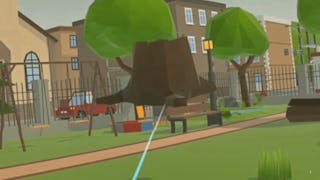
Skills you'll gain: Augmented and Virtual Reality (AR/VR), Virtual Reality, Virtual Environment, Unity Engine, Interaction Design, Video Game Development, 3D Assets, Software Installation
Skills you'll gain: Education Software and Technology, Virtual Environment, Teaching, Collaborative Software, Data Sharing, Google Workspace
Skills you'll gain: Canva (Software), Graphics Software, Graphic Design, Graphical Tools, Graphic and Visual Design Software, Graphic and Visual Design, 3D Modeling, Web Presence

Skills you'll gain: WordPress, Blogs, Content Management Systems, Web Content, Writing and Editing, Editing, Content Creation, User Accounts, E-Commerce, Content Management

What brings you to Coursera today?

Skills you'll gain: Finite Element Methods, Engineering Analysis, Simulation and Simulation Software, Simulations, Mechanical Design, Mathematical Modeling, Structural Engineering, Structural Analysis, 3D Modeling

Skills you'll gain: Virtual Machines, Cloud Security, Public Cloud, Amazon Web Services, Scalability, Virtual Networking, Private Cloud, Cloud Computing Architecture, Cloud Platforms, Cloud Computing, Cloud Infrastructure, Cloud Services, Cloud Deployment
Skills you'll gain: 3D Modeling, SketchUp (3D Modeling Software), Computer Graphics, Visualization (Computer Graphics), Design Software, Product Design, Graphic Design

Skills you'll gain: Unreal Engine, Video Game Development, Game Design, Computer Literacy

Skills you'll gain: Collaborative Software, Education Software and Technology, Digital pedagogy
Skills you'll gain: Virtual Machines, Microsoft Azure, Infrastructure As A Service (IaaS), Cloud Infrastructure, Cloud Computing Architecture, Virtualization and Virtual Machines, Cloud Deployment, Firewall, Cloud Computing, Network Security, Virtual Networking, Web Servers, Network Administration, Remote Access Systems, Application Deployment

Skills you'll gain: WordPress, Responsive Web Design, Web Content, Content Management Systems, Web Design, Web Presence, Web Design and Development, Content Management, Web Development
What brings you to Coursera today?
Best free Virtual Reality courses
High-quality free Virtual Reality courses you can start today.
- Improve Communication with Genial.lyCourseraBeginnerLess Than 2 HoursFree
- Create a Virtual Classroom using Google SlidesCourseraBeginnerLess Than 2 HoursFree
- Graphic design: pop your Linkedin with 3D effect using CanvaCourseraBeginnerLess Than 2 HoursFree
Best Virtual Reality courses from Coursera
Top-rated Virtual Reality courses offered by Coursera on Coursera.
- VR with Unity: Build your first Meta Quest VR ProjectCourseraIntermediateLess Than 2 HoursCoursera
- Use WordPress to Create a Blog for your BusinessCourseraBeginnerLess Than 2 HoursCoursera
- FEM - Linear, Nonlinear Analysis & Post-ProcessingCourseraIntermediateLess Than 2 HoursCoursera
Best Virtual Reality courses for beginners
Top-rated beginner-friendly Virtual Reality courses with no prerequisites.
- Create a Virtual Private Cloud (VPC) Using AWSCourseraBeginnerLess Than 2 HoursNo prerequisites
- SketchUp: how to start modelling simple 3D objectsCourseraBeginnerLess Than 2 HoursNo prerequisites
- Unreal para Principiantes: Crea videojuegosCourseraBeginnerLess Than 2 HoursNo prerequisites
Best short Virtual Reality courses
Quick Virtual Reality courses you can complete in a few hours or less.
- Encouraging Student Collaboration with PadletCourseraBeginnerLess Than 2 HoursQuick completion
- Azure: Create a Virtual Machine and Deploy a Web ServerCourseraBeginnerLess Than 2 HoursQuick completion
- Construye un sitio web con WordpressCourseraBeginnerLess Than 2 HoursQuick completion










