Image Processing Courses
Image processing courses can help you learn image enhancement, filtering techniques, and object recognition. You can build skills in color correction, noise reduction, and feature extraction. Many courses introduce tools like OpenCV and MATLAB, that support applying these techniques in practical scenarios, such as developing applications for facial recognition or image segmentation.
Popular Image Processing Courses and Certifications
 Status: Free Trial
Skills you'll gain: Prompt Engineering, Apache Spark, PyTorch (Machine Learning Library), Large Language Modeling, Transfer Learning, Model Evaluation, Computer Vision, Retrieval-Augmented Generation, Unsupervised Learning, Generative Model Architectures, Generative AI, PySpark, Vision Transformer (ViT), Keras (Neural Network Library), LLM Application, Supervised Learning, Vector Databases, Machine Learning, Python Programming, Data Science
Skills you'll gain: PyTorch (Machine Learning Library), Model Evaluation, Convolutional Neural Networks, Transfer Learning, Image Analysis, Deep Learning, Python Programming
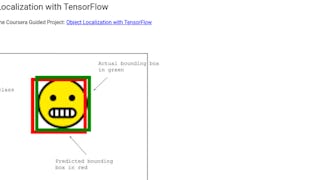
Skills you'll gain: Tensorflow, Keras (Neural Network Library), Data Synthesis, Convolutional Neural Networks, Image Analysis, Computer Vision, Artificial Neural Networks, Model Evaluation, Applied Machine Learning, Deep Learning, Machine Learning, Python Programming

Skills you'll gain: Model Evaluation, ChatGPT, Keras (Neural Network Library), Applied Machine Learning, Tensorflow, Data Preprocessing, Image Analysis, Machine Learning Methods, Data Import/Export, Machine Learning, Python Programming, Performance Tuning, Artificial Neural Networks
 Status: Free Trial
Skills you'll gain: Model Evaluation, Tensorflow, Supervised Learning, Artificial Neural Networks, Regression Analysis, Machine Learning Methods, Applied Machine Learning, Machine Learning Algorithms, Deep Learning, Image Analysis, Machine Learning, Random Forest Algorithm, Artificial Intelligence and Machine Learning (AI/ML), Decision Tree Learning, Natural Language Processing, Scikit Learn (Machine Learning Library), Convolutional Neural Networks, Computer Vision, Data Science, Python Programming
 Status: NewStatus: Free Trial
Logical Operations
Skills you'll gain: Data Structures, Data Processing, Virtual Machines, Verification And Validation, Program Development, Data Preprocessing, Python Programming, Debugging, Maintainability, Programming Principles, Application Development, Scripting, Scripting Languages, Computer Programming, Software Installation, Development Environment, Software Development, Computer Programming Tools, Functional Design, Cross Platform Development
What brings you to Coursera today?
 Status: Free Trial
University of Michigan
Skills you'll gain: Database Design, Data Processing, Web Scraping, Data Visualization, Relational Databases, Restful API, Web Services, SQL, Databases, Data Visualization Software, JSON, Interactive Data Visualization, Extensible Markup Language (XML), Data Structures, Programming Principles, Data Cleansing, Network Protocols, Data Analysis, Python Programming, Computer Programming
 Status: Free
Universitat Pompeu Fabra of Barcelona
Skills you'll gain: Digital Signal Processing, Music, Open Source Technology, Python Programming, Time Series Analysis and Forecasting, NumPy, Mathematical Modeling, Advanced Mathematics
 Status: Free Trial
Skills you'll gain: Restful API, Flask (Web Framework), Application Deployment, Unit Testing, Python Programming, Web Applications, Software Development Life Cycle, IBM Cloud, Artificial Intelligence, Code Review, Integrated Development Environments, Natural Language Processing, Programming Principles
 Status: Free Trial
Skills you'll gain: SQL, Relational Databases, Stored Procedure, Databases, Query Languages, Jupyter, Data Manipulation, Data Analysis, Pandas (Python Package), Transaction Processing, Python Programming
 Status: Free Trial
University of Michigan
Skills you'll gain: Matplotlib, Network Analysis, Social Network Analysis, Feature Engineering, Data Visualization, Pandas (Python Package), Data Visualization Software, Interactive Data Visualization, Model Evaluation, Scientific Visualization, Applied Machine Learning, Supervised Learning, Text Mining, Visualization (Computer Graphics), Data Manipulation, NumPy, Graph Theory, Data Preprocessing, Natural Language Processing, Python Programming
 Status: Free TrialStatus: AI skills
Skills you'll gain: NoSQL, Apache Spark, Data Warehousing, Database Design, Database Administration, Apache Hadoop, Extract, Transform, Load, Apache Airflow, Web Scraping, Relational Databases, Linux Commands, SQL, IBM Cognos Analytics, Data Store, Generative AI, Professional Networking, Data Import/Export, Python Programming, Data Analysis, Data Science
Searches related to image processing
In summary, here are 10 of our most popular image processing courses
- IBM AI Engineering: IBM
- Deep Learning with PyTorch : Image Segmentation : Coursera
- Object Localization with TensorFlow: Coursera
- Machine Learning with ChatGPT: Image Classification Model: Coursera
- AI Workflow: Machine Learning, Visual Recognition and NLP: IBM
- Certified Entry-Level Python Programmer (PCEP): Logical Operations
- Python for Everybody: University of Michigan
- Audio Signal Processing for Music Applications: Universitat Pompeu Fabra of Barcelona
- Developing AI Applications with Python and Flask: IBM
- Databases and SQL for Data Science with Python: IBM










