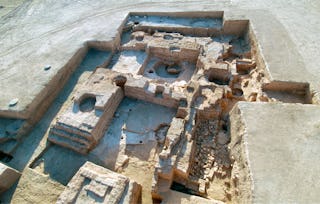
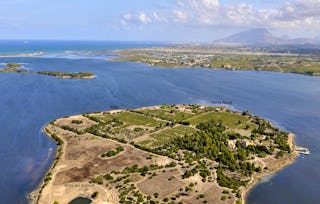
Quali sono le radici più profonde di quel mix di culture che chiamiamo ‘civiltà mediterranea’? Quali commistioni e quali scambi hanno prodotto il suo frutto più completo, ossia la città, come luogo delle comunità che plasmano il loro territorio e i loro spazi? Quali elementi formarono il sostrato condiviso di usanze, tradizioni, idee, scoperte ed innovazioni che hanno messo a confronto e mischiato popoli diversi per millenni. Cosa ha fatto, dalla ceramica alla metallurgia, dalla gastronomia all’architettura, dall’arte alla religione di un mare una culla di civiltà? L’archeologia può servire a sviluppare queste domande e cercare delle risposte non scontate, toccando con mano quello che gli antichi popoli del Mediterraneo ci hanno lasciato. Punto di osservazione privilegiato del corso è l’antica città fenicia di Mozia, posta al centro del “mare di mezzo”. Attraverso l’esperienza diretta dello scavo, con immagini prese dal vivo, il corso vuole far toccare a chi vorrà parteciparvi le tessere del grande mosaico della civiltà mediterranea. Il diario dello scavo - il libro dell’archeologo - e la piccozzina usata per scavare saranno i due strumenti che ci condurranno attraverso il mare a scoprire cosa furono realmente queste antiche città, e come il loro contributo è ancora parte della nostra memoria condivisa.
Das ist alles enthalten
3 Videos1 Lektüre1 Aufgabe
Infos zu Modulinhalt anzeigen
3 Videos•Insgesamt 25 Minuten
1.1 Sulle rotte dei Fenici•5 Minuten
1.2 Attraversare il Mediterraneo•10 Minuten
1.3 L’idea di città•11 Minuten
1 Lektüre•Insgesamt 10 Minuten
Letture consigliate•10 Minuten
1 Aufgabe•Insgesamt 30 Minuten
Quiz_Verso l'Ovest•30 Minuten
Modulo
Modul 2•1 Stunde abzuschließen
Moduldetails
Das ist alles enthalten
3 Videos1 Lektüre1 Aufgabe
Infos zu Modulinhalt anzeigen
3 Videos•Insgesamt 26 Minuten
2.1 Gerico e la città del Levante•6 Minuten
2.2 Il palazzo cuore della città•10 Minuten
2.3 Una società in rete•9 Minuten
1 Lektüre•Insgesamt 10 Minuten
Letture consigliate•10 Minuten
1 Aufgabe•Insgesamt 30 Minuten
Quiz_L'idea di città•30 Minuten
Alla scoperta di Mozia
Modul 3•1 Stunde abzuschließen
Moduldetails
Das ist alles enthalten
3 Videos1 Lektüre1 Aufgabe
Infos zu Modulinhalt anzeigen
3 Videos•Insgesamt 28 Minuten
3.1 Approdando a Mozia•6 Minuten
3.2 Mozia nella Preistoria tra Levantini e Micenei•8 Minuten
3.3 L'arrivo dei Fenici•15 Minuten
1 Lektüre•Insgesamt 10 Minuten
Letture consigliate•10 Minuten
1 Aufgabe•Insgesamt 30 Minuten
Alla scoperta di Mozia•30 Minuten
Ideologia e vita
Modul 4•1 Stunde abzuschließen
Moduldetails
Das ist alles enthalten
3 Videos1 Lektüre1 Aufgabe
Infos zu Modulinhalt anzeigen
3 Videos•Insgesamt 33 Minuten
4.1 Acque per la vita•9 Minuten
4.2 Le acque sacre e il mondo infero•10 Minuten
4.3 Il Tempio del Kothon•15 Minuten
1 Lektüre•Insgesamt 10 Minuten
Letture consigliate•10 Minuten
1 Aufgabe•Insgesamt 30 Minuten
Ideologia e Vita•30 Minuten
Stelle riflesse nelle acque
Modul 5•2 Stunden abzuschließen
Moduldetails
Das ist alles enthalten
4 Videos1 Lektüre1 Aufgabe
Infos zu Modulinhalt anzeigen
4 Videos•Insgesamt 60 Minuten
5.1 La piscina sacra•18 Minuten
5.2 Astarte: i mille volti della dea•14 Minuten
5.3 Il recinto sacro•12 Minuten
5.4 Antiche ancore•16 Minuten
1 Lektüre•Insgesamt 10 Minuten
Letture consigliate•10 Minuten
1 Aufgabe•Insgesamt 30 Minuten
Stelle riflesse nelle acque•30 Minuten
Un'identità da trasmettere
Modul 6•1 Stunde abzuschließen
Moduldetails
Das ist alles enthalten
3 Videos1 Lektüre1 Aufgabe
Infos zu Modulinhalt anzeigen
3 Videos•Insgesamt 38 Minuten
6.1 La necropoli: la vita riflessa nella morte•14 Minuten
6.2 Il Tophet•14 Minuten
6.3 Il Tophet e la città•11 Minuten
1 Lektüre•Insgesamt 10 Minuten
Letture consigliate•10 Minuten
1 Aufgabe•Insgesamt 30 Minuten
Un’identità da trasmettere•30 Minuten
Una società in cambiamento
Modul 7•1 Stunde abzuschließen
Moduldetails
Das ist alles enthalten
3 Videos1 Lektüre1 Aufgabe
Infos zu Modulinhalt anzeigen
3 Videos•Insgesamt 38 Minuten
7.1 L’abitato•12 Minuten
7.2 Reperti e Colori della vita quotidiana•14 Minuten
7.3 La produzioni di Mozia•13 Minuten
1 Lektüre•Insgesamt 10 Minuten
Letture consigliate•10 Minuten
1 Aufgabe•Insgesamt 30 Minuten
Una società in cambiamento•30 Minuten
Immagine di una città
Modul 8•2 Stunden abzuschließen
Moduldetails
Das ist alles enthalten
3 Videos1 Lektüre2 Aufgaben
Infos zu Modulinhalt anzeigen
3 Videos•Insgesamt 36 Minuten
8.1 È un esempio di commistione tra la cultura fenicia e quella etrusca•8 Minuten
8.2 Difesa e guerre•13 Minuten
8.3 Integrazione e distruzione: l’Auriga di Mozia•14 Minuten
1 Lektüre•Insgesamt 10 Minuten
Letture consigliate•10 Minuten
2 Aufgaben•Insgesamt 60 Minuten
Immagine di una città•30 Minuten
Questionario di verifica finale•30 Minuten
Dozent
Lehrkraftbewertungen
Wir haben alle Lernenden um Feedback zu unseren Dozenten gebeten, ausgehend von der Qualität ihres Unterrichtsstils.
Sapienza University of Rome, founded in 1303 by Pope Boniface VIII, is the oldest University in Rome and the largest in Europe.
Since its founding over 700 years ago, Sapienza has played an important role in Italian history and has been directly involved in key changes and developments in society, economics and politics. It has contributed to the development of Italian and European science and culture in all areas of knowledge.
The main campus, designed by Marcello Piacentini, was opened in 1935. It is situated close to the city centre, and is the largest in Europe - a real city within a city where teaching activities are integrated with libraries and museums as well as comprehensive student services. Faculties and Departments also carry out their activities in decentralized locations in different parts of the city. There are two other university campuses elsewhere in Lazio.
Sapienza offers a vast array of courses including degree programmes, PhD courses, one to two year professional courses, and Specialization Schools in many disciplines, run by 63 Departments and 11 Faculties.
When will I have access to the lectures and assignments?
To access the course materials, assignments and to earn a Certificate, you will need to purchase the Certificate experience when you enroll in a course. You can try a Free Trial instead, or apply for Financial Aid. The course may offer 'Full Course, No Certificate' instead. This option lets you see all course materials, submit required assessments, and get a final grade. This also means that you will not be able to purchase a Certificate experience.
What will I get if I purchase the Certificate?
When you purchase a Certificate you get access to all course materials, including graded assignments. Upon completing the course, your electronic Certificate will be added to your Accomplishments page - from there, you can print your Certificate or add it to your LinkedIn profile.
Is financial aid available?
Yes. In select learning programs, you can apply for financial aid or a scholarship if you can’t afford the enrollment fee. If fin aid or scholarship is available for your learning program selection, you’ll find a link to apply on the description page.