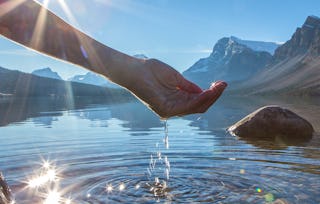
This course provides an introduction to key environmental concepts, current environmental challenges, and their impact on human health and well-being. Learners will explore different types of environments and understand how environmental agents—such as air and water pollutants—affect public health. The course also covers methods for estimating the burden of disease attributable to environmental factors. Emphasis is placed on the interconnectedness of environmental issues with the broader goals of sustainable development. By the end of the course, learners will have a foundational understanding of how environmental quality influences health outcomes and why sustainability is essential for long-term human and ecological well-being.
This module will introduce you to the concepts of the environment, current issues related to our environment, and sustainable development. You will learn about types of environments, how environmental agents determine our health and popular ways to estimate the burden on human health due to environmental factors. We will conclude this module by exploring the linkages between environmental issues and sustainable development.
What's included
8 videos4 readings3 assignments
Show info about module content
8 videos•Total 61 minutes
Course Introduction•2 minutes
Environment and Its Types   •7 minutes
Human Environment: The Two-Way Interaction  •9 minutes
Need, Want, and Greed: The Basis of Environmental Issues  •8 minutes
Integrating Environmental Issues and Sustainable Development •8 minutes
4 readings•Total 150 minutes
Essential Reading: Idea of Environment and Environmental Issues•30 minutes
Recommended Reading: Idea of Environment and Environmental Issues•30 minutes
Essential Reading: Environmental Issues Through the Lenses of Health and Sustainable Development•30 minutes
Recommended Reading: Environmental Issues Through the Lenses of Health and Sustainable Development•60 minutes
3 assignments•Total 81 minutes
Graded Quiz: Environmental Issues and Sustainable Development  •60 minutes
Idea of Environment and Environmental Issues •12 minutes
Environmental Issues Through the Lenses of Health and Sustainable Development•9 minutes
Environmental Issues: What Their Exposure Does and Why and How Should We Observe Them?
Module 2•4 hours to complete
Module details
This module will introduce you to the concepts of exposure, dose, and response and the need to study them. You will also learn about the dose-response model (DRM). You will be able to ask relevant questions when you are interested in observing what exposure to environmental issues does to humans. You will also explore prevalent study designs and how to select the correct type of study designs.
What's included
7 videos3 readings3 assignments
Show info about module content
7 videos•Total 63 minutes
Understanding Exposure, Dose, and Response  •8 minutes
Dose-Response Model (DRM): Significance and Steps Involved •7 minutes
Need for Studying Exposure, Dose, and Response •10 minutes
Descriptive Measures   •9 minutes
Measuring Disease Frequency: Part 1•9 minutes
Measuring Disease Frequency: Part 2•9 minutes
Epidemiologic Study Designs to Explore Environmental Issues and Choosing the Correct Study Design•10 minutes
3 readings•Total 120 minutes
Essential reading: Understanding Exposure, Dose, and Response; Importance of Studying Them•30 minutes
Recommended reading: Understanding Exposure, Dose, and Response; Importance of Studying Them•60 minutes
Recommended Reading: Environmental Issues: How to Observe What Exposure Does to Humans?•30 minutes
3 assignments•Total 81 minutes
Graded Quiz: Environmental Issues: What Their Exposure Does and Why and How Should We Observe Them?•60 minutes
Understanding Exposure, Dose, and Response: Importance of Studying Them  •9 minutes
Environmental Issues: How to Observe What Exposure Does to Humans?•12 minutes
Risk Assessment and Management (RAM) 
Module 3•5 hours to complete
Module details
This module will introduce you to the concept of risk and the need for assessing risk in the larger context of public health and public policy. You will learn about popular risk assessment and management frameworks and the importance of risk communication. You will also learn how risks vary based on perceptions, what are various intervention strategies, and some useful sources of data.
What's included
7 videos5 readings4 assignments
Show info about module content
7 videos•Total 59 minutes
Safety, Hazard, and Risk, and the Need for Analyzing Risk   •8 minutes
Risk Assessment and Management•9 minutes
Risk Management Frameworks •9 minutes
Risk Communication   •9 minutes
Risk Perception and Importance of Acknowledging Uncertainties in RAM   •9 minutes
Intervention Strategies to Manage Risk   •7 minutes
Data Quality and Data Sources for Environmental Health Topics   •9 minutes
5 readings•Total 180 minutes
Essential reading: Idea of Risk and RAM•30 minutes
Essential reading: Uncertainties in RAM, Intervention Strategies, and Data Sources  •30 minutes
Recommended reading: Uncertainties in RAM, Intervention Strategies, and Data Sources  •60 minutes
4 assignments•Total 81 minutes
Graded Quiz: Risk Assessment and Management (RAM) •60 minutes
Idea of Risk and RAM•3 minutes
Deconstructing RAM•9 minutes
Uncertainties in RAM, Intervention Strategies, and Data Sources  •9 minutes
Climate Change and Air Pollution 
Module 4•8 hours to complete
Module details
This module will introduce you to the idea of climate change, which is one of the greatest threats to all forms of life. You will conceptualize climate change, its impact on humans, and ways to mitigate it. You will also learn about air pollution, which is becoming a global issue, particularly in developing nations. This module will also help you identify ways to tackle air pollution.
What's included
7 videos4 readings3 assignments
Show info about module content
7 videos•Total 51 minutes
Climate Change and Its Mitigation Strategies •8 minutes
Climate Change and Human Exposure: Conceptual Model•7 minutes
Extreme Temperature, Vector-Borne Disease, and Food Production•7 minutes
Air Pollution: Pollutants and Sources of Exposure  •9 minutes
Effects of Air Pollution on Health   •6 minutes
Economic and Non-Economic Costs of Air Pollution   •8 minutes
Using Policy Instruments to Tackle Air Pollution   •7 minutes
4 readings•Total 335 minutes
Essential Reading: Climate Change•60 minutes
Recommended Reading: Climate Change•200 minutes
Essential Reading: Air Pollution•15 minutes
Recommended Reading: Air Pollution•60 minutes
3 assignments•Total 81 minutes
Graded Quiz: Climate Change and Air Pollution•60 minutes
Climate Change•9 minutes
Air Pollution•12 minutes
Issues Related to Water and Sanitation
Module 5•4 hours to complete
Module details
This module will discuss the topic of water, sanitation, and related aspects of hygiene in the context of the environment. You will understand the concept of water and sanitation as sectors and the interconnections between water, sanitation, and health. You will also learn about Sustainable Development Goal 6 (SDG-6) related to water and sanitation and recommended action points.
What's included
6 videos4 readings3 assignments
Show info about module content
6 videos•Total 41 minutes
Understanding Water, Sanitation, and Hygiene Sectors •7 minutes
Water, Sanitation, and Hygiene (WASH) and Health•5 minutes
Importance of Policy and Program Interventions Related to WASH•7 minutes
Water, Sanitation, and Hygiene (WASH) and Climate Change•7 minutes
Present Status and Issues Associated with Water, Sanitation, and Hygiene •7 minutes
Water and Sanitation Policy: Case Study from South Asia•8 minutes
4 readings•Total 120 minutes
Essential Reading: Water and Sanitation: Part I •15 minutes
Recommended Reading: Water and Sanitation: Part I •60 minutes
Essential Reading: Water and Sanitation: Part II•15 minutes
Recommended Reading: Water and Sanitation: Part II•30 minutes
3 assignments•Total 78 minutes
Graded Quiz: Issues Related to Water and Sanitation•60 minutes
Water and Sanitation: Part I•6 minutes
Water and Sanitation: Part II •12 minutes
Environmental Disasters    
Module 6•3 hours to complete
Module details
This module will discuss environmental disasters and their types, contextualizing them from 1950 to the present. You will examine some case studies of environmental disasters and their health implications. You will also explore population vulnerability to such exposures and discuss related health implications.
What's included
6 videos4 readings3 assignments
Show info about module content
6 videos•Total 42 minutes
Basic Concepts: Hazard, Vulnerability, Risk, and Resilience•7 minutes
Disasters: Environmental, Natural, and Anthropogenic•7 minutes
Minamata Bay Disaster: Case Study in Environmental Disasters•7 minutes
Health Implications of Environmental Disasters•7 minutes
Vulnerable Groups and Their Increased Risk•6 minutes
4 readings•Total 90 minutes
Essential Reading: Environmental Disasters: Definition and Present Context  •15 minutes
Recommended Reading: Environmental Disasters: Definition and Present Context  •30 minutes
Essential Reading: Environmental Disasters and Their Implications for Human Health•15 minutes
Recommended Reading: Environmental Disasters and Their Implications for Human Health•30 minutes
3 assignments•Total 78 minutes
Graded Quiz: Environmental Disasters•60 minutes
Environmental Disasters: Definition and Present Context•9 minutes
Environmental Disasters and Their Implications for Human Health•9 minutes
Environmental Law, Policy, and Governance
Module 7•4 hours to complete
Module details
This module will discuss the concepts of institutions, law, policy, and governance, which are interlinked and form the basis for environmental law and policy. You will learn about the development of international environmental law and policy and the backdrop against which they emerged. You will also explore some international policy instruments and conventions and their significance.
What's included
8 videos4 readings3 assignments
Show info about module content
8 videos•Total 60 minutes
International Law and International Environmental Law•7 minutes
Characteristics of Environmental Law and Policy•9 minutes
Important Principles of Environmental Law •10 minutes
Important Environmental Policy Instruments •9 minutes
Environmental Governance: What and How? •7 minutes
Global Environmental Governance: Challenges •8 minutes
Environmental Governance in Action: The Case of the Montreal Protocol•7 minutes
Video: Course Wrap-Up•3 minutes
4 readings•Total 105 minutes
Essential Reading: Environmental Law and Policy and Their Characteristics •15 minutes
Recommended Reading: Environmental Law and Policy and Their Characteristics •15 minutes
Graded Quiz: Environmental Law, Policy, and Governance •60 minutes
Environmental Law and Policy and Their Characteristics •12 minutes
Environmental Governance•9 minutes
Build toward a degree
This course is part of the following degree program(s) offered by O.P. Jindal Global University. If you are admitted and enroll, your completed coursework may count toward your degree learning and your progress can transfer with you.Âą
View eligible degrees
Build toward a degree
This course is part of the following degree program(s) offered by O.P. Jindal Global University. If you are admitted and enroll, your completed coursework may count toward your degree learning and your progress can transfer with you.Âą
ÂąSuccessful application and enrollment are required. Eligibility requirements apply. Each institution determines the number of credits recognized by completing this content that may count towards degree requirements, considering any existing credits you may have. Click on a specific course for more information.
O.P. Jindal Global University is recognised as an Institution of Eminence by the Ministry of Education, Government of India. It is also ranked the No. 1 Private University in India in the QS World University Rankings 2021. The university has 9000+ students across 12 schools that offer 52 degree programs. The university maintains a 1:9 faculty-student ratio.
It is a research-intensive university, deeply committed to institutional values of interdisciplinary and innovative learning, pluralism and rigorous scholarship, globalism, and international engagement.
OK
Explore more from Environmental Science and Sustainability
When will I have access to the lectures and assignments?
To access the course materials, assignments and to earn a Certificate, you will need to purchase the Certificate experience when you enroll in a course. You can try a Free Trial instead, or apply for Financial Aid. The course may offer 'Full Course, No Certificate' instead. This option lets you see all course materials, submit required assessments, and get a final grade. This also means that you will not be able to purchase a Certificate experience.
What will I get if I purchase the Certificate?
When you purchase a Certificate you get access to all course materials, including graded assignments. Upon completing the course, your electronic Certificate will be added to your Accomplishments page - from there, you can print your Certificate or add it to your LinkedIn profile.
Is financial aid available?
Yes. In select learning programs, you can apply for financial aid or a scholarship if you can’t afford the enrollment fee. If fin aid or scholarship is available for your learning program selection, you’ll find a link to apply on the description page.