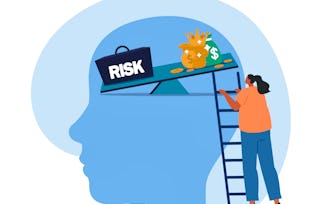
In today’s complex professional environments, ethical decision-making is essential for long-term success and effective leadership. This course dives deep into the psychological and social factors that shape our ethical judgments and behaviors. You'll explore how biases and stereotypes influence decisions, discover the power of social norms and conformity, and examine the crucial role emotions play in ethical reasoning. Additionally, you'll learn about the nuanced effects of power and status on ethical actions, including how to manage power responsibly and effectively.
Through engaging content, real-world scenarios, and actionable strategies, you’ll gain practical insights into navigating ethical dilemmas, enhancing emotional intelligence, and fostering integrity-driven leadership. Ideal for professionals at all stages of their careers, this course provides essential tools to build ethical awareness, improve interpersonal relationships, and contribute positively to organizational culture. Strengthen your capacity for principled decision-making and position yourself as an ethical leader in your field.
In this module, learners explore the cognitive foundations of social biases by examining stereotypes and situational influences on behavior. Through an exploration of stereotypes as schemas, learners will uncover how cognitive shortcuts shape judgments, social perceptions, and ethical decision-making. Students will also investigate the impact of situational forces on behavior, confronting the pervasive influence of stereotypes, the fundamental attribution error, and empathy gaps. By exploring the balance between cognitive efficiency and ethical accuracy, learners will critically assess their own decision-making processes in social contexts.
What's included
12 videos1 assignment3 discussion prompts
Show info about module content
12 videos•Total 64 minutes
Introduction to the Course•4 minutes
Introduction to Stereotypes•7 minutes
Bottom-up vs. Top-down Processing•4 minutes
Stereotypes as Person Schemas•7 minutes
Problems with Stereotypes: Judgment Errors•7 minutes
Problems with Stereotypes: Prescriptiveness•4 minutes
Stereotypes Summary•2 minutes
The Underappreciated Power of the Situation•6 minutes
The Fundamental Attribution Error•5 minutes
Hot-Cold Empathy Gaps•7 minutes
The Illusion of Courage•9 minutes
Module 1 Conclusion•2 minutes
1 assignment•Total 30 minutes
Module 1 Quiz•30 minutes
3 discussion prompts•Total 90 minutes
Reflection on Stereotypes•30 minutes
Stereotypes and Judgments•30 minutes
Misattribution Reflection•30 minutes
Social Influence and Ethical Behavior: Conformity, Compliance, and Resistance
Module 2•3 hours to complete
Module details
In Module 2, learners explore the profound effects of social influence on ethical decision-making and behavior. This module examines conformity and compliance, uncovering the subtle ways that social norms, behavioral contagion, and interpersonal pressures shape ethical actions. Students learn how individuals often underestimate the power of social influences, leading to unintended ethical compromises, and discover strategies to resist unethical conformity and compliance in their daily lives.
What's included
9 videos1 assignment3 discussion prompts
Show info about module content
9 videos•Total 46 minutes
Introduction to Module 2 and Conformity•8 minutes
Social Norms•5 minutes
Behavioral Contagion•4 minutes
Introduction to Compliance•3 minutes
Underestimating Compliance•6 minutes
Saying No to Unethical Requests•7 minutes
Saying No to Romantic Requests•7 minutes
Bad Actors•5 minutes
Module 2 Conclusion•1 minute
1 assignment•Total 30 minutes
Module 2 Quiz•30 minutes
3 discussion prompts•Total 90 minutes
Behavioral Contagion Discussion•30 minutes
Reluctant Agreement Discussion•30 minutes
Deception Discussion•30 minutes
Moral Emotions: Intuition, Reason, and Ethical Behavior
Module 3•3 hours to complete
Module details
Module 3 explores the crucial role of emotions in ethical decision-making and moral judgments. This module addresses how moral emotions—including other-condemning emotions (like anger, disgust, contempt), other-suffering emotions (empathy, compassion), other-praising emotions (gratitude, awe, elevation), and self-conscious emotions (guilt, shame, pride, embarrassment)—influence ethical behavior. Students will examine how moral decisions often arise from intuitive, emotional responses rather than pure rational reasoning, and how recognizing these emotional influences can enhance ethical behavior and interpersonal understanding.
What's included
9 videos1 assignment3 discussion prompts
Show info about module content
9 videos•Total 49 minutes
Module 3: Moral Emotions•5 minutes
Moral Dumbfounding•4 minutes
What Are Emotions?•12 minutes
What Are Moral Emotions?•3 minutes
Other-Condemning Emotions•6 minutes
Other-Suffering Emotions•4 minutes
Other-Praising Emotion•6 minutes
Self-Conscious Emotions•9 minutes
Module 3 Conclusion•1 minute
1 assignment•Total 30 minutes
Module 3 Quiz•30 minutes
3 discussion prompts•Total 90 minutes
Moral Intuition Discussion•30 minutes
Emotions and Moral Judgments•30 minutes
Personal Experience Discussion•30 minutes
Power and Ethics: Understanding Influence, Responsibility, and Accountability
Module 4•3 hours to complete
Module details
Module 4 examines how power and status influence ethical behavior, exploring when and why power leads individuals toward ethical or unethical actions. Students will understand the relational nature of power, the distinction between power and status, and the psychological effects that holding power can produce. This module delves into scenarios where power corrupts or empowers, and explores strategies to wield power responsibly and ethically.
What's included
8 videos1 assignment3 discussion prompts
Show info about module content
8 videos•Total 45 minutes
Introduction to Power•2 minutes
Definition of Power & Status•6 minutes
Power & Action•10 minutes
Power Without Status•6 minutes
Power & Indirect Unethical Acts•6 minutes
Power & Perspective-Taking•6 minutes
Power & Responsibility•8 minutes
Module 4 Conclusion•2 minutes
1 assignment•Total 30 minutes
Module 4 Quiz•30 minutes
3 discussion prompts•Total 90 minutes
Power and Status Discussion•30 minutes
How Power Flows: Discussion•30 minutes
Power and Perspective: Discussion•30 minutes
Instructor
Instructor ratings
Instructor ratings
We asked all learners to give feedback on our instructors based on the quality of their teaching style.
The University of Pennsylvania (commonly referred to as Penn) is a private university, located in Philadelphia, Pennsylvania, United States. A member of the Ivy League, Penn is the fourth-oldest institution of higher education in the United States, and considers itself to be the first university in the United States with both undergraduate and graduate studies.
When will I have access to the lectures and assignments?
To access the course materials, assignments and to earn a Certificate, you will need to purchase the Certificate experience when you enroll in a course. You can try a Free Trial instead, or apply for Financial Aid. The course may offer 'Full Course, No Certificate' instead. This option lets you see all course materials, submit required assessments, and get a final grade. This also means that you will not be able to purchase a Certificate experience.
What will I get if I purchase the Certificate?
When you purchase a Certificate you get access to all course materials, including graded assignments. Upon completing the course, your electronic Certificate will be added to your Accomplishments page - from there, you can print your Certificate or add it to your LinkedIn profile.
Is financial aid available?
Yes. In select learning programs, you can apply for financial aid or a scholarship if you can’t afford the enrollment fee. If fin aid or scholarship is available for your learning program selection, you’ll find a link to apply on the description page.