When you enroll in this course, you'll also be enrolled in this Specialization.
Learn new concepts from industry experts
Gain a foundational understanding of a subject or tool
Develop job-relevant skills with hands-on projects
Earn a shareable career certificate
There are 4 modules in this course
This course is all about infectious diseases. We’ve selected four disease areas — HIV, Malaria, Emerging Infectious Diseases (Ebola and Zika), and TB — and we will go through each in turn. We’ve selected these diseases because they span a range of different types of disease and allow us to look at important issues that relevance of other diseases too. We will look at each disease in the same way: we begin by looking at the aetiology and epidemiology of the diseases. We then show how data on this disease can be used to understand important trends and patterns. We then focus on the interventions that can be used to address that disease - typically spanning both prevention and treatment - and consider how policies have been developed to address the disease. We finish by reflecting on the whole topic area of the disease with an external expert.
This week you will look at HIV, an infectious disease that emerged in the 1980s and has become one of the leading causes of death in many countries. You will first look at how HIV affects the immune system and causes AIDS and how it spreads from person to person. You will then review the state of the global epidemic and look at current trends in specific countries. There are many interventions that are available to help prevent transmission and to treat persons who are HIV-positive, and you will review the evidence for each. You will review and critique the strategy that has been developed to ‘end AIDS’ by UNAIDS, the UN agency tasked with leading the fight against AIDS.
Discuss data for your own country of choice•25 minutes
Fast-track strategy•20 minutes
2 plugins•Total 30 minutes
Fast-track Strategy•15 minutes
Malaria
Module 2•4 hours to complete
Module details
Malaria is one of the most high-profile infectious diseases and a major cause of death in young children in many parts of the world. You will first learn about the complicated way that malaria spreads from person to person via mosquitoes. This knowledge will help you to make sense of the relationship between climate and the global distribution of malaria, and you will explore this yourself using fine-scale geographic data. You will then look at the available interventions for combatting malaria and review and critique the WHO’s strategy for combating Malaria.
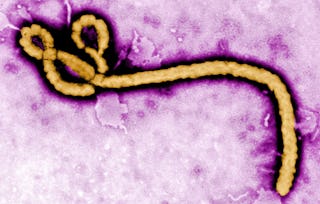
An important theme in infectious disease research is that new outbreaks can occur. You will look at two diseases that have emerged (or re-emerged) recently – Ebola and Zika. For each in turn, you will learn about what the disease is, how it is spread and the story of the most recent outbreaks. You will also learn about the challenges of trying to understand the nature of an epidemic whilst is it starting to spread, and you will examine data from the 2014 West Africa Ebola epidemic yourself. Finally, you will review strategies have been developed for responding to outbreaks and look at some of the development that are underway that should improve our ability to respond in the future.
The infectious disease that probably causes the most death worldwide today than any other is Tuberculosis, an ancient diseases that is posing new challenges in high and low income settings. Study this week begins with a review of how TB spreads and causes diseases and a close look at spread of disease in several different global settings. The mainstay approach has been providing treatment and you will learn how this has been done and how new approaches and seeking to do more. Prevention of TB touches on many aspects of health care and development, as well as pharmaceuticals and vaccine development, and you will learn about all the current avenues of research and implementation. Finally, you will read and critique current international strategies for ending the TB epidemic.
Imperial College London is a world top ten university with an international reputation for excellence in science, engineering, medicine and business. located in the heart of London. Imperial is a multidisciplinary space for education, research, translation and commercialisation, harnessing science and innovation to tackle global challenges.
Imperial students benefit from a world-leading, inclusive educational experience, rooted in the College’s world-leading research. Our online courses are designed to promote interactivity, learning and the development of core skills, through the use of cutting-edge digital technology.
When will I have access to the lectures and assignments?
To access the course materials, assignments and to earn a Certificate, you will need to purchase the Certificate experience when you enroll in a course. You can try a Free Trial instead, or apply for Financial Aid. The course may offer 'Full Course, No Certificate' instead. This option lets you see all course materials, submit required assessments, and get a final grade. This also means that you will not be able to purchase a Certificate experience.
What will I get if I subscribe to this Specialization?
When you enroll in the course, you get access to all of the courses in the Specialization, and you earn a certificate when you complete the work. Your electronic Certificate will be added to your Accomplishments page - from there, you can print your Certificate or add it to your LinkedIn profile.
Is financial aid available?
Yes. In select learning programs, you can apply for financial aid or a scholarship if you can’t afford the enrollment fee. If fin aid or scholarship is available for your learning program selection, you’ll find a link to apply on the description page.