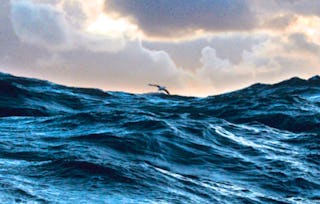
In this course you can learn about the mechanics of global weather, the foundations of ocean meteorology, predictive modeling and how sailors receive data via satellite and use high-performance navigation software.
This course looks at oceanic meteorology and climatology through the lens of the sport of sailing.
You will gain a basic knowledge of meteorology needed by sailors to take part in a regatta such as the Barcelona World Race, the only double-handed, round the world regatta with no stops.
You will learn about the strategies employed during a round the world regatta and how these are put to use on board the latest ocean racing yachts.
In this module you will learn the foundations for an understanding of general and in particular maritime meteorology. What are the factors and engines powering the weather? What do we need to know to understand the weather phenomena we experience every day? What do ocean sailors need to know to predict the weather? Instructors: Tomàs Molina, Santi Serrat
What's included
13 videos13 readings1 assignment
Show info about module content
13 videos•Total 102 minutes
Understanding meteorology - Introduction•1 minute
Video 1.1.1. From perception to data•14 minutes
Video 1.1.2. Towards numerical models•22 minutes
Video 1.1.3. The evolution of meteorological information in ocean regattas•14 minutes
Video 1.2. The four local weather engines•4 minutes
Video 1.2.1 The first engine: Orography•8 minutes
Video 1.2.1. Case Study•2 minutes
Video 1.2.2. The second engine: Convection•8 minutes
Video 1.2.3. The third engine: Convergence and Divergence•4 minutes
Video 1.2.4 The fourth engine: Fronts•5 minutes
Video 1.3.1 General atmospheric circulation•7 minutes
Video 1.3.1.4. Sailor experiences•5 minutes
Video 1.3.2 The mechanics of global weather•9 minutes
13 readings•Total 130 minutes
In this course...•10 minutes
In this module...•10 minutes
1.1.1. From perception to data•10 minutes
1.1.2. Towards numerical models•10 minutes
1.1.3. The evolution of meteorological information in ocean regattas•10 minutes
1.2. The four local weather engines•10 minutes
1.2.1. The first engine: Orography•10 minutes
1.2.2. The second engine - Convection•10 minutes
1.2.3.The third engine: Convergence and Divergence•10 minutes
1.2.4 The fourth engine: Fronts•10 minutes
1.3 The atmosphere and the global mechanics of weather•10 minutes
1.3.1. General atmospheric circulation•10 minutes
1.3.2 The mechanics of global weather•10 minutes
1 assignment•Total 30 minutes
Quiz 1. Understanding meteorology•30 minutes
Meteorological predictions
Module 2•4 hours to complete
Module details
In this module you will learn:
How meteorological predictions are made. What numerical weather models and equations look like. This will be explained by Tomàs Molina in Module 2.1
You will look at the forecasting structures that help us to interpret the information given by the models:
Advection, troughs, ridges, barometric swamps and low pressure systems. These will be explained by Tomàs Molina in Module 2.2
What the basic prediction models used by sailors are. This will be explained by Marcel van Triest in Module 2.3
Remember you can access to the help forum . If you are experiencing difficulty learning or accessing course content, or if you simply want more information.
What's included
10 videos12 readings1 assignment
Show info about module content
10 videos•Total 64 minutes
Video 2. Meteorological predictions – Introduction•1 minute
Video 2.1.1 What are prediction models and how are they made?•19 minutes
Video 2.1.2 Reliability and accuracy of models. Predictability•11 minutes
Video 2.2.1 Advection•4 minutes
Video 2.2.2 Troughs•3 minutes
Video 2.2.3 Ridges•4 minutes
Video 2.2.4 Flat low•2 minutes
Video 2.2.5 Low pressure systems•14 minutes
Video 2.3.1 Types of information available•2 minutes
Video 2.3.2 The GRIB format•4 minutes
12 readings•Total 120 minutes
2.1. Predictions•10 minutes
2.1.1 What are prediction models and how are they made?•10 minutes
2.1.2 Reliability and accuracy of models. Predictability•10 minutes
2.2 Forecasting structures•10 minutes
2.2.1 Advection•10 minutes
2.2.2 Troughs•10 minutes
2.2.3 Ridges•10 minutes
2.2.4 Flat low•10 minutes
2.2.5 Low pressure systems•10 minutes
2.3 Basic prediction models at sea•10 minutes
2.3.1 Types of information available•10 minutes
2.3.2 The GRIB format•10 minutes
1 assignment•Total 30 minutes
Quiz 2. Meteorological predictions•30 minutes
The sailor as meteorologist
Module 3•5 hours to complete
Module details
In this module you will learn how sailors use meteorology to sail around the world and to win round the world regattas.
All of their interest is focussed on the wind and they need theoretical, but above all practical, knowledge to help them to take the correct decisions at sea.
Remember you can access to the help forum.
If you are experiencing difficulty learning or accessing course content, or if you simply want more information.
What's included
14 videos17 readings1 assignment
Show info about module content
14 videos•Total 83 minutes
Video 3. The sailor as meteorologist - Introduction•2 minutes
Video 3.1 The meteorological routing•3 minutes
Video 3.1.2 Polar curves•3 minutes
Video 3.1.3 Route calculation•16 minutes
Video 3.2.1 Medium and long term•15 minutes
Video 3.2.2 Short term•7 minutes
Video 3.3.1 The workstation•2 minutes
Video 3.3.2 Onboard weather routing•14 minutes
Video 3.4.1 The mast•4 minutes
Video 3.4.2 Onboard electronics•1 minute
Video 3.4.3 Satellite communications•4 minutes
Video 3.4.4 The autopilot•4 minutes
Video 3.4.5 The central computer•4 minutes
Video 3.4.6 The main issues with onboard electronics•5 minutes
17 readings•Total 170 minutes
3.1 The meteorological routing•10 minutes
3.1.1 Tools•10 minutes
3.1.2 Polar curves•10 minutes
3.1.3 Route calculation•10 minutes
3.2 Strategy and tactics - Introduction•10 minutes
3.2.1 Medium and long term•10 minutes
3.2.2 Short term•10 minutes
3.3 The sailor's daily routine - Introduction•10 minutes
3.3.1 The workstation•10 minutes
3.3.2 Onboard weather routing•10 minutes
3.4 Sensors and measuring instruments on a racing yacht - Introduction•10 minutes
3.4.1 The mast•10 minutes
3.4.2 Onboard electronics•10 minutes
3.4.3 Satellite communications•10 minutes
3.4.4 The autopilot•10 minutes
3.4.5 The central computer•10 minutes
3.4.6 The main issues with onboard electronics•10 minutes
1 assignment•Total 30 minutes
Quiz 3. The sailor as meteorologist•30 minutes
Ocean regattas and meteorology
Module 4•2 hours to complete
Module details
The science of meteorology is a fundamental part of any type of ocean navigation. In the case of yacht racing, it's importance is even greater, given that the wind is the force propelling the boat and is the key factor in formulating the strategy and tactics needed to win. However, the lead role of meteorology in a regatta is for safety, and that is something that the race organisers always make a priority.
In Module 4.1 the general climatology for a regatta such as the Barcelona World Race is described, as well as the preparations the skippers make with the sails, the boat and other personal kit.
In Module 4.2 you will learn how the Race Management of a regatta work together with the meteorologist to ensure that the information reaches the boats and to guarantee the maximum safety levels for the crews.
In Module 4.3 the type of information the crews receive whilst out on the oceans is described, as well as the telecommunications systems used to make this happen.
In Module 4.4 you will learn how weather information impacts on safety and you will look at the specific case of ice detection in the Southern Ocean.
What's included
7 videos6 readings1 assignment
Show info about module content
7 videos•Total 31 minutes
Video 4. Introduction•1 minute
Video 4.1 The planning of a round the world regatta and climatology•5 minutes
Video 4.2 Meteorology and the organisation of a round the world regatta•4 minutes
Video 4.2.1 The meteorologist in a round the world regatta•3 minutes
Video 4.2.2 The Race Directors and weather information•3 minutes
Video 4.3 Onboard information during the Barcelona World Race•3 minutes
Video 4.4 Meteorology and safety•11 minutes
6 readings•Total 60 minutes
4.1. The planning of a round the world regatta and climatology•10 minutes
4.2 Meteorology and the organisation of a round the world regatta•10 minutes
4.2.1 The meteorologist in a round the world regatta•10 minutes
4.2.2 The Race Directors and weather information•10 minutes
4.3 Onboard information during the Barcelona World Race•10 minutes
4.4 Meteorology and safety•10 minutes
1 assignment•Total 30 minutes
QUIZ 4•30 minutes
Climatology and meteorology in the Barcelona World Race: From the Mediterranean Sea to the Indian Ocean
Module 5•3 hours to complete
Module details
We begin now by going over the Barcelona World Race round the world route.
In Module 5 you will learn about general and specific strategies for sailing from Barcelona to the Indian Ocean.
What's included
7 videos6 readings1 assignment
Show info about module content
7 videos•Total 73 minutes
5. Video Introduction•1 minute
Video 5.1 The Mediterranean: Meteorological aspects of interest•23 minutes
Video 5.1.1 From Barcelona to the Gibraltar Strait•11 minutes
Video 5.1.2 From the Gibraltar Strait to Barcelona•5 minutes
Video 5.2 The Atlantic: From North to South. General strategy•1 minute
Video 5.2.1 The North Atlantic: from Gibraltar to the Equator•18 minutes
Video 5.2.2 The South Atlantic: From the Equator to the Indian Ocean•13 minutes
6 readings•Total 60 minutes
5.1 The Mediterranean: Meteorological aspects of interest•10 minutes
5.1.1 From Barcelona to the Gibraltar Strait•10 minutes
5.1.2 From the Gibraltar Strait to Barcelona•10 minutes
5.2 The Atlantic: From North to South. General strategy•10 minutes
5.2.1 The North Atlantic: from Gibraltar to the Equator•10 minutes
5.2.2 The South Atlantic: From the Equator to the Indian Ocean•10 minutes
1 assignment•Total 30 minutes
Quiz 5. Climatology and meteorology in the Barcelona World Race: From the Mediterranean Sea to the Indian Ocean•30 minutes
Climatology and meteorology in the Barcelona World Race: From the Indian Ocean to Gibraltar
Module 6•2 hours to complete
Module details
In this module we are going to study the meteorology and strategy for the seas of the south of the planet. Down in the Southern Ocean is where the sailors go up against the toughest sailing conditions in the regatta and where they must also abide by safety restrictions due to the danger of floating ice.
On the following pages, Marcel van Triest will analyse general strategy and also look at case studies from the Barcelona World Race 2010/11. In that edition, ice gates were used to restrict the fleet's descent south and to avoid boats heading into danger zones. For the 2014/15 edition, however, ice gates have been substituted by a “restriction zone”, a polygon with some 72 sides surrounding the Antarctic.
In this video Marcel explains the general context of the passage through the Southern Ocean and reviews the routes taken in the 2010/11 edition of the race. They key difference in this edition is that the regatta does not take the boats through Cook Strait (New Zealand).
What's included
6 videos5 readings1 assignment
Show info about module content
6 videos•Total 46 minutes
Video 6.1 A general approach to the Southern Ocean - Introduction•4 minutes
Video 6.1.1 The Southern Indian Ocean•15 minutes
Video 6.1.2 The Southern Pacific Ocean•12 minutes
Video 6.2 The Atlantic: From South to North. General approach•2 minutes
Video 6.2.1 The South Atlantic: From Cape Horn to the Equator•8 minutes
Video 6.2.2 The North Atlantic: From the Equator to the Gibraltar Strait•6 minutes
5 readings•Total 50 minutes
6.1.1 The Southern Indian Ocean•10 minutes
6.1.2 The Southern Pacific Ocean•10 minutes
6.2 The Atlantic: From South to North. General approach•10 minutes
6.2.1 The South Atlantic: From Cape Horn to the Equator•10 minutes
6.2.2 The North Atlantic: From the Equator to the Gibraltar Strait•10 minutes
1 assignment•Total 30 minutes
Quiz 6. Climatology and meteorology in the Barcelona World Race: From the Indian Ocean to Gibraltar•30 minutes
Instructor
Instructor ratings
Instructor ratings
We asked all learners to give feedback on our instructors based on the quality of their teaching style.
The University of Barcelona is the most formidable public institution of higher education in Catalonia, catering to the needs of the greatest number of students and delivering the broadest and most comprehensive offering in higher educational courses. The UB is also the principal centre of university research in Spain and has become a European benchmark for research activity, both in terms of the number of research programmes it conducts and the excellence these have achieved.
The Barcelona Foundation for Ocean Sailing (FNOB), was created with three strategic objectives in mind: sports, industry & technology and communication, and devised to undertake a series of projects geared towards promoting and boosting activities related to top-level ocean sailing.
To fulfil these objectives, the FNOB defined four key strategic areas: R&D, Education and Knowledge, Science & Technology and the Environment.
"To be able to take courses at my own pace and rhythm has been an amazing experience. I can learn whenever it fits my schedule and mood."
Jennifer J.
Learner since 2020
"I directly applied the concepts and skills I learned from my courses to an exciting new project at work."
Larry W.
Learner since 2021
"When I need courses on topics that my university doesn't offer, Coursera is one of the best places to go."
Chaitanya A.
"Learning isn't just about being better at your job: it's so much more than that. Coursera allows me to learn without limits."
Learner reviews
4.5
145 reviews
5 stars
65.51%
4 stars
25.51%
3 stars
4.82%
2 stars
0.68%
1 star
3.44%
Showing 3 of 145
N
NG
4·
Reviewed on Mar 12, 2021
I found the course very informative, a nice introduction to world meteorology. Thanks for sharing.
R
RH
5·
Reviewed on Feb 4, 2026
Extremely well presented, outstanding knowledge shared, very engaging presenters.
M
MJ
5·
Reviewed on Mar 23, 2021
As a deck cadet learning meteorology this really helped show the practical weather considerations as well as giving a nice picture of the global circulation system.
When will I have access to the lectures and assignments?
To access the course materials, assignments and to earn a Certificate, you will need to purchase the Certificate experience when you enroll in a course. You can try a Free Trial instead, or apply for Financial Aid. The course may offer 'Full Course, No Certificate' instead. This option lets you see all course materials, submit required assessments, and get a final grade. This also means that you will not be able to purchase a Certificate experience.
What will I get if I purchase the Certificate?
When you purchase a Certificate you get access to all course materials, including graded assignments. Upon completing the course, your electronic Certificate will be added to your Accomplishments page - from there, you can print your Certificate or add it to your LinkedIn profile.
Is financial aid available?
Yes. In select learning programs, you can apply for financial aid or a scholarship if you can’t afford the enrollment fee. If fin aid or scholarship is available for your learning program selection, you’ll find a link to apply on the description page.