Plasma Physics Courses
Plasma physics courses can help you learn about charged particle dynamics, plasma confinement techniques, and wave-particle interactions. You can build skills in diagnostic techniques, numerical simulations, and understanding magnetohydrodynamics. Many courses introduce tools such as computational software for modeling plasma behavior and experimental setups for studying fusion reactions, allowing you to apply your knowledge in both research and practical applications.
Popular Plasma Physics Courses and Certifications
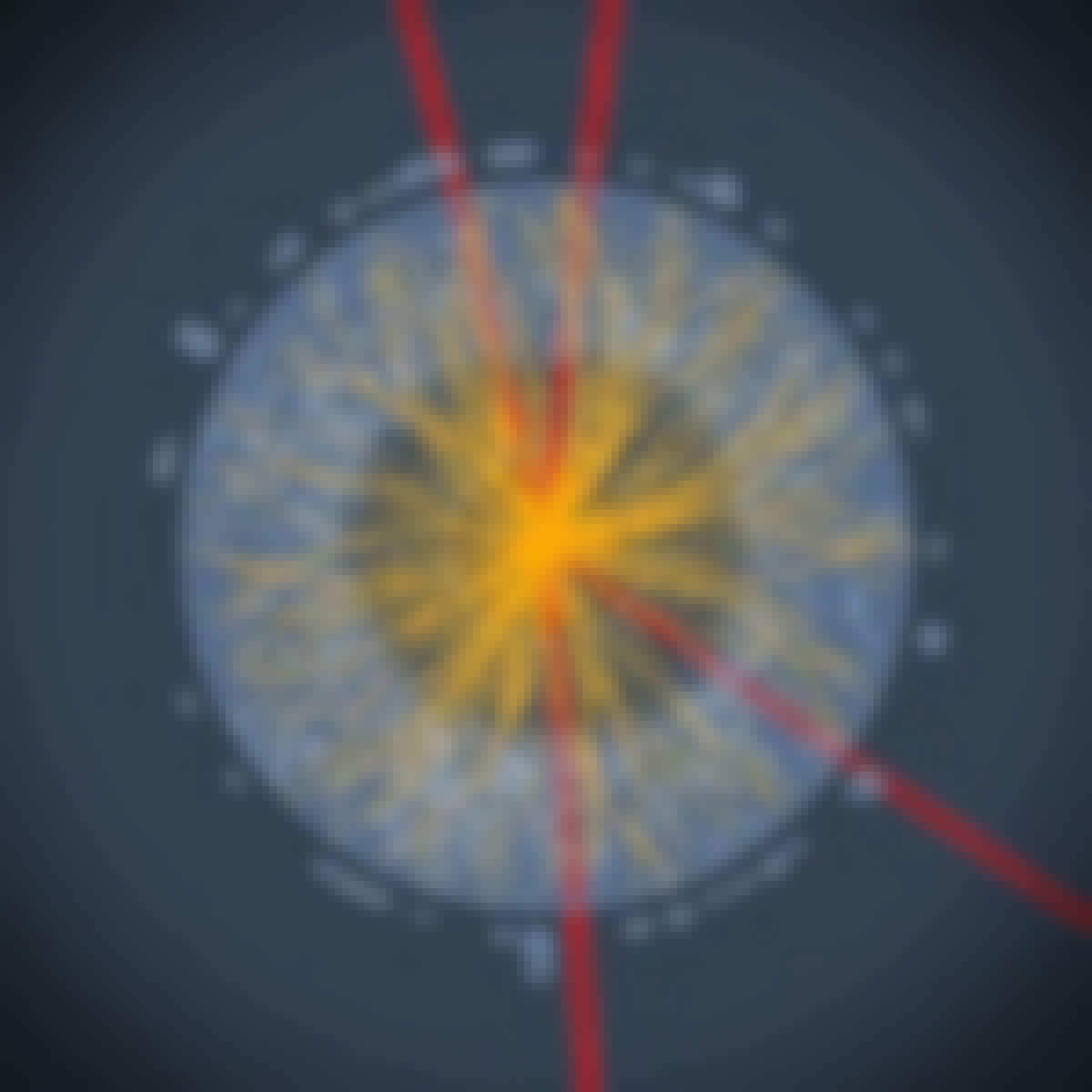
University of Geneva
Skills you'll gain: Physics, electromagnetics, Laboratory Research, Laboratory Equipment, Physical Science, Radiation Protection, Science and Research, Experimentation, Laboratory Techniques, Research
Arizona State University
Skills you'll gain: Semiconductors, Analytical Testing, Electronic Components, Engineering, Scientific, and Technical Instruments, Analytical Chemistry, Image Analysis, Electronics, Application Specific Integrated Circuits, Laboratory Equipment, Production Process, Basic Electrical Systems, Test Equipment, Materials science, Electrical Engineering, Laboratory Testing, Manufacturing Processes, Process Control, Electronics Engineering, Structural Analysis, Laboratory Research
Rice University
Skills you'll gain: Mechanics, Torque (Physics), Physics, Problem Solving, Mechanical Engineering, Calculus, Graphing, Physical Science, Mathematical Modeling, Algebra, Applied Mathematics, Trigonometry
Universitat Autònoma de Barcelona
Skills you'll gain: Physics, General Science and Research, Physical Science, Research, electromagnetics, Experimentation
Rice University
Skills you'll gain: Basic Electrical Systems, Electrical Engineering, Torque (Physics), electromagnetics, Physics, Electrical Systems, Electronics, Electronic Components, Engineering Calculations, Mechanics, Applied Mathematics, Problem Solving, Scientific Visualization, Calculus, Integral Calculus, Differential Equations, Mathematical Modeling

Birla Institute of Technology & Science, Pilani
Skills you'll gain: Physics, Mechanics, Thermal Management, Engineering, Vibrations, Physical Science, Engineering Analysis, General Science and Research, electromagnetics, Experimentation, Mathematical Theory & Analysis, Problem Solving, Science and Research, Analytical Skills, Computer Science, Critical Thinking and Problem Solving, Logical Reasoning, Research, Software Development, Critical Thinking
What brings you to Coursera today?

Rice University
Skills you'll gain: Physics, Mechanics, electromagnetics, Vibrations, Materials science, Applied Mathematics, Physical Science, Mathematical Modeling, Advanced Mathematics, Calculus, Differential Equations, Trigonometry, Linear Algebra, Integral Calculus, Problem Solving

University of Michigan
Skills you'll gain: Mechanics, Environmental Monitoring, Global Positioning Systems, Environmental Science, Engineering, Physics, Environment, General Science and Research, Physical Science, Climate Change Programs, Cost Reduction, Engineering Calculations, Scientific Methods, Science and Research, World History, Chemical Engineering, International Relations, Social Studies, Political Sciences, Emerging Technologies
Rice University
Skills you'll gain: Mechanics, Problem Solving, Physics, Graphing, Mathematical Modeling, Algebra, Calculus, Physical Science, Applied Mathematics, Mechanical Engineering, Trigonometry

University of Colorado Boulder
Skills you'll gain: Physics, Physical Science, Materials science, Advanced Mathematics, Mathematical Modeling, Applied Mathematics
UNSW Sydney (The University of New South Wales)
Skills you'll gain: Mechanics, Physics, Systems Of Measurement, Physical Science, Calculus, Estimation, Trigonometry, Applied Mathematics, Experimentation

Korea Advanced Institute of Science and Technology(KAIST)
Skills you'll gain: electromagnetics, Electrical Engineering, Differential Equations, Physics, Electrical Systems, Materials science, Integral Calculus, Advanced Mathematics, Energy and Utilities, Applied Mathematics, Engineering Calculations, Engineering, Mechanics, Electronic Components, Engineering Analysis, Mathematical Modeling, Scientific Visualization
In summary, here are 10 of our most popular plasma physics courses
- Particle Physics: an Introduction: University of Geneva
- Semiconductor Characterization: Arizona State University
- Introduction to Mechanics: Rice University
- Introduction to Neutrino Physics: Universitat Autònoma de Barcelona
- Introduction to Electricity and Magnetism: Rice University
- General Physics: Birla Institute of Technology & Science, Pilani
- Physics of Waves and Optics: Rice University
- Rocket Science 101: University of Michigan
- Physics 101 - Forces and Kinematics : Rice University
- The Physics of Emergence: Introduction to Condensed Matter: University of Colorado Boulder










