Finite Element Courses
Finite Element courses can help you learn numerical methods, structural analysis, and material behavior principles. You can build skills in mesh generation, boundary condition application, and post-processing results. Many courses introduce tools like ANSYS, Abaqus, and COMSOL Multiphysics, that support simulating complex physical phenomena and validating design choices in engineering projects.
Popular Finite Element Courses and Certifications
National Taiwan University
Skills you'll gain: 3D Modeling, SketchUp (3D Modeling Software), Software Installation, Visualization (Computer Graphics), Design Software, Computer Graphic Techniques, Graphical Tools, Technical Design
 Status: Preview
Korea Advanced Institute of Science and Technology(KAIST)
Skills you'll gain: Mechanics, Mechanical Engineering, Engineering Analysis, Torque (Physics), Physics, Engineering Calculations, Differential Equations, Integral Calculus, Calculus, Applied Mathematics
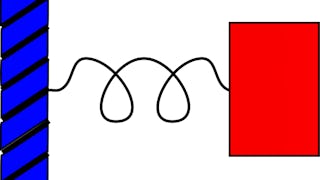 Status: Free Trial
The Hong Kong University of Science and Technology
Skills you'll gain: Differential Equations, Applied Mathematics, Calculus, Integral Calculus, Numerical Analysis, Mathematical Modeling, Advanced Mathematics, Linear Algebra, Vibrations, Algebra
 Status: Free Trial
L&T EduTech
Skills you'll gain: Autodesk Revit, Building Information Modeling, Autodesk, Collaborative Software, Drafting and Engineering Design, Computer-Aided Design, Engineering Documentation, Engineering Drawings, Building Design, Architectural Design, 3D Modeling, Civil Engineering, Structural Engineering, Technical Standard, HVAC, Electrical Systems, Plumbing, User Interface (UI)
 Status: Preview
Pontificia Universidad Católica de Chile
Skills you'll gain: Structural Engineering, Structural Analysis, Mechanical Engineering, Mechanical Design, Mechanics, Materials science, Torque (Physics), Failure Analysis, Engineering Analysis, Engineering Calculations, Physics, Mathematical Modeling, Safety Assurance, Applied Mathematics
 Status: Free Trial
Skills you'll gain: Unreal Engine, Video Game Development, Game Design, Interactive Design, Virtual Environment, Simulation and Simulation Software, Simulations, Physics
 Status: Free Trial
Dassault Systèmes
Skills you'll gain: Mechanical Design, Computer-Aided Design, Mechanical Drawings, Drafting and Engineering Design, 3D Modeling, Assembly Drawing, Engineering Drawings, Mechanical Engineering, Product Family Engineering, Technical Drawing, Engineering Design Process, Product Development, Production Process, Manufacturing and Production
In summary, here are 7 of our most popular finite element courses
- 3D CAD Fundamental: National Taiwan University
- Particle Dynamics: Korea Advanced Institute of Science and Technology(KAIST)
- Differential Equations for Engineers: The Hong Kong University of Science and Technology
- BIM Fundamentals for Engineers: L&T EduTech
- Mecánica de materiales: Pontificia Universidad Católica de Chile
- Unreal Engine: Apply & Implement Physics Simulations: EDUCBA
- Explore the Mechanical Designer Role: Dassault Systèmes










