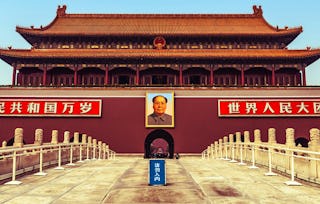
This course offers a conceptual framework for understanding China that highlights the intersection of politics and economics. It shows that rather than develop into a full blown market economy, state and party officials at all levels of the political system maintain significant influence in economic development. Such a “political” economy has had both positive and negative outcomes, which we will assess in detail. We also look at the origins, views, backgrounds and relations among leaders, and how those leaders make decisions about public policy and try to get those decisions implemented down through the system. China has few formal institutions through which citizens can participate in politics, but we will study the strategies Chinese people use to try to influence their leaders’ decisions. Finally, we assess China’s future and whether rapid economic development and the emergence of a vibrant middle class will push China towards greater democracy or whether the single party system is likely to survive into the future. The course is a quite useful background for Chinese Politics Part 2 – China and the World.
Before you start with the content for Module 1, please watch the Course Overview, review the Assignments and Grading page, and introduce yourself to other learners who will be studying this course with you.
What's included
9 videos3 readings1 assignment1 discussion prompt
Show info about module content
9 videos•Total 77 minutes
Course Overview•3 minutes
1.1: Categorizing the System through Models•14 minutes
1.2: Bureaucratic Model and Chinese Politics•15 minutes
1.3: The Structure of the Political System•3 minutes
1.4: Key Party Structures•17 minutes
1.5: Government and the Party•8 minutes
1.6: China’s Legislature•4 minutes
1.7: The Chinese Communist Party (CCP) and China’s Military•6 minutes
1.8: CCP Controls the Judiciary•6 minutes
3 readings•Total 30 minutes
Assignments and Grading•10 minutes
Module 1 Required Pre-course Reading•10 minutes
Module 1 Suggested Reading•10 minutes
1 assignment•Total 30 minutes
Quiz 1•30 minutes
1 discussion prompt•Total 10 minutes
Meet and Greet•10 minutes
Module 2: Elite Politics in China
Module 2•3 hours to complete
Module details
What's included
9 videos1 reading1 assignment3 discussion prompts
Show info about module content
9 videos•Total 81 minutes
2.1: Elite Politics affects Economics and Business•3 minutes
2.2: Leadership Values, Structures of Conflict and Political Stability•13 minutes
2.3: Key Strategies for Elite Success and Elite Mobility in China•12 minutes
2.4: Selection of Leaders: What do we know?•11 minutes
2.5: Retired Leaders and the Succession Process•7 minutes
2.6: New Leaders Bring Policy Changes•8 minutes
2.7: Characteristics of Chinese Middle-level Leadership•12 minutes
2.8: Generations among Chinese Elites•8 minutes
2.9: International Experience of Top Chinese Leaders•7 minutes
3.2: The Politics of Policy Making in China•13 minutes
3.3: Selecting Policy Alternatives•10 minutes
3.4: Making the Decision•10 minutes
3.5: Social Interests and Policy Making•11 minutes
3.6: Policy Implementation through Campaigns•10 minutes
3.7: Local Response, Unintended Consequences and Policy Adjustment•18 minutes
3.8: Policy Failures and Successes•14 minutes
1 reading•Total 10 minutes
Module 3 Course Reading•10 minutes
1 peer review•Total 120 minutes
Peer-reviewed Written Assignment 1•120 minutes
2 discussion prompts•Total 20 minutes
3.2: Discussion•10 minutes
3.7: Discussion•10 minutes
Module 4: Understanding Societal Engagement in Politics in China
Module 4•2 hours to complete
Module details
What's included
9 videos1 reading1 assignment
Show info about module content
9 videos•Total 102 minutes
4.1: Political Culture in China•11 minutes
4.2: Political Culture as Empirically Measurable Variable•15 minutes
4.3: Political Culture in Rural China•16 minutes
4.4: Political Participation•7 minutes
4.5: Details on the Modes of Participation•16 minutes
4.6: Group Activity and Group Politics•13 minutes
4.7: Collective Action and Protest•9 minutes
4.8: Key Social Groups who Participate in Politics•5 minutes
4.9: Concluding the Modes of Participation•9 minutes
1 reading•Total 10 minutes
Module 4 Course Reading•10 minutes
1 assignment•Total 30 minutes
Quiz 3•30 minutes
Module 5: China’s Domestic and International Political Economy
Module 5•4 hours to complete
Module details
What's included
10 videos1 reading1 peer review
Show info about module content
10 videos•Total 102 minutes
5.1: Six Components of China's Political Economy•8 minutes
5.2: China’s Political Economy on the Eve of Reform•13 minutes
5.3: Impact of Reforms on China’s Political Economy•10 minutes
5.4: The Impact of Reform on Rural Income•4 minutes
5.5: China’s Township and Village Enterprises (TVEs), 1984-1994•13 minutes
5.6: Role of the Public Sector in China's Political Economy•13 minutes
5.7: Central-Local Financial Relations•9 minutes
5.8: China as a “Trading State”•12 minutes
5.9: Dilemmas of a “Trading State”•8 minutes
5.10: Chinese Firms “Going Out”•13 minutes
1 reading•Total 10 minutes
Module 5 Course Reading•10 minutes
1 peer review•Total 120 minutes
Peer-reviewed Written Assignment 2•120 minutes
Module 6: China’s Future: Democratization or “Flexible Authoritarianism”
Module 6•2 hours to complete
Module details
What's included
12 videos1 reading1 assignment1 discussion prompt
Show info about module content
12 videos•Total 99 minutes
6.1: China’s Future•4 minutes
6.2: Scenario 1: Political Development and Democratic Transition•11 minutes
6.3: Scenario 1: Further Forces for Political Development and Democratic Transition•14 minutes
6.4: Lessons from Scenarios of Democratic Transition•7 minutes
6.5: Scenario 2: Continued Market Leninism•8 minutes
6.6: Constraints on Society and Ideology•9 minutes
6.7: Xi Jinping’s Intense Attack on Corruption•7 minutes
6.8: Jiang Zemin’s “Three Representatives” and the Role of the Middle Class•10 minutes
6.9: Scenario 3: Collapse of the CCP•7 minutes
6.10: Sources of Political Instability•6 minutes
6.11: Inequality, Corruption and CCP Rule•11 minutes
6.12: Conclusion•5 minutes
1 reading•Total 10 minutes
Module 6 Course Reading•10 minutes
1 assignment•Total 30 minutes
Quiz 4•30 minutes
1 discussion prompt•Total 10 minutes
6.12: Discussion•10 minutes
Final Exam and Course Evaluation
Module 7•1 hour to complete
Module details
Now is time to test your understanding on the entire course. Take the final exam and complete the post-course survey. Your valuable feedback will certainly help us improve future iterations of the course.
What's included
1 reading2 assignments
Show info about module content
1 reading•Total 10 minutes
Rate this course•10 minutes
2 assignments•Total 60 minutes
Final Exam•30 minutes
Post-course Survey•30 minutes
Instructor
Instructor ratings
Instructor ratings
We asked all learners to give feedback on our instructors based on the quality of their teaching style.
HKUST is a world-class research-intensive university that focuses on science, technology, and business as well as humanities and social science. HKUST offers an international campus, and a holistic and interdisciplinary pedagogy to nurture well-rounded graduates with a global vision, a strong entrepreneurial spirit, and innovative thinking.
OK
Explore more from Governance and Society
T
The Hong Kong University of Science and Technology

"To be able to take courses at my own pace and rhythm has been an amazing experience. I can learn whenever it fits my schedule and mood."
Jennifer J.
Learner since 2020
"I directly applied the concepts and skills I learned from my courses to an exciting new project at work."
Larry W.
Learner since 2021
"When I need courses on topics that my university doesn't offer, Coursera is one of the best places to go."
Chaitanya A.
"Learning isn't just about being better at your job: it's so much more than that. Coursera allows me to learn without limits."
Learner reviews
4.8
358 reviews
5 stars
84.12%
4 stars
12.81%
3 stars
1.11%
2 stars
0.55%
1 star
1.39%
Showing 3 of 358
M
MW
4·
Reviewed on Aug 22, 2016
Really good programme so far, very clear and structured input from a knowledgeable expert, who is nonetheless able to make the topics covered accessible.Tests are a bit tricky though!
R
RG
5·
Reviewed on Jan 23, 2018
Amazing course..very useful for gaining a better understanding of the Chinese political system
J
JD
5·
Reviewed on Mar 5, 2016
A well-structured, thoughtful course delivered by a true expert on the subject. One of the finest courses available throughout the entire Coursera platform.
When will I have access to the lectures and assignments?
To access the course materials, assignments and to earn a Certificate, you will need to purchase the Certificate experience when you enroll in a course. You can try a Free Trial instead, or apply for Financial Aid. The course may offer 'Full Course, No Certificate' instead. This option lets you see all course materials, submit required assessments, and get a final grade. This also means that you will not be able to purchase a Certificate experience.
What will I get if I purchase the Certificate?
When you purchase a Certificate you get access to all course materials, including graded assignments. Upon completing the course, your electronic Certificate will be added to your Accomplishments page - from there, you can print your Certificate or add it to your LinkedIn profile.
Is financial aid available?
Yes. In select learning programs, you can apply for financial aid or a scholarship if you can’t afford the enrollment fee. If fin aid or scholarship is available for your learning program selection, you’ll find a link to apply on the description page.