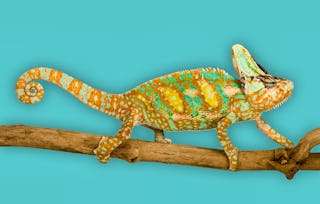
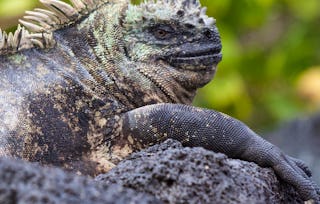
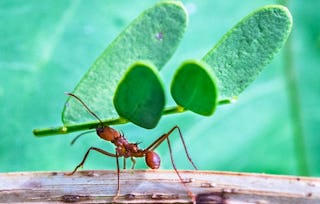
In this course you will learn how evolution works. You will develop an understanding of evolutionary processes and their formative power. You will see how evolution has shaped biodiversity, and continuously influences our daily life. Evolution impacts human endeavors as varied as medicine, agriculture, psychology, economy, and culture. It is the major unifying principle for biology and a fundamental natural law. In five weeks we will make evolution accessible for you and help you to recognize evolutionary processes around you, in nature as well as in society. We make use of the unique collection of Naturalis, the natural history museum in Leiden, but also take you to the field. Using classical and up-to-date examples, we will show you how scientists address evolutionary questions. In the last module, we will have a look at the future. How will humans evolve? And how do we influence our own evolution and that of other organisms?
This course is aimed at anybody with a drive to obtain a deeper, broader, and pragmatic understanding of evolution, including high-school students, BSc (undergraduate) biology students, MSc (graduate) students from other disciplines, medical professionals, conservation officers and educators in museums, libraries, national parks, and schools.
Great that you are joining us! In this course you will learn about Evolution. Before you start with this course we invite you to first take a look around and meet your fellow learners. We would like to know what brings you here and what you would like to get out of the course. If you encounter any difficulties while studying, please let us know in the forum. For technical difficulties or questions regarding the course certificate, you can always contact the Coursera Learner Helpdesk. Good luck & we hope you will enjoy studying in this course!
What's included
1 video1 reading1 discussion prompt1 plugin
Show info about module content
1 video•Total 2 minutes
How to succeed in your online class?•2 minutes
1 reading•Total 2 minutes
Meet the instructors & the team•2 minutes
1 discussion prompt•Total 10 minutes
Introduce yourself•10 minutes
1 plugin•Total 2 minutes
Discover The World at Leiden University [video]•2 minutes
Do we change?
Module 2•8 hours to complete
Module details
In this module, you are going to learn that a very powerful mechanism, natural selection, leads to evolutionary change. We are going to have a detailed look at what is required for this natural selection. And, knowing these conditions, we can judge whether traits in humans are evolving at the moment. This is a surprisingly simple module. I am looking forward to discuss human evolution with you at the end!
Let's talk about human evolution in general•10 minutes
How do we change?
Module 3•2 hours to complete
Module details
This is a real puzzle-module. We are going to decipher the language of DNA, and see that mutations in this DNA lead to new variation. As we saw, variation is the raw material for natural selection. Thus, take your pen and pencil and unravel with me the code of your own DNA!
What's included
5 videos2 readings4 assignments
Show info about module content
5 videos•Total 20 minutes
Introduction•1 minute
DNA•4 minutes
Mutation•5 minutes
Dialogue•3 minutes
Evo-devo•8 minutes
2 readings•Total 20 minutes
Imperfect weasels•10 minutes
Gene Switches•10 minutes
4 assignments•Total 50 minutes
Test your knowledge•15 minutes
E-tivity: translating a short human gene•15 minutes
E-tivity: mutations in human genes•15 minutes
E-tivity: playing with Hox-genes•5 minutes
Who is this "we" anyway?
Module 4•4 hours to complete
Module details
In the first two modules, we have asked ourselves whether we experience evolutionary change, and if so, how this change comes about. In this module, we will explore who this "we" is anyway: is it us, the individual? Is it our species? Our genes? Who is in charge here?
What's included
6 videos5 readings6 assignments
Show info about module content
6 videos•Total 35 minutes
Introduction•1 minute
Levels of Organization•5 minutes
Selfish Units•8 minutes
Supressing Selfishness•6 minutes
Promoting Collaboration•8 minutes
Discussion•7 minutes
5 readings•Total 171 minutes
The false allure of group selection by Steven Pinker•30 minutes
Distinguishing between Selfish DNA and The Selfish Gene•1 minute
Selfish cells•30 minutes
Video lecture on behavioral evolution by Robert Sapolsky•90 minutes
Green beards and eusociality in the Red Imported Fire Ant•20 minutes
6 assignments•Total 60 minutes
Test your knowledge•30 minutes
Units of Selection•5 minutes
The Good of the Species•5 minutes
Single Round Prisoner's Dilemma•5 minutes
Iterated Prisoner's Dilemma•10 minutes
Hamilton's rule•5 minutes
How have we (and haven't we) changed?
Module 5•7 hours to complete
Module details
In this module, we will take a look at the limitations to evolution. Despite the strength of the process of natural selection, some things simply are not possible. Evolution has to play by the rules, and this module will explore what those rules are.
"Living fossils" and evolutionary inertia•180 minutes
1 peer review•Total 120 minutes
Maladaptation•120 minutes
3 discussion prompts•Total 30 minutes
Can humans evolve better eyes?•10 minutes
Can you think of other trade-offs?•10 minutes
Trade-offs and sex in bedbugs•10 minutes
How will we change?
Module 6•6 hours to complete
Module details
In this module, we will have a look at the future. How will humans evolve, and, as our impact on the world increases, how will we affect the evolution of other organisms?
Leiden University is one of Europe's foremost research universities. This prominent position gives our graduates a leading edge and prepares them for careers both within and outside of academia. Leiden University is the oldest university in the Netherlands, founded in 1575. Our motto is: Praesidium Libertatis (Bastion of Liberty) - Freedom of spirit, thought and expression. Leiden University has a campus in Leiden and The Hague, with 7 faculties, 47 Bachelor Programmes, 79 Master Programmes and nearly 30,000 students.
Naturalis is the natural history museum of the Netherlands and the national research institute in biodiversity. We collect, conserve and study animals, plants and rocks. Our collection now contains 37 million objects and that makes it one of the largest in the world. And it is still growing each day thanks to the worldwide fieldwork of our researchers and many amateur scientists.
When will I have access to the lectures and assignments?
To access the course materials, assignments and to earn a Certificate, you will need to purchase the Certificate experience when you enroll in a course. You can try a Free Trial instead, or apply for Financial Aid. The course may offer 'Full Course, No Certificate' instead. This option lets you see all course materials, submit required assessments, and get a final grade. This also means that you will not be able to purchase a Certificate experience.
What will I get if I purchase the Certificate?
When you purchase a Certificate you get access to all course materials, including graded assignments. Upon completing the course, your electronic Certificate will be added to your Accomplishments page - from there, you can print your Certificate or add it to your LinkedIn profile.
Is financial aid available?
Yes. In select learning programs, you can apply for financial aid or a scholarship if you can’t afford the enrollment fee. If fin aid or scholarship is available for your learning program selection, you’ll find a link to apply on the description page.