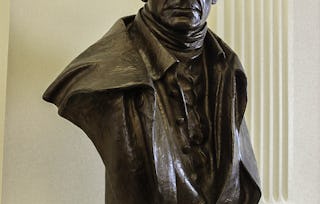
The French Revolution was one of the most important upheavals in world history. This course examines its origins, course and outcomes.
This course is designed for you to work through successfully on your own. However you will not be alone on this journey. Use the resources included in the course and take part in the suggested learning activities to get the most out of your learning. To successfully complete this course, it is recommended that you devote at least six hours to every module over the six weeks of the course. In that time you should watch the video lectures, reflect and respond to in-video pause points, and complete the quizzes.
As part of the required reading for this course, during each week of this course you will have free access to a chapter of Peter McPhee's textbook, The French Revolution, which is also available for purchase as an e-book.
View the MOOC promotional video here: http://tinyurl.com/gstw4vv
We begin this course with an introduction to the French Revolution. We will examine the social and institutional structures of the Old Regime. We will look at the main occupational groups and the roles of the First and Second estates (the clergy and nobility) in particular. We will also consider the relationship between Paris and the provinces in Old Regime France. Finally, you will be introduced to the Enlightenment and we will reflect on its significance and its possible revolutionary implications.
What's included
7 videos4 readings1 assignment1 discussion prompt
Show info about module content
7 videos•Total 106 minutes
Welcome to the French Revolution MOOC•3 minutes
1.1 An Introduction to the French Revolution•15 minutes
1.2 The Essentials of Eighteenth-Century France•15 minutes
1.3 The First & Second Estates: Clergy and Nobility•24 minutes
1.4 Paris and the Provinces•9 minutes
1.5 The 'Enlightenment': 'from above'•18 minutes
1.6 The 'Enlightenment': 'from below'•22 minutes
4 readings•Total 130 minutes
Course Overview•10 minutes
Your teaching team•10 minutes
Start of course survey•10 minutes
France in the 1780s•100 minutes
1 assignment•Total 10 minutes
Week one quiz - 12% of final grade•10 minutes
1 discussion prompt•Total 10 minutes
What was the Old Regime?•10 minutes
Week 2 - The Revolution of 1789
Module 2•3 hours to complete
Module details
This week we look at the Revolution of 1789 and its causes. We will explore the tensions and conflicts that led to the crisis of the Old Regime. The focus will be on the Third Estate and the revolt of the bourgeoisie, the 'menu peuple' and the peasantry. We will look at the Declaration of the Rights of Man and citizen and you will be asked to reflect on its 'universal' significance.
What's included
6 videos1 reading1 assignment1 discussion prompt
Show info about module content
6 videos•Total 68 minutes
2.1 An Atlantic crisis•9 minutes
2.2 A fiscal crisis and its repercussions•13 minutes
2.3 The Third Estate in revolt: bourgeoisie and menu people•14 minutes
2.4 The Third Estate in revolt: the peasantry•12 minutes
2.5 The Declaration of the Rights of Man and the August Decrees•11 minutes
2.6 The October Days - the end of the Revolution?•10 minutes
1 reading•Total 110 minutes
The Revolution of 1789•110 minutes
1 assignment•Total 10 minutes
Week two quiz - 12% of final grade•10 minutes
1 discussion prompt•Total 10 minutes
Was 1789 inevitable?•10 minutes
Week 3 - The Reconstruction of France, 1789-92
Module 3•3 hours to complete
Module details
Week three of this MOOC deals with the reforms introduced in 1789-91. We look at the institutional and administrative reorganisation of France. We will then consider three critical turning points of the Revolution: the Civil Constitution of the Clergy, the King's attempted flight in 1791 and the outbreak of war in 1792. Finally we will look at the fate of the King and the ultimate failure of the monarchy. You will be asked to reflect on the immediate effects and longer-term consequences of these events.
What's included
6 videos1 reading1 assignment1 discussion prompt
Show info about module content
6 videos•Total 63 minutes
3.1 Making the new nation 1789-91•13 minutes
3.2 The Revolution divides•9 minutes
3.3 Turning-point 1: Church reform•10 minutes
3.4 Turning-point 2: the King's flight June 1791•12 minutes
3.5 Turning-point 3: The outbreak of war April 1792•10 minutes
3.6 A second revolution: 10 August 1792•9 minutes
1 reading•Total 110 minutes
Reform, conflict, and a second Revolution, 1789-1792•110 minutes
1 assignment•Total 10 minutes
Week three quiz - 12% of final grade•10 minutes
1 discussion prompt•Total 10 minutes
Why was Louis executed?•10 minutes
Week 4 - The Republic in crisis 1792-93
Module 4•4 hours to complete
Module details
Week four deals with the crisis of the Republic in 1792-93. We will examine the conflicts and disunity within the National Convention and consider the balance between revolutionary and counter-revolutionary forces by mid-1793. We will explore the civil war in the Vendee region of Western France and attempt to make sense of the growing revolutionary violence. We will look at the origins of the 'Terror', its institutions and its ideology, and students will be asked to reflect more broadly on the role of violence during the Revolution.
What's included
10 videos1 reading1 assignment1 discussion prompt
Show info about module content
10 videos•Total 130 minutes
4.1 September 1792: blood and death•9 minutes
4.2 September 1792: republican unity and disunity in the National Convention•11 minutes
4.3 Revolution and counter-revolution: the balance of forces•10 minutes
4.4 The crisis of 1793•12 minutes
4.5 Emergency measures: the implementation of 'terror'•18 minutes
4.6 How to end 'terror', December 1793•8 minutes
Interview with Dr Marisa Linton •11 minutes
Interview with Professor Timothy Tackett•17 minutes
Interview with Professor Ian Germani •18 minutes
Interview with Charles Walton•16 minutes
1 reading•Total 100 minutes
The crisis of 1792-1793: war and terror•100 minutes
1 assignment•Total 10 minutes
Week four quiz - 12% of final grade•10 minutes
1 discussion prompt•Total 10 minutes
The Terror - Necessary emergency measures or revolutionary violence?•10 minutes
Week 5 - Ending the Terror and Ending the Revolution
Module 5•3 hours to complete
Module details
This week we look at the ideology and culture of the 'Terror' and the nature of the Jacobin and sans-culottes alliance. We will consider possible explanations for the increasing intensity of revolutionary violence and ask whether such violence was a proportionate, emergency response to the growing counter-revolutionary threat. This module also deals with the end of the 'Terror', and the overthrow of Robespierre and the ensuing 'Thermidorian reaction'. Finally we look at the 'settlement' of 1795 and ask whether the Revolution was indeed over.
What's included
6 videos1 reading1 assignment2 discussion prompts
Show info about module content
6 videos•Total 72 minutes
5.1 Robespierre and 'virtue'•10 minutes
5.2 The ideology and culture of the Terror•13 minutes
5.3 The Jacobin and sans-culottes alliance•12 minutes
5.4 Emergency measures or revolutionary violence?•11 minutes
5.5 Thermidor Year II - 27 July 1794•11 minutes
5.6 The 'settlement' of 1795: the end of the Revolution?•15 minutes
1 reading•Total 100 minutes
Ending the terror, ending the revolution, 1794-1799•100 minutes
1 assignment•Total 10 minutes
Week five quiz - 12% of final grade•10 minutes
2 discussion prompts•Total 20 minutes
What was the nature of the ideology of the 'Terror'?•10 minutes
Why were Robespierre and his associates overthrown in July 1794?•10 minutes
Week 6 - Change and continuity: How revolutionary was the Revolution?
Module 6•6 hours to complete
Module details
This final week of the course offers you the opportunity to reflect broadly on the significance of the Revolution. We begin by looking at Napoleon Bonaparte and the Restoration of the monarchy in 1814-15. We then consider the ways in which the revolutionary experience affected the lives of women and slaves. We will discuss the Revolution's global implications and ask whether or not 1789 can be understood more broadly, as part of an international 'Age of Revolution'. Finally we explore the 'minimalist' and 'maximalist' approaches to the significance of the Revolution and you will be asked to reflect on the impact of the Revolution on the lives of French citizens.
The University of Melbourne is an internationally recognised research intensive University with a strong tradition of excellence in teaching, research, and community engagement. Established in 1853, it is Australia's second oldest University.
When will I have access to the lectures and assignments?
To access the course materials, assignments and to earn a Certificate, you will need to purchase the Certificate experience when you enroll in a course. You can try a Free Trial instead, or apply for Financial Aid. The course may offer 'Full Course, No Certificate' instead. This option lets you see all course materials, submit required assessments, and get a final grade. This also means that you will not be able to purchase a Certificate experience.
What will I get if I purchase the Certificate?
When you purchase a Certificate you get access to all course materials, including graded assignments. Upon completing the course, your electronic Certificate will be added to your Accomplishments page - from there, you can print your Certificate or add it to your LinkedIn profile.
Is financial aid available?
Yes. In select learning programs, you can apply for financial aid or a scholarship if you can’t afford the enrollment fee. If fin aid or scholarship is available for your learning program selection, you’ll find a link to apply on the description page.