This course explains how to analyze circuits that have alternating current (AC) voltage or current sources. Circuits with resistors, capacitors, and inductors are covered, both analytically and experimentally. Some practical applications in sensors are demonstrated.
This module describes how to analyze circuits with sinusoidal inputs
What's included
9 videos3 readings21 assignments
Show info about module content
9 videos•Total 72 minutes
1.0 Introduction to Linear Circuits 2: AC Analysis•3 minutes
1.1 AC Circuits•8 minutes
1.2 Phasors•11 minutes
1.3 Impedance•5 minutes
1.4 Circuit Analysis with AC Impedances•10 minutes
1.5 AC Circuit Analysis Example•8 minutes
1.6 Transfer Functions•13 minutes
1.7 Transfer Function Example•9 minutes
1.8 Module Summary•4 minutes
3 readings•Total 30 minutes
Start Here•10 minutes
Syllabus•10 minutes
Consent Form•10 minutes
21 assignments•Total 630 minutes
Module 1 Exam•30 minutes
Problem 1-1-1•30 minutes
Problem 1-2-1•30 minutes
Problem 1-3-1•30 minutes
Problem 1-3-2•30 minutes
Problem 1-3-3•30 minutes
Problem 1-3-4•30 minutes
Problem 1-4-1•30 minutes
Problem 1-4-2•30 minutes
Problem 1-4-3•30 minutes
Problem 1-4-4•30 minutes
Problem 1-4-5•30 minutes
Problem 1-5-1•30 minutes
Problem 1-5-2•30 minutes
Problem 1-5-3•30 minutes
Problem 1-5-4•30 minutes
Problem 1-6-1•30 minutes
Problem 1-6-2•30 minutes
Problem 1-6-3•30 minutes
Problem 1-6-4•30 minutes
Problem 1-7-1•30 minutes
Module 2: Frequency Reponse
Module 2•4 hours to complete
Module details
The description goes here
What's included
7 videos7 assignments
Show info about module content
7 videos•Total 55 minutes
2.1 Frequency Response Module Overview•3 minutes
2.2 Frequency Spectrum•9 minutes
2.3 Frequency Spectra of Real Signals•12 minutes
2.4 Frequency Response: Linear•7 minutes
2.5 Frequency Response: Bode•10 minutes
2.6 Bode Plot of RC Circuits•8 minutes
2.7 Bode Plot of RLC Circuits•6 minutes
7 assignments•Total 210 minutes
Module 2 Exam•30 minutes
Problem 2-2-1•30 minutes
Problem 2-4-1•30 minutes
Problem 2-5-1•30 minutes
Problem 2-5-2•30 minutes
Problem 2-6-1•30 minutes
Problem 2-7-1•30 minutes
Module 3: Filters
Module 3•4 hours to complete
Module details
What's included
5 videos6 assignments
Show info about module content
5 videos•Total 40 minutes
3.1 Lowpass and Highpass Filters•9 minutes
3.2 Lowpass Highpass Filter Design•10 minutes
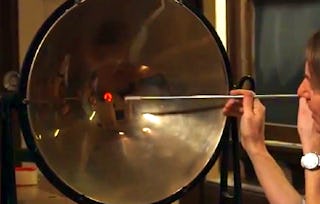
3.3 Lab Demo: Guitar String Filtering•12 minutes
3.4 Bandpass and Notch Filters•5 minutes
Module 2 & 3 Summary•4 minutes
6 assignments•Total 180 minutes
Module 3 Exam•30 minutes
Problem 3-1-1•30 minutes
Problem 3-1-2•30 minutes
Problem 3-2-1•30 minutes
Problem 3-3-1•30 minutes
Problem 3-4-1•30 minutes
Module 4: Power
Module 4•5 hours to complete
Module details
The description goes here
What's included
10 videos8 assignments
Show info about module content
10 videos•Total 88 minutes
4.1 Power Module Overview•1 minute
4.2 Root Mean Square•8 minutes
4.3 Power Factor•12 minutes
4.4 Power Triangles•10 minutes
4.5 AC Power Transfer•14 minutes
Sample Problem: AC Power 1•5 minutes
Sample Problem: AC Power 2•15 minutes
Sample Problem: AC Power 3•8 minutes
Sample Problem: AC Power 4•10 minutes
Sample Problem: AC Power 5•5 minutes
8 assignments•Total 240 minutes
Module 4 Exam•30 minutes
Problem 4-2-1•30 minutes
Problem 4-2-2•30 minutes
Problem 4-3-1•30 minutes
Problem 4-3-2•30 minutes
Problem 4-4-1•30 minutes
Problem 4-4-2•30 minutes
Problem 4-4-3•30 minutes
Module 5: Transformers
Module 5•2 hours to complete
Module details
What's included
6 videos3 assignments
Show info about module content
6 videos•Total 47 minutes
5.1 Transformers•6 minutes
5.2 Linear Transformer Model•11 minutes
5.3 Ideal Transformer Model•10 minutes
5.4 Linear Variable Differential Transformers•5 minutes
Module 4 & 5 Wrap-Up•4 minutes
5.5 (Optional) Quick Review of Complex Numbers•9 minutes
3 assignments•Total 90 minutes
Module 5 Exam•30 minutes
Problem 5-3-1•30 minutes
Problem 5-4-1•30 minutes
Instructors
Instructor ratings
Instructor ratings
We asked all learners to give feedback on our instructors based on the quality of their teaching style.
The Georgia Institute of Technology is one of the nation's top research universities, distinguished by its commitment to improving the human condition through advanced science and technology.
Georgia Tech's campus occupies 400 acres in the heart of the city of Atlanta, where more than 20,000 undergraduate and graduate students receive a focused, technologically based education.
When will I have access to the lectures and assignments?
To access the course materials, assignments and to earn a Certificate, you will need to purchase the Certificate experience when you enroll in a course. You can try a Free Trial instead, or apply for Financial Aid. The course may offer 'Full Course, No Certificate' instead. This option lets you see all course materials, submit required assessments, and get a final grade. This also means that you will not be able to purchase a Certificate experience.
What will I get if I purchase the Certificate?
When you purchase a Certificate you get access to all course materials, including graded assignments. Upon completing the course, your electronic Certificate will be added to your Accomplishments page - from there, you can print your Certificate or add it to your LinkedIn profile.
Is financial aid available?
Yes. In select learning programs, you can apply for financial aid or a scholarship if you can’t afford the enrollment fee. If fin aid or scholarship is available for your learning program selection, you’ll find a link to apply on the description page.