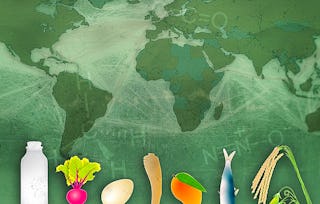
The New Nordic Diet is a new food culture developed in 2009-13 with key emphasis on gastronomy, health, and environment. Major research in its effect on acceptability, behaviour and learning skills, and disease prevention have been conducted by the OPUS centre at the University of Copenhagen and the people behind the award-winning restaurant Noma in Copenhagen.
This course will give the participants the opportunity to experience a healthy and palatable new food and eating concept diet “The New Nordic Diet” and an understanding of how food and diets can affect mental and physical health and ensure the foundation for a healthier life style for future generations with a regional based diet and food culture.
In Denmark “the Nordic cuisine”, has expanded from food eaten at the award-winning Copenhagen restaurant Noma to home-made dishes of local ingredients of whole-grain rye bread, root vegetables, berries, fresh fish and seaweed.
This course is also part of the EIT Health Programme
In this first module you will be introduced to The New Nordic Diet project. You will hear about the background for the project, the definition of the signatures and principles behind which are considered to be fundamental of this new meal system. The New Nordic Diet is based on Nordic ingredients but is adaptable all over the world. It incompases both the health and well-being of the individual and environmental sustainability as well as the pleasure of eating. The challenges for accepting new healthy components of a New Nordic Diet will be illustrated too. Based on these principles leading chefs working with the Nordic kitchen and academic staffs from our university will guide you through this module’s lectures.
What's included
4 videos1 assignment
Show info about module content
4 videos•Total 41 minutes
1.1: Introduction to the course, by Arne Astrup•4 minutes
1.2: The Nordic Movement, by Claus Meyer•15 minutes
Easy to Love, Easy to Get Hold of, Easy to Make, and Easy to Afford•13 minutes
1.4: Communication in the Research Center OPUS, by Kristian Levring Madsen•8 minutes
1 assignment•Total 30 minutes
Introduction to the New Nordic Diet•30 minutes
Development of the New Nordic Diet
Module 2•1 hour to complete
Module details
What's included
3 videos1 assignment
Show info about module content
3 videos•Total 40 minutes
2.1: Sensory Evaluation of Food, by Wender Bredie•16 minutes
2.2: Developing a New Nordic Diet, by Charlotte Mithril•13 minutes
2.3: Sustainability of the New Nordic Diet, by Henrik Saxe•11 minutes
1 assignment•Total 24 minutes
Development of the New Nordic Diet•24 minutes
The OPUS School Meal Study
Module 3•2 hours to complete
Module details
In this module we will investigate how the OPUS School Meal Study was designed and how the investigators examined the effect of the New Nordic Diet school meals on the well-being, development academic performance, body composition as well as their risk of developing lifestyle diseases such as type 2 diabetes, osteoporosis and cardiovascular diseases. The study compared the New Nordic Diet with the current situation in schools (packed lunch from home and/or school canteens/small shops etc.).
What's included
7 videos1 assignment
Show info about module content
7 videos•Total 87 minutes
3.1: The New Nordic Diet and Child Nutrition, by Arne Astrup•4 minutes
3.2: The Opus School Meal Study, by Camilla Damsgaard•26 minutes
3.3: Results of the School Meal Study, by Camilla Damsgaard•11 minutes
4.1: The Importance of Children's Activity and Sleep, by Mads Fiil Hjorth•12 minutes
4.2: Movement behaviors in children and indicators of adverse health, by Mads Fiil Hjorth•8 minutes
4.3: Optimal Wellness, Development and Health, by Niels Egelund•21 minutes
4.4: The influence on children's cognition and performance in school, by Kim Michaelsen•5 minutes
1 assignment•Total 30 minutes
The OPUS School Meal Study•30 minutes
The OPUS Supermarket Intervention
Module 4•2 hours to complete
Module details
In this module, we'll be looking at the effect of New Nordic Diet on adults. We will study the effect of eating the New Nordic Diet (NND) and an Average Danish Diet (ADD), respectively, in terms of body weight, body composition (fat) and risk factors for cardiovascular diseases and type 2-diabetes. You will learn about problems, barriers and benefits associated with two types of diet, focusing in particular on shopping, cooking and eating, meal structure and diet composition. Moreover, drop-out rate and the subject’s compliance with the principles behind the diet are discussed.
What's included
6 videos1 assignment
Show info about module content
6 videos•Total 75 minutes
5.1: Introduction, by Arne Astrup•7 minutes
5.2: Social Aspects of Acceptance, by Aruun Michelsen•13 minutes
6.1: The Adult Intervention, Part 1, the Studies, by Thomas Meinert Larsen•20 minutes
The Adult Intervention, Part 2, the Results•11 minutes
6.3: Perspectives on Health and Consumer Acceptance, by Thomas Meinert Larsen•17 minutes
6.4: The SHOP System, by Sanne Kjelleberg Poulsen•6 minutes
1 assignment•Total 30 minutes
The OPUS Supermarket Intervention•30 minutes
Investigate the New Nordic Diet – from Food to Health
Module 5•1 hour to complete
Module details
In this last module's lectures we will concentrate on the health of the New Nordic Diet, focus on the effects published so far from four different studies and on the potential factors and foods affecting the outcomes.
What's included
4 videos1 assignment
Show info about module content
4 videos•Total 48 minutes
7.1: Introduction, by Arne Astrup•7 minutes
7.2: Nutrition and Diet, by Lars Ove Dragsted•23 minutes
7.3: Industrially Produced Trans Fats and the New Nordic Diet, by Steen Stender•14 minutes
7.4: Closing Remarks, by Arne Astrup•4 minutes
1 assignment•Total 30 minutes
Investigate the New Nordic Diet – from Food to Health•30 minutes
Instructor
Instructor ratings
Instructor ratings
We asked all learners to give feedback on our instructors based on the quality of their teaching style.
The University of Copenhagen is the oldest University in Denmark; founded in 1479, and with over 38,000 students and more than 9,000 employees. The purpose of the University is to conduct research and provide education to the highest academic level. Based in Denmark's capital city it is one of the top research institutions in Europe.
"To be able to take courses at my own pace and rhythm has been an amazing experience. I can learn whenever it fits my schedule and mood."
Jennifer J.
Learner since 2020
"I directly applied the concepts and skills I learned from my courses to an exciting new project at work."
Larry W.
Learner since 2021
"When I need courses on topics that my university doesn't offer, Coursera is one of the best places to go."
Chaitanya A.
"Learning isn't just about being better at your job: it's so much more than that. Coursera allows me to learn without limits."
Learner reviews
4.6
779 reviews
5 stars
70.21%
4 stars
22.46%
3 stars
5.13%
2 stars
0.89%
1 star
1.28%
Showing 3 of 779
G
G
5·
Reviewed on Sep 10, 2020
It has focused both on the importance of the diet and implementation of the diet among the people, but focused mainly on the the requirements and sacrifices to be done for the implementation.
N
NE
5·
Reviewed on May 31, 2020
I like all of the materials. it supports me to understand the new phenomenon of food and diet depth. Thank you... the lectures give all the explanation excellent.
N
NJ
5·
Reviewed on Feb 8, 2019
An interesting and engaging course from which I learnt much about the health benefits of the New Nordic Diet. My thanks to the educators for making this course available.
When will I have access to the lectures and assignments?
To access the course materials, assignments and to earn a Certificate, you will need to purchase the Certificate experience when you enroll in a course. You can try a Free Trial instead, or apply for Financial Aid. The course may offer 'Full Course, No Certificate' instead. This option lets you see all course materials, submit required assessments, and get a final grade. This also means that you will not be able to purchase a Certificate experience.
What will I get if I purchase the Certificate?
When you purchase a Certificate you get access to all course materials, including graded assignments. Upon completing the course, your electronic Certificate will be added to your Accomplishments page - from there, you can print your Certificate or add it to your LinkedIn profile.
Is financial aid available?
Yes. In select learning programs, you can apply for financial aid or a scholarship if you can’t afford the enrollment fee. If fin aid or scholarship is available for your learning program selection, you’ll find a link to apply on the description page.