The vital signs – heart rate, blood pressure, body temperature, respiration rate, and pain – communicate important information about the physiological status of the human body. In this six-part course we explore the anatomy and physiology underlying the vital signs so that you will develop a systematic, integrated understanding of how the body functions. Relevant body systems are reviewed including cardiovascular and respiratory, followed by explanations of how the function of these systems affects vital signs. We discuss normal ranges, normal variants, and the mechanisms that underlie changes in the objective measurement of vital signs. The course also includes demonstrations of appropriate techniques for measuring vital signs in yourself and others.
The course is designed for a broad, general audience but will be particularly interesting for individuals working in healthcare, those considering a career as a healthcare professional, lay caregivers, those with an interest in personal health and fitness, or anyone who simply wants to understand how the body functions.
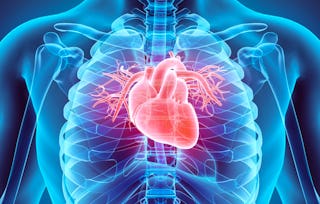
This week we start our exploration of the vital signs with a look at the heart. We'll study the basic structure of the heart, think about how the heart pumps blood through the body, and learn how clinicians assess and think about heart rate and the pulse.
During week 2 we will learn about the anatomy of the blood vessels and how they function. You will have a better understanding of systolic and diastolic blood pressure, mean arterial pressure, and assessing blood pressure accurately.
This week we will explore metabolism. We will discuss anabolism and catabolism, basal metabolic rate, how the body generates heat. You will also have a better understanding of how health care providers assess metabolic rate.
During week 4 you will learn the definition of mean body temperature and how the body regulates temperature. We will discuss hypothermia and the difference between hyperthermia and fever. Lastly, you will learn how to assess body temperature.
What's included
5 videos3 readings1 assignment
Show info about module content
5 videos•Total 71 minutes
4.1 Introduction to Thermoregulation•18 minutes
4.2 Maintaining Body Temperature •15 minutes
4.3 Hypothermia & Hyperthermia•18 minutes
4.4 Fever•9 minutes
4.5 Assessing Body Temperature Demonstration •10 minutes
3 readings•Total 30 minutes
Week 4 Lecture Outline•10 minutes
Week 4 In-video Quizzes•10 minutes
Lecture Transcripts (SRT Files)•10 minutes
1 assignment•Total 30 minutes
Week 4 Quiz•30 minutes
Week 5: Respiration Rate
Module 5•2 hours to complete
Module details
This week we will learn about pulmonary anatomy, capillary gas exchange, and regulation of respiration. You will have a better understanding of how health care providers assess respiration rate and the quality of lung sounds.
What's included
8 videos3 readings1 assignment
Show info about module content
8 videos•Total 87 minutes
5.1 Basic Anatomy of the Respiratory System•11 minutes
This week we will explore the neurological pathways associated with pain, and the difference between pain tolerance and pain threshold. We will understand what pain is telling us and why accurately assessing and effectively managing pain are important. In addition, we will review how healthcare providers asses pain.
What's included
8 videos3 readings1 assignment
Show info about module content
8 videos•Total 86 minutes
6.1 The Anatomy & Physiology of Pain, Part 1 •17 minutes
6.2 The Anatomy & Physiology of Pain, Part 2 •10 minutes
6.3 The Anatomy & Physiology of Pain, Part 3 •11 minutes
6.4 Types of Pain •9 minutes
6.5 Assessing Pain Demonstration •11 minutes
6.6 Social, Cultural & Psychological Influences on Pain •11 minutes
6.7 The Treatment of Pain •16 minutes
6.8 Wrapping Up Vital Signs •1 minute
3 readings•Total 30 minutes
Week 6 Lecture Outline•10 minutes
Week 6 In-video Quizzes•10 minutes
Lecture Transcripts (SRT Files)•10 minutes
1 assignment•Total 30 minutes
Week 6 Quiz•30 minutes
Instructor
Instructor ratings
Instructor ratings
We asked all learners to give feedback on our instructors based on the quality of their teaching style.
The University of Pennsylvania (commonly referred to as Penn) is a private university, located in Philadelphia, Pennsylvania, United States. A member of the Ivy League, Penn is the fourth-oldest institution of higher education in the United States, and considers itself to be the first university in the United States with both undergraduate and graduate studies.
"To be able to take courses at my own pace and rhythm has been an amazing experience. I can learn whenever it fits my schedule and mood."
Jennifer J.
Learner since 2020
"I directly applied the concepts and skills I learned from my courses to an exciting new project at work."
Larry W.
Learner since 2021
"When I need courses on topics that my university doesn't offer, Coursera is one of the best places to go."
Chaitanya A.
"Learning isn't just about being better at your job: it's so much more than that. Coursera allows me to learn without limits."
Learner reviews
4.8
6,918 reviews
5 stars
86.26%
4 stars
11.60%
3 stars
1.50%
2 stars
0.28%
1 star
0.33%
Showing 3 of 6918
A
AS
5·
Reviewed on Jun 19, 2024
This course was well instructed and included questioning that ensured the learner was engaged in the content. Dr. Skanga did an excellent job with the instruction and creation of this course.
J
JA
5·
Reviewed on Oct 10, 2020
I really enjoyed the course. It looked at vital signs in a really different view from the traditional ways of looking at it and it was really informative. The practical sessions too were great. Nice!
S
SM
4·
Reviewed on Aug 9, 2023
Remarkable course and great understanding develop from this course. But only bad thing is that the name is not mentioned on the course of the respective learner that's why i am gonna 4 stars
Yes! You can access the full course, including assessments and all videos, through the Audit track. Learners also have the option of earning Course Certificate by submitting all assignments for a grade and purchasing the course for $49. Financial aid is available.
When will I have access to the lectures and assignments?
To access the course materials, assignments and to earn a Certificate, you will need to purchase the Certificate experience when you enroll in a course. You can try a Free Trial instead, or apply for Financial Aid. The course may offer 'Full Course, No Certificate' instead. This option lets you see all course materials, submit required assessments, and get a final grade. This also means that you will not be able to purchase a Certificate experience.
What will I get if I purchase the Certificate?
When you purchase a Certificate you get access to all course materials, including graded assignments. Upon completing the course, your electronic Certificate will be added to your Accomplishments page - from there, you can print your Certificate or add it to your LinkedIn profile.
Is financial aid available?
Yes. In select learning programs, you can apply for financial aid or a scholarship if you can’t afford the enrollment fee. If fin aid or scholarship is available for your learning program selection, you’ll find a link to apply on the description page.