Functional Medicine Courses
Functional medicine courses can help you learn personalized nutrition, chronic disease management, and the impact of lifestyle on health. You can build skills in patient assessment, integrative treatment planning, and understanding biochemical individuality. Many courses introduce tools like health assessment questionnaires and dietary tracking apps, which help you apply these skills in real-world settings to create tailored health strategies.
Popular Functional Medicine Courses and Certifications

University of Minnesota
Skills you'll gain: Drug Interaction, Meditation & Breathwork, Patient Education And Counseling, Mindfulness, Patient Referral, Pharmacology, Treatment Planning, Health Care Procedure and Regulation, Pain Management, Contraindication, Manual Therapy, Patient Safety, Health Assessment, Patient Education and Support, Clinical Practices, Nursing Practices, Patient Evaluation, Pharmacotherapy, Nurse Education, Patient-centered Care
Johns Hopkins University
Skills you'll gain: Oncology, Medical Imaging, Radiology, Diagnostic Radiology, Patient Education and Support, Mammography, Radiation Therapy, Molecular Biology, Diagnostic Tests, X-Ray Computed Tomography, Clinical Trials, Molecular, Cellular, and Microbiology, Capillary, Pain Management, Preventative Care, Treatment Planning, Hemodynamics, Drug Development, Cell Biology, Biology
 Status: Job Ready
National Academy of Sports Medicine
Skills you'll gain: Nutrition Education, Patient Education And Counseling, Basic Life Support (BLS) Certification, Neurology, Automated External Defibrillator, Cardiopulmonary Resuscitation (CPR), Overcoming Obstacles, Mechanics, Injury Prevention, Public Health, Anatomy, Health Promotion, Exercise Therapy, Meal Planning And Preparation, Medical Terminology, Motivational Skills, Needs Assessment, Chronic Diseases, Adaptability, Communication

Niel Asher Education
Skills you'll gain: Patient Preparation, Manual Therapy, Patient Treatment, Pain Management, Patient Evaluation, Clinical Assessment, Contraindication, Clinical Practices, Exercise Therapy, Sterilization, Physical Therapy, Intravenous Therapy, Respiratory Therapy, Occupational Therapy, Health And Wellness Coaching, Mental Health Therapies, Health Care, Physical Science, Maternal Health, Mental Health
National Academy of Sports Medicine
Skills you'll gain: Mental Concentration, Nutrition and Diet, Nutrition Education, Mental Health, Stress Management
University of Michigan
Skills you'll gain: Sensory Systems Analysis, Human Musculoskeletal System, Anatomy, Endocrinology, Pulmonology, Cardiology, Respiration, Hematology, Obstetrics And Gynecology, Orthopedics, Neurology, Hemodynamics, Nephrology, Kinesiology, Physiology, Urology, Pathology, Immunology, Cell Biology, Biology
What brings you to Coursera today?

University of Minnesota
Skills you'll gain: Drug Interaction, Pharmacology, Patient Education And Counseling, Pharmacotherapy, Medication Therapy Management, Pain Management, Pharmaceuticals, Patient Evaluation, Respiratory Care, Patient Safety, Health Care Procedure and Regulation, Obstetrics And Gynecology, Health And Safety Standards, Medical Science and Research, Mental Health
National Academy of Sports Medicine
Skills you'll gain: Nutritional Assessment, Sports Medicine, Exercise Science, Nutrition and Diet, Athletic Training, Nutrition Education, Regulatory Compliance, Clinical Nutrition, Medical Science and Research
National Academy of Sports Medicine
Skills you'll gain: Nutritional Assessment, Exercise Science, Nutrition and Diet, Physiology, Biochemistry, Systems Of Measurement
University of Geneva
Skills you'll gain: Precision Medicine, Medical Science and Research, Data Ethics, Healthcare Ethics, Pharmacology, Health Informatics, Bioinformatics, Clinical Research, Biomedical Technology, Primary Care, Biotechnology, Clinical Research Ethics, General Medicine, Oncology, Pharmaceuticals, Health Policy, Pharmacotherapy, Molecular Biology, Diagnostic Tests, Patient Education And Counseling
Duke University
Skills you'll gain: Occupational Medicine, Physiology, Medical Science and Research, Biomedical Engineering, Emergency Medicine, Hemodynamics, Vital Signs, Oxygen Therapy, Preventative Care, Injury Prevention, Radiation Protection, Human Factors, Exercise Science, Health Care, Respiration, Human Musculoskeletal System, Environment, Physics, Biology, Engineering

Duke University
Skills you'll gain: Sensory Systems Analysis, Neurology, Physiology, Anatomy, Life Sciences, Electrophysiology, Cell Biology, Psychology, Pathology, Molecular Biology
In summary, here are 10 of our most popular functional medicine courses
- Integrative Health and Medicine: University of Minnesota
- Cancer Biology: Johns Hopkins University
- NASM Personal Fitness Trainer: National Academy of Sports Medicine
- Integrative Traditional Chinese Medicine Specialist: Niel Asher Education
- Nutrition for Optimal Mental Health: National Academy of Sports Medicine
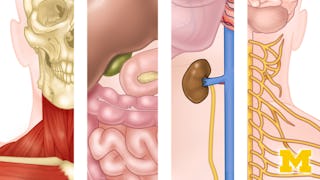
- Anatomy: University of Michigan
- Herbal Medicine: University of Minnesota
- Making Sense of Supplements: National Academy of Sports Medicine
- Metabolic Makeover: National Academy of Sports Medicine
- Precision Medicine: University of Geneva










