Computer Vision Courses
Computer vision courses can help you learn image processing, object detection, facial recognition, and video analysis. You can build skills in feature extraction, image classification, and deep learning techniques. Many courses introduce tools like OpenCV, TensorFlow, and PyTorch, that support implementing algorithms and developing applications that leverage artificial intelligence and AI for visual data interpretation.
Popular Computer Vision Courses and Certifications

University of Toronto
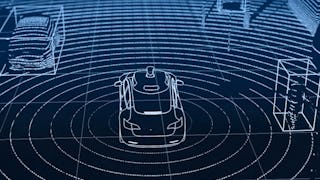
Skills you'll gain: Computer Vision, Convolutional Neural Networks, Image Analysis, Control Systems, Robotics, Deep Learning, Simulation and Simulation Software, Software Architecture, Simulations, Safety Assurance, Global Positioning Systems, Hardware Architecture, Systems Architecture, Network Routing, Graph Theory, Estimation, Algorithms, Artificial Intelligence, Mathematical Modeling, Applied Mathematics
Skills you'll gain: Prompt Engineering, AI Orchestration, AI Workflows, LangGraph, Agentic Workflows, LangChain, Retrieval-Augmented Generation, Prompt Patterns, Prompt Engineering Tools, LLM Application, Tool Calling, Agentic systems, Multimodal Prompts, Model Context Protocol, Generative AI Agents, Generative AI, AI Security, Vector Databases, AI Integrations, Software Development

Google Cloud
Skills you'll gain: Model Evaluation, Computer Vision, Convolutional Neural Networks, Google Cloud Platform, Tensorflow, Image Analysis, Model Optimization, Model Training, Applied Machine Learning, Transfer Learning, Model Deployment, AI Workflows, Artificial Neural Networks, Deep Learning, Fine-tuning, Machine Learning Methods, Data Preprocessing

Coursera
Skills you'll gain: Apache Airflow, Model Optimization, Data Validation, Image Analysis, Transfer Learning, Data Preprocessing, Data Integrity, Model Evaluation, Debugging, Computer Vision, PyTorch (Machine Learning Library), Data Pipelines, Feature Engineering, MLOps (Machine Learning Operations), Tensorflow, Model Training, Embeddings, Performance Tuning, Deep Learning, Digital Signal Processing
University of Toronto
Skills you'll gain: Computer Vision, Convolutional Neural Networks, Image Analysis, Deep Learning, Robotics, Model Training, Machine Learning Algorithms, Model Evaluation, Linear Algebra

What brings you to Coursera today?

Skills you'll gain: Keras (Neural Network Library), Deep Learning, PyTorch (Machine Learning Library), Computer Vision, Machine Learning, Data Transformation, Python Programming

Princeton University
Skills you'll gain: Microarchitecture, Computer Architecture, Memory Management, Hardware Architecture, Computer Engineering, Systems Architecture, Distributed Computing, Performance Tuning

Amazon Web Services
Skills you'll gain: Retrieval-Augmented Generation, Performance Tuning, Generative AI Agents, Model Optimization, Vector Databases, Generative AI, Prompt Engineering, Agentic Workflows, A/B Testing, Performance Testing, Amazon CloudWatch, Amazon Web Services, API Gateway, Artificial Intelligence and Machine Learning (AI/ML), Artificial Intelligence, Software Development, Serverless Computing, Natural Language Processing, Cloud Computing, Machine Learning

Amazon Web Services
Skills you'll gain: Prompt Engineering, Generative Model Architectures, Retrieval-Augmented Generation, Generative AI, Prompt Patterns, AI Workflows, Multimodal Prompts, Serverless Computing, Solution Architecture, Vector Databases, Embeddings, Large Language Modeling, Model Evaluation, Amazon Web Services, Artificial Intelligence and Machine Learning (AI/ML), Cloud Computing, Software Development, Artificial Intelligence, Machine Learning, Natural Language Processing

Amazon Web Services
Skills you'll gain: Generative Model Architectures, Generative AI, Retrieval-Augmented Generation, Metadata Management, Amazon S3, Enterprise Architecture, Data Maintenance, AI Integrations, Amazon Web Services, Data Store, Taxonomy, Prompt Engineering, Amazon DynamoDB, Cloud Computing, Artificial Intelligence and Machine Learning (AI/ML), Software Development, Artificial Intelligence, Data Pipelines, Natural Language Processing, Machine Learning

Amazon Web Services
Skills you'll gain: Token Optimization, Generative AI, Model Optimization, Prompt Engineering, Large Language Modeling, Cloud Deployment, Retrieval-Augmented Generation, System Monitoring, Amazon Web Services, Performance Tuning, Amazon CloudWatch, Scalability, Cloud Computing, Serverless Computing, Artificial Intelligence and Machine Learning (AI/ML), Artificial Intelligence, Software Development, Natural Language Processing, Machine Learning

Amazon Web Services
Skills you'll gain: Retrieval-Augmented Generation, Personally Identifiable Information, Data Ethics, Prompt Engineering, Generative AI, Security Controls, Artificial Intelligence, Artificial Intelligence and Machine Learning (AI/ML), Data Governance, Verification And Validation, Amazon S3, Amazon Web Services, Cybersecurity, Machine Learning, Natural Language Processing, Cloud Computing, Software Development, Governance
What brings you to Coursera today?
Best Computer Vision courses from Amazon Web Services
Top-rated Computer Vision courses offered by Amazon Web Services on Coursera.
- Gen AI Dev- Optimize Application PerformanceAmazon Web ServicesAdvanced1 - 3 MonthsAmazon Web Services
- Gen AI Dev- Analyze Requirements & Design GenAI SolutionsAmazon Web ServicesAdvanced1 - 4 WeeksAmazon Web Services
- Gen AI Dev- Design and Implement Vector Store SolutionsAmazon Web ServicesAdvanced1 - 3 MonthsAmazon Web Services
Best Computer Vision certificate programs
Earn a certificate in Computer Vision from top universities and companies.
- Self-Driving CarsUniversity of TorontoAdvanced3 - 6 MonthsSpecialization
- IBM RAG and Agentic AIIBMAdvanced3 - 6 MonthsProfessional Certificate
- Vision & Audio AI SystemsCourseraAdvanced3 - 6 MonthsSpecialization










