Embedded Systems Courses
Embedded systems courses can help you learn programming languages like C and C++, real-time operating systems, hardware interfacing, and system design principles. You can build skills in debugging, optimizing performance, and integrating sensors and actuators into devices. Many courses introduce tools such as Arduino and Raspberry Pi, which are commonly used for prototyping, along with simulation software that aids in testing and validating system behavior.
Popular Embedded Systems Courses and Certifications
Skills you'll gain: Linux Commands, Linux, Command-Line Interface, File Management, Unix Shell, Linux Administration, Package and Software Management, DevOps
Skills you'll gain: WordPress, Content Management Systems, Content Management, Web Content, Web Design and Development, Web Presence, Content Creation, Control Panels, Creativity

Skills you'll gain: Embedded Systems, Embedded Software, Memory Management, C (Programming Language), Software Development
Coursera
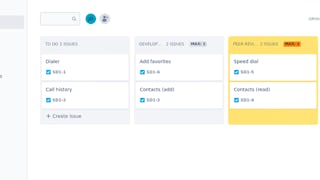
Skills you'll gain: Workflow Management, Jira (Software), Product Roadmaps, Collaborative Software, Kanban Principles, Project Coordination, Agile Software Development, Agile Methodology, Issue Tracking, Agile Project Management, Project Management Software
Skills you'll gain: Microsoft Azure, Artificial Intelligence and Machine Learning (AI/ML), Image Analysis, Computer Vision, AI Enablement, Applied Machine Learning, Artificial Intelligence, Cloud Services, AI Integrations, Authentications, Cloud API, Cloud Computing, Cloud Applications, Application Programming Interface (API), Software Development

What brings you to Coursera today?
Skills you'll gain: Content Management Systems, WordPress, Content Management, Web Presence, Web Content, Web Design, Web Design and Development, Web Development, System Configuration, Design, Marketing, Computer Science

Coursera
Skills you'll gain: HubSpot CRM, Customer Relationship Management (CRM) Software, Customer Relationship Management, Customer Data Management, Email Marketing, Business Software, Customer Communications Management, Sales Pipelines, Dashboard, Account Management, Data Management, Customer Service, Marketing, Sales Operations, Team Building

Skills you'll gain: Productivity, Productivity Software, Consolidation, Collaborative Software, Setting Appointments, Calendar Management, Organizational Skills, Project Management Software, Scheduling, Time Management, Delegation Skills, Team Oriented, Document Management, Workflow Management, Goal Setting, Project Management, User Accounts
Skills you'll gain: Sprint Planning, Azure DevOps, Backlogs, Collaborative Software, Issue Tracking, Kanban Principles, Agile Software Development, Microsoft Azure, Project Management, DevOps

Skills you'll gain: Applicant Tracking Systems, Professional Development, Graphic Design, Keyword Research, Content Optimization, Business Writing, Recruitment, Data Visualization

Skills you'll gain: Spring Boot, Database Design, Object-Relational Mapping, Application Frameworks, Spring Framework, Data Modeling, Database Development, Database Software, Data Mapping, Application Development, Database Architecture and Administration, Requirements Analysis, Data Persistence
Skills you'll gain: Command-Line Interface, Linux Commands, Linux, File Management, Linux Administration, File Systems, File I/O
What brings you to Coursera today?
Best free Embedded Systems courses
High-quality free Embedded Systems courses you can start today.
- Build a free website with WordPressCourseraIntermediateLess Than 2 HoursFree
- Get started with JiraCourseraBeginnerLess Than 2 HoursFree
- Build a computer vision app with Azure Cognitive ServicesMicrosoftIntermediateLess Than 2 HoursFree
Best Embedded Systems courses from Coursera
Top-rated Embedded Systems courses offered by Coursera on Coursera.
- Getting Started with Linux TerminalCourseraBeginnerLess Than 2 HoursCoursera
- Pointers and Memory in C: Build a Rocket Display ModuleCourseraIntermediateLess Than 2 HoursCoursera
- Build a Full Website using WordPressCourseraAdvancedLess Than 2 HoursCoursera
Best Embedded Systems courses for beginners
Top-rated beginner-friendly Embedded Systems courses with no prerequisites.
- Introduction to CRM with HubSpotCourseraBeginnerLess Than 2 HoursNo prerequisites
- Introduction to Project Management with ClickUpCourseraBeginnerLess Than 2 HoursNo prerequisites
- Getting Started with Azure DevOps BoardsCourseraBeginnerLess Than 2 HoursNo prerequisites
Best short Embedded Systems courses
Quick Embedded Systems courses you can complete in a few hours or less.
- Build a Professional Resume using CanvaCourseraBeginnerLess Than 2 HoursQuick completion
- Spring Boot with Embedded DatabaseCourseraBeginnerLess Than 2 HoursQuick completion
- Linux: File Management for DevopsCourseraIntermediateLess Than 2 HoursQuick completion










