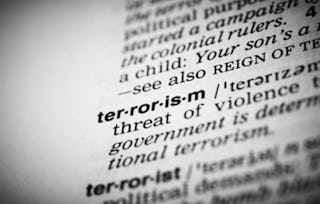
This course will explore the forces that led to the 9/11 attacks and the policies the United States adopted in response. We will examine the phenomenon of modern terrorism, the development of the al Qai'da ideology, and the process by which individuals radicalize towards violence.
In this course, we will examine why al Qai-da attacked America. We will also examine the phenomenon of terrorism, in general, and the radical ideology developed and propagated by Osama bin Laden through al Qaida, more specifically. We will consider why individuals are attracted to this ideology and how they radicalize to violence. We will also explore how the United States addressed terrorism prior to 9/11 and the policy changes the US (and its allies around the globe) faced in the immediate aftermath of the attacks.
What's included
3 videos5 readings
Show info about module content
3 videos•Total 36 minutes
David Schanzer Biography•14 minutes
Understanding 9/11•4 minutes
What Happened Here•18 minutes
5 readings•Total 50 minutes
Course Overview•10 minutes
Assessments and Grading•10 minutes
Discussion Forums•10 minutes
Report a problem with the course•10 minutes
Week 1: Required Reading•10 minutes
Week 2: What is Terrorism?
Module 2•1 hour to complete
Module details
Our topic for this week is, what is terrorism. We will try to define terrorism and understand the actions that we're going to be studying in this course, 9/11 and its aftermath. We will examine one of the key debates in this area; can terrorism be executed by a state, or is it only the use of political violence by a non-state actor. You will also learn how to write a policy memo.
How to Write a Policy Memo - Heading and Background•7 minutes
How to Write a Policy Memo - Analysis and Summary•5 minutes
How to Write a Policy Memo - Revision•2 minutes
How to Write a Policy Memo - Proofread•2 minutes
1 reading•Total 10 minutes
Week 2: Required Reading•10 minutes
Week 3: A Primer on Islam
Module 3•2 hours to complete
Module details
This week we have a special treat: we will have an extensive conversation with Imam Abdullah Antepli, the Islamic Chaplin here at Duke. We’ll cover a wide range of topics, including Islamic history, law, the role of women and the Muslim experience in the post – 9/11 world.
What's included
13 videos1 reading
Show info about module content
13 videos•Total 96 minutes
Beginnings of Islam•8 minutes
Early Muslim Civilization•10 minutes
What Muslims Believe•8 minutes
The Core Practices of Islam•6 minutes
What is Shariah Law•11 minutes
Shariah and the Rule of Law•6 minutes
What is Jihad'?•6 minutes
The Sword Verses•7 minutes
Osama bin Laden’s Use of Religion•5 minutes
Women in Islam•8 minutes
Women, Islam, & Culture•6 minutes
The Muslim-American Experience Post 9/11- Part 1•9 minutes
The Muslim-American Experience Post 9/11 - Part 2•6 minutes
1 reading•Total 10 minutes
Week 3: Required Reading•10 minutes
Week 4: The al Qai'da Ideology
Module 4•2 hours to complete
Module details
Our topic for this week is the al Qaeda ideology. An ideology is essentially the set of beliefs that an individual, a group, or an organization has to either motivate them or to give that organization purpose. For al Qaeda, of course this is incredibly important because they're trying to motivate individuals to sacrifice their lives for what they view as a great cause.
What's included
9 videos1 reading
Show info about module content
9 videos•Total 87 minutes
An Ideology of Grievance•17 minutes
Biography of Sayyid Qutb•10 minutes
Qutb’s Milestones and a Muslim Revival•8 minutes
Qutb and Jihad•8 minutes
Roots of al Qaeda•15 minutes
Osama Bin Laden’s Ideology•13 minutes
Terminology: What Is Islamism?•7 minutes
Elements of the al Qai’da Ideology•4 minutes
Flaws in the al Qai’da Ideology•4 minutes
1 reading•Total 10 minutes
Week 4: Required Reading•10 minutes
Week 5: The Radicalization Process
Module 5•2 hours to complete
Module details
This week we’ll examine how individuals become radicalized. We’ll see that there are multiple paths to radicalization where opportunity and chance play a significant role. Thus, radicalization is a complex process that defies simple explanation. We’ll conclude with a conversation with Peter Neumann, Professor of Security Studies at the Department of War Studies, King’s College London, and director of the International Centre for the Study of Radicalization.
What's included
6 videos1 reading1 peer review
Show info about module content
6 videos•Total 70 minutes
Flawed Theories of Radicalization•14 minutes
Radicalization as a Complex Process•5 minutes
Multiple Pathways to Radicalization•9 minutes
The Role of Opportunities & Chance•6 minutes
The Power of Online Radicalization with Peter Neumann part 1•17 minutes
The Power of Online Radicalization with Peter Neumann, part 2•20 minutes
1 reading•Total 10 minutes
Week 5: Required Reading•10 minutes
1 peer review•Total 60 minutes
Peer Assessment #1•60 minutes
Week 6: Counterterrorism Before 9/11
Module 6•2 hours to complete
Module details
This week we’ll examine the three main US political philosophies that underlie the country’s approach to counterterrorism. We’ll look at the beginnings of the US response to this growing threat and how US agencies involved in counterterrorism efforts have adapted over time. Finally, we’ll examine how the US attempted to combat Osama bin Laden’s growing threat to US security.
What's included
8 videos1 reading
Show info about module content
8 videos•Total 83 minutes
The NeoCon Critique: American Weakness•9 minutes
The Liberal Critique: American Empire•8 minutes
The Realist Perspective•8 minutes
Early Efforts to Address a Growing Threat•12 minutes
Slow Change in the Agencies - Airport Security•4 minutes
Slow Change in the Agencies - FBI, CIA, DOD•13 minutes
Stopping Bin Laden Prior to 9/11 - Part 1•18 minutes
Stopping Bin Laden Prior to 9/11 - Part 2•12 minutes
1 reading•Total 10 minutes
Week 6: Required Reading•10 minutes
Week 7: September 12, 2001
Module 7•4 hours to complete
Module details
In this final week of the course we’ll speak with Juan Zarate , one of the key White House counter terrorism advisers in the second Bush administration, about US counterterrorism efforts since 9/11. We’ll look at the current state of threats to US interests from emerging actors, such as ISIS. Finally, we’ll look at the recent developments in the Middle East that affect US security.
What's included
8 videos2 readings1 peer review
Show info about module content
8 videos•Total 111 minutes
Challenges on September 12, 2001•13 minutes
Intelligence and Policy Failures•8 minutes
Interview with Juan Zarate - Part 1•21 minutes
Interview with Juan Zarate - Part 2•14 minutes
Where Did ISIS Come From•15 minutes
What Does ISIS Believe•13 minutes
Violent Extremism in the United States•14 minutes
9/11 & The Modern Middle East•12 minutes
2 readings•Total 20 minutes
Week 7: Required Reading•10 minutes
Review your learning experience•10 minutes
1 peer review•Total 120 minutes
Peer Assessment #2•120 minutes
Instructor
Instructor ratings
Instructor ratings
We asked all learners to give feedback on our instructors based on the quality of their teaching style.
Duke University has about 13,000 undergraduate and graduate students and a world-class faculty helping to expand the frontiers of knowledge. The university has a strong commitment to applying knowledge in service to society, both near its North Carolina campus and around the world.
"To be able to take courses at my own pace and rhythm has been an amazing experience. I can learn whenever it fits my schedule and mood."
Jennifer J.
Learner since 2020
"I directly applied the concepts and skills I learned from my courses to an exciting new project at work."
Larry W.
Learner since 2021
"When I need courses on topics that my university doesn't offer, Coursera is one of the best places to go."
Chaitanya A.
"Learning isn't just about being better at your job: it's so much more than that. Coursera allows me to learn without limits."
Learner reviews
4.7
134 reviews
5 stars
77.61%
4 stars
15.67%
3 stars
5.22%
2 stars
1.49%
1 star
0%
Showing 3 of 134
C
CS
5·
Reviewed on Feb 26, 2021
Very interesting course with a religious view of Terrorist Attacks. Learned a lot!
Q
QH
5·
Reviewed on Jul 5, 2024
This is an excellent course for those that wants to learn about what happened before and after the tragic events of 9/11. The instructor does not shy away from sensitive topics. Excellent.
S
SB
5·
Reviewed on Mar 24, 2018
Outstanding course and content; the interviews really enriched my learning.
Will I receive a transcript from Duke University for completing this course?
No. Completion of a Coursera course does not earn you academic credit from Duke; therefore, Duke is not able to provide you with a university transcript. However, your electronic Certificate will be added to your Accomplishments page - from there, you can print your Certificate or add it to your LinkedIn profile.
When will I have access to the lectures and assignments?
To access the course materials, assignments and to earn a Certificate, you will need to purchase the Certificate experience when you enroll in a course. You can try a Free Trial instead, or apply for Financial Aid. The course may offer 'Full Course, No Certificate' instead. This option lets you see all course materials, submit required assessments, and get a final grade. This also means that you will not be able to purchase a Certificate experience.
What will I get if I purchase the Certificate?
When you purchase a Certificate you get access to all course materials, including graded assignments. Upon completing the course, your electronic Certificate will be added to your Accomplishments page - from there, you can print your Certificate or add it to your LinkedIn profile.
Is financial aid available?
Yes. In select learning programs, you can apply for financial aid or a scholarship if you can’t afford the enrollment fee. If fin aid or scholarship is available for your learning program selection, you’ll find a link to apply on the description page.