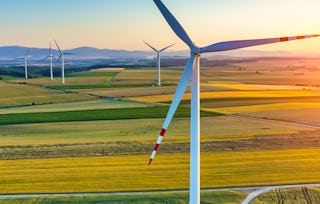
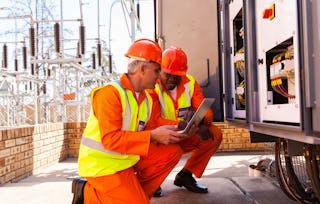
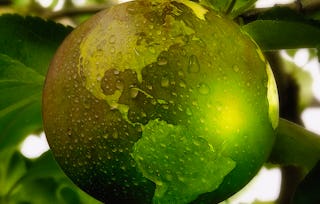
This course is designed to introduce students to the issues of energy in the 21st century – including food and fuels – which are inseparably linked – and will discuss energy production and utilization from the biology, engineering, economics, climate science, and social science perspectives.
This course will cover the current production and utilization of energy, as well as the consequences of this use, examining finite fossil energy reserves, how food and energy are linked, impacts on the environment and climate, and the social and economic impacts of our present energy and food production and use. After the introductory lectures, we will examine the emerging field of sustainable energy, fuel and food production, emphasizing the importance of developing energy efficient and sustainable methods of production, and how these new technologies can contribute to replacing the diminishing supplies of fossil fuels, and reduce the consequences of carbon dioxide release into the environment. This course will also cover the importance of creating a sustainable energy future for all societies including those of the developing world. Lectures will be prepared and delivered by leading UC San Diego and Scripps Institution of Oceanography faculty and industry professionals across these areas of expertise.
Course overview materials, including syllabus, lecturer information, grading criteria, and external notices and resources.
What's included
7 readings
Show info about module content
7 readings•Total 70 minutes
Syllabus•10 minutes
How to Use Discussion Forums•10 minutes
Glossary•10 minutes
Social Media Resources•10 minutes
Lecturers•10 minutes
Get to Know Your Classmates•10 minutes
Additional Opportunities•10 minutes
Introduction to Energy
Module 2•3 hours to complete
Module details
Introduces the basics of energy, covers finite energy sources like petroleum, looks at how energy and food are related, and examines the scale of current and future energy consumption and what renewable energy options can meet that demand.
What's included
10 videos5 readings1 assignment
Show info about module content
10 videos•Total 110 minutes
Introduction to Energy Part 1•13 minutes
Introduction to Energy Part 2•12 minutes
Energy and Modern Agriculture Part 1•12 minutes
Energy and Modern Agriculture Part 2 •12 minutes
Petroleum Part 1 •11 minutes
Petroleum Part 2 •7 minutes
Energy by the Numbers Part 1•13 minutes
Energy by the Numbers Part 2•10 minutes
What Scales to Meet Energy Demand? Part 1 •11 minutes
What Scales to Meet Energy Demand? Part 2 •10 minutes
5 readings•Total 50 minutes
Learning Objectives•10 minutes
1 assignment•Total 20 minutes
Introduction to Energy Quiz•20 minutes
Physical Energy Sources
Module 3•6 hours to complete
Module details
Looks at some of the alternative energy options from the physical sciences domain, including wind energy, photovoltaic and photothermal energy, and nuclear energy. It also covers energy storage and electric vehicles, and energy efficiency and smart grid technologies.
What's included
12 videos6 readings1 assignment1 peer review
Show info about module content
12 videos•Total 141 minutes
Future Energy Needs and Consequences from a Physical Sciences Perspective Part 1•10 minutes
Future Energy Needs and Consequences from a Physical Sciences Perspective Part 2•16 minutes
Wind Power and Turbine Technologies Part 1•15 minutes
Wind Power and Turbine Technologies Part 2•7 minutes
The Future of Nuclear Energy Part 1•14 minutes
The Future of Nuclear Energy Part 2•10 minutes
Photovoltaic and Photothermal Energy Production Part 1•18 minutes
Photovoltaic and Photothermal Energy Production Part 2•7 minutes
Electric Vehicles and Storage Technologies Part 1•14 minutes
Electric Vehicles and Storage Technologies Part 2•8 minutes
Energy Efficiency and Smart Grid Part 1•13 minutes
Energy Efficiency and Smart Grid Part 2•8 minutes
6 readings•Total 60 minutes
Learning Objectives•10 minutes
1 assignment•Total 30 minutes
Physical Energy Sources Quiz•30 minutes
1 peer review•Total 120 minutes
Peer Review: Carbon Footprint•120 minutes
Introduction to Biological Energy Sources
Module 4•1 hour to complete
Module details
Provides an overview of the different biological energy sources including plants and algae. It explains what biofuels are, how they are produced, and the pros and cons of different biological sources.
What's included
2 videos1 reading
Show info about module content
2 videos•Total 27 minutes
Where Do We Go From Here? Biological Energy Options Part 1•11 minutes
Where Do We Go From Here? Biological Energy Options Part 2•16 minutes
1 reading•Total 10 minutes
Learning Objectives•10 minutes
Plant Biofuel
Module 5•2 hours to complete
Module details
Discusses various plant-based fuels including corn ethanol, cellulosic ethanol, and jatropha biodiesel. It will cover the different technologies used, the pros and cons of each source, and current production around the world.
What's included
6 videos3 readings1 assignment
Show info about module content
6 videos•Total 77 minutes
Corn Ethanol Part 1•11 minutes
Corn Ethanol Part 2•10 minutes
Cellulosic Ethanol Part 1•21 minutes
Cellulosic Ethanol Part 2•8 minutes
Jatropha Part 1•17 minutes
Jatropha Part 2•10 minutes
3 readings•Total 30 minutes
Learning Objectives•10 minutes
1 assignment•Total 20 minutes
Intro to Biological Energy Sources and Plant Biofuel Quiz•20 minutes
Algae Biofuel
Module 6•3 hours to complete
Module details
Examines different algae used for biofuel production including cyanobacteria, diatoms, and green algae. It looks at how these organisms are different and why they are used to produce biofuels and bio-products. Additionally, the module covers the different tools and technologies used in research and production including bio-prospecting, genetics, synthetic biology, and metabolic engineering.
What's included
9 videos5 readings1 assignment
Show info about module content
9 videos•Total 88 minutes
Cyanobacteria Part 1•16 minutes
Cyanobacteria Part 2•11 minutes
Diatoms Part 1•18 minutes
Diatoms Part 2•8 minutes
Green Algae •13 minutes
Bio-prospecting, Genetics, and Synthetic Biology of Algae Part 1•13 minutes
Bio-prospecting, Genetics, and Synthetic Biology of Algae Part 2•8 minutes
Metabolic Engineering of Algae, Part 1•0 minutes
Metabolic Engineering of Algae, Part 2•0 minutes
5 readings•Total 50 minutes
Learning Objectives•10 minutes
1 assignment•Total 30 minutes
Midterm Exam•30 minutes
Biofuel Production and Downstream Processing
Module 7•4 hours to complete
Module details
Covers the chemistry of biodiesel, looks at the different thermochemical processes used to convert biomass to fuel, and examines renewable biogas. It also looks at the production process of algae biofuel, how and why nutrient utilization and recycling is important in biofuel production, and the relationship between biofuel and water.
What's included
11 videos6 readings1 assignment
Show info about module content
11 videos•Total 132 minutes
Biodiesel Chemistry and Analysis Part 1•19 minutes
Biodiesel Chemistry and Analysis Part 2•6 minutes
Thermochemical Conversion of Biomass to Fuel Part 1•21 minutes
Thermochemical Conversion of Biomass to Fuel Part 2•9 minutes
Biogas Part 1•15 minutes
Biogas Part 2•8 minutes
Production Processes for Biofuels from Algae Part 1•14 minutes
Production Processes for Biofuels from Algae Part 2•11 minutes
Nutrient Utilization and Recycling Part 1•13 minutes
Nutrient Utilization and Recycling Part 2•5 minutes
Biofuel and Water•12 minutes
6 readings•Total 60 minutes
Learning Objectives•10 minutes
1 assignment•Total 30 minutes
Biofuel Production and Downstream Processing Quiz•30 minutes
Social Issues, Economics, and Politics
Module 8•7 hours to complete
Module details
Examines how energy production and use affects the economy, our wellbeing, and our heath. It will also look at how energy impacts the poorest communities, the external costs of traditional energy, and how we can regulate energy and incentivize renewable energy. Additionally, this section identifies what a Life Cyle Assessment is and how it is used with renewable and non-renewable fuels. Lastly, it looks at the United States’ past and present energy policies, and the current state of international policy on climate change.
What's included
16 videos7 readings1 assignment1 peer review
Show info about module content
16 videos•Total 179 minutes
Economic and Social Impact of Energy Production and Use Part 1•14 minutes
Economic and Social Impact of Energy Production and Use Part 2•12 minutes
The Importance of Energy for the Bottom Billion Part 1•14 minutes
The Importance of Energy for the Bottom Billion Part 2•14 minutes
Economics of Energy Part 1•15 minutes
Economics of Energy Part 2•13 minutes
Regulation of Energy Use and Energy Efficiency Part 1•16 minutes
Regulation of Energy Use and Energy Efficiency Part 2•11 minutes
Energy Services for the Remote Communities of Nepal Part 1•16 minutes
Energy Services for the Remote Communities of Nepal Part 2•13 minutes
Lifecycle Assessment of Fossil and Renewable Fuels Part 1•10 minutes
Lifecycle Assessment of Fossil and Renewable Fuels Part 2•7 minutes
Policy Impacts on Renewable Energy Industries, Part 1•0 minutes
Policy Impacts on Renewable Energy Industries, Part 2•0 minutes
International Politics of Climate Change Part 1•13 minutes
International Politics of Climate Change Part 2•12 minutes
7 readings•Total 70 minutes
Learning Objectives•10 minutes
1 assignment•Total 30 minutes
Social Issues, Economics, and Politics Quiz•30 minutes
1 peer review•Total 120 minutes
Peer Review: Local Energy Solutions•120 minutes
Climate Change
Module 9•4 hours to complete
Module details
Looks at the history of research on how carbon dioxide causes climate change, the key points of the Intergovernmental Panel on Climate Change’s reporting, and how climate change is portrayed in the media. Also, it discusses the importance of decreasing Short-lived Climate Pollutants (SLCPs) to mitigate climate change and some possible solutions to reduce these pollutants produced by the poorest communities. Additionally, this section looks at how climate change has affected California’s water and energy use, and how climate change threatens global food security.
What's included
8 videos4 readings1 assignment
Show info about module content
8 videos•Total 108 minutes
Climate Change and the Impact of Carbon Dioxide Part 1•12 minutes
Climate Change and the Impact of Carbon Dioxide Part 2•14 minutes
A New Approach for Slowing Down Climate Change and Sea Level Rise in the Near-term Part 1•13 minutes
A New Approach for Slowing Down Climate Change and Sea Level Rise in the Near-term Part 2•12 minutes
Climate Change and Water in California Part 1•15 minutes
Climate Change and Water in California Part 2•16 minutes
Climate Change and Food Security Part 1•11 minutes
Climate Change and Food Security Part 2•14 minutes
4 readings•Total 40 minutes
Learning Objectives•10 minutes
1 assignment•Total 80 minutes
Final Exam•80 minutes
Office Hours
Module 10•9 hours to complete
Module details
Recordings of live office hours from Dr. Mayfield and other course lecturers.
What's included
10 videos
Show info about module content
10 videos•Total 561 minutes
Office Hours- Introduction to Energy with George Tynan•61 minutes
Office Hours - Physical Energy Sources with George Tynan•61 minutes
Office Hours - Physical Energy Sources with Bill Torre•63 minutes
Office Hours - Introduction to Biological Energy Sources with Susan Golden•58 minutes
Office Hours- Algae Biofuel with Stephen Mayfield•60 minutes
Office Hours - Biofuel Production and Downstream Processing with Skip Pomeroy•53 minutes
Office Hours - Biofuel Production and Downstream Processing with Rob McBride•57 minutes
Office Hours - Social Issues, Economics, and Politics with Mark Jacobsen•59 minutes
Office Hours - Social Issues, Economics, and Politics with David Victor•44 minutes
Office Hours - Climate Change with Stephen Mayfield•45 minutes
Instructor
Instructor ratings
Instructor ratings
We asked all learners to give feedback on our instructors based on the quality of their teaching style.
UC San Diego is an academic powerhouse and economic engine, recognized as one of the top 10 public universities by U.S. News and World Report. Innovation is central to who we are and what we do. Here, students learn that knowledge isn't just acquired in the classroom—life is their laboratory.
OK
Explore more from Environmental Science and Sustainability
"To be able to take courses at my own pace and rhythm has been an amazing experience. I can learn whenever it fits my schedule and mood."
Jennifer J.
Learner since 2020
"I directly applied the concepts and skills I learned from my courses to an exciting new project at work."
Larry W.
Learner since 2021
"When I need courses on topics that my university doesn't offer, Coursera is one of the best places to go."
Chaitanya A.
"Learning isn't just about being better at your job: it's so much more than that. Coursera allows me to learn without limits."
Learner reviews
4.7
1,176 reviews
5 stars
80%
4 stars
16.34%
3 stars
2.29%
2 stars
0.34%
1 star
1.02%
Showing 3 of 1176
A
AM
5·
Reviewed on Sep 28, 2016
Very informative course even for someone with a prior knowledge in a particular segment in renewable energy. Covers diverse energy resources along with economic, and environmental considerations.
L
LK
5·
Reviewed on Jul 6, 2019
Even though without scientific background, I found this course simply brilliant. Pragmatic, with much data on the future sources of energy that I hope will replace fossil fuels...
I
IG
5·
Reviewed on Apr 24, 2016
An excellent course for environmentally conscious individuals interested in the different options we have to create a 100% renewable energy future.
When will I have access to the lectures and assignments?
To access the course materials, assignments and to earn a Certificate, you will need to purchase the Certificate experience when you enroll in a course. You can try a Free Trial instead, or apply for Financial Aid. The course may offer 'Full Course, No Certificate' instead. This option lets you see all course materials, submit required assessments, and get a final grade. This also means that you will not be able to purchase a Certificate experience.
What will I get if I purchase the Certificate?
When you purchase a Certificate you get access to all course materials, including graded assignments. Upon completing the course, your electronic Certificate will be added to your Accomplishments page - from there, you can print your Certificate or add it to your LinkedIn profile.
Is financial aid available?
Yes. In select learning programs, you can apply for financial aid or a scholarship if you can’t afford the enrollment fee. If fin aid or scholarship is available for your learning program selection, you’ll find a link to apply on the description page.