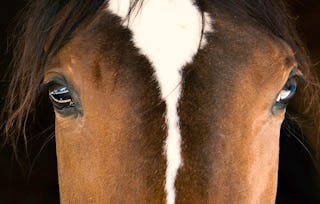
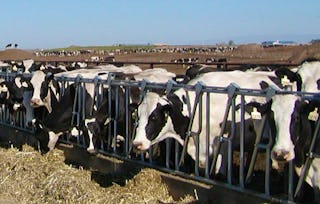
There are over 100 million horses, donkeys and mules in the world today and owners of these animals can be found on almost every continent and in almost every society. The Horse Course will cover many unique aspects of equine ownership and touch upon the science behind many of today’s management practices.
Welcome to Week 1 of The Horse Course! To start off the course, we will begin discussing what exactly an “equid” is. We will cover the many equine species inhabiting our globe. Next, we’ll jump into the history of horses and donkeys, touching upon how they have made such an impact on our own societal development. The second half of week 1 will cover the many breeds of horses and donkeys. We will finish up with a lecture on the equine hybrids.
What's included
7 videos1 reading1 assignment1 discussion prompt
Show info about module content
7 videos•Total 60 minutes
Welcome to The Horse Course•4 minutes
Introduction to the World’s Equids•9 minutes
Evolution of Horses and Donkeys•10 minutes
Roles of Horses and Donkeys in Human Development•9 minutes
Breeds of Horses•15 minutes
Breeds of Donkeys•5 minutes
The Hybrids•7 minutes
1 reading•Total 10 minutes
Week 1•10 minutes
1 assignment•Total 30 minutes
Week 1 Quiz•30 minutes
1 discussion prompt•Total 10 minutes
Horses and Donkeys•10 minutes
Basic Equine Physiology
Module 2•4 hours to complete
Module details
This week will start out with covering some basic physiology. We will then advance into hoof anatomy and care. This will lead to spending a lecture discussing laminitis, a serious hoof condition in horses and other equids. The final two lectures will jump into the various coat colors and markings in horses.
Week 2 Assignment Instructions - Aminal Description and Hoof Care Plan•5 minutes
1 reading•Total 10 minutes
Week 2•10 minutes
1 assignment•Total 30 minutes
Week 2 Quiz•30 minutes
1 peer review•Total 60 minutes
Animal Description and Hoof Care Plan Assignment•60 minutes
1 discussion prompt•Total 10 minutes
Natural Hoof Care•10 minutes
Equine Behavior and Training
Module 3•3 hours to complete
Module details
The topics this week will focus on equid behavior and movement. Understanding how equids relate to their environment and communicate is critical to training and management. We will start this week by examining the basic equine senses and communication. Then we will discuss normal and abnormal behaviors and the basic psychology used in training. We will finish the week discussing the basic gaits and how these animals move.
Week 3 Assignment Instructions - Training Plan•6 minutes
1 reading•Total 10 minutes
Week 3•10 minutes
1 assignment•Total 30 minutes
Week 3 Quiz•30 minutes
1 peer review•Total 60 minutes
Training Plan Assignment•60 minutes
1 discussion prompt•Total 10 minutes
Domestic Horse/Donkey Behavior•10 minutes
Feeding Management
Module 4•4 hours to complete
Module details
The topics this week will focus on equid nutrition. Understanding how and what to feed these animals is one of the most important aspects of basic care. We will start with digestive anatomy, how to evaluate your animal’s nutrient requirements, and then jump into feeding management. We will round out the week discussing colic and other nutritional disorders.
The topics this week will focus on equine health. Monitoring and taking care of your animal’s health is critical to owning any equid. We will start off with the normal equine vital signs and then we will discuss administering first aid to your animals. We will then cover the different parasites and diseases that can afflict these animals. Finally, we will end the week discussing some common genetic disorders.
Week 5 Assignment Instructions - Health Management Plan•6 minutes
1 reading•Total 10 minutes
Week 5•10 minutes
1 assignment•Total 30 minutes
Week 5 Quiz•30 minutes
1 peer review•Total 60 minutes
Health Management Plans Assignment•60 minutes
1 discussion prompt•Total 10 minutes
Emergency Situations•10 minutes
Breeding Management
Module 6•3 hours to complete
Module details
The topics this week will focus on equine reproduction. Breeding is an important component of the equine industry. We will start off this week with some basic anatomy, including what makes the equids unique. Then we will cover the estrous cycles of mares and jennies, followed by common breeding systems used throughout the world. After discussing unique aspects of equine pregnancy and parturition, we will finish out the week covering some management tips for taking care of the newborn foal.
What's included
8 videos1 reading1 assignment1 discussion prompt
Show info about module content
8 videos•Total 115 minutes
Week 6 Welcome Video•7 minutes
Equine Reproductive Anatomy - Female•17 minutes
Equine Reproductive Anatomy - Male•11 minutes
Estrous Cycle•20 minutes
Breeding Systems•13 minutes
Pregnancy•17 minutes
Parturition•15 minutes
Post Foaling Care•15 minutes
1 reading•Total 10 minutes
Week 6•10 minutes
1 assignment•Total 30 minutes
Week 6 Quiz•30 minutes
1 discussion prompt•Total 10 minutes
Horses and other Mammalian Species•10 minutes
Instructor
Instructor ratings
Instructor ratings
We asked all learners to give feedback on our instructors based on the quality of their teaching style.
The University of Florida (UF) is recognized nationally and internationally as a leader in academic excellence, both on campus and online. Ranked in the top 10 of Public Universities, the University of Florida is the state’s oldest university and has a long established tradition of academic excellence.
"To be able to take courses at my own pace and rhythm has been an amazing experience. I can learn whenever it fits my schedule and mood."
Jennifer J.
Learner since 2020
"I directly applied the concepts and skills I learned from my courses to an exciting new project at work."
Larry W.
Learner since 2021
"When I need courses on topics that my university doesn't offer, Coursera is one of the best places to go."
Chaitanya A.
"Learning isn't just about being better at your job: it's so much more than that. Coursera allows me to learn without limits."
Learner reviews
4.9
996 reviews
5 stars
90.36%
4 stars
7.63%
3 stars
1.40%
2 stars
0.20%
1 star
0.40%
Showing 3 of 996
R
RZ
5·
Reviewed on Apr 22, 2021
An amazing course learning the wonderful equine basics! For anyone who is interested in equine lifestyle, or is wanting to learn about it, I can not recommend this course enough!
E
ES
5·
Reviewed on Jul 6, 2020
Great course. A must have for all horse lovers. The instructor explained everything in a way that I could understand and grow from. I have learned so much thanks to this course and greatly enjoyed it!
A
AL
5·
Reviewed on Jun 3, 2016
Excellent course! The course content was informative and the instructor kept the flow going at a nice pace and was interesting to listen to. I highly recommend this course!
When will I have access to the lectures and assignments?
To access the course materials, assignments and to earn a Certificate, you will need to purchase the Certificate experience when you enroll in a course. You can try a Free Trial instead, or apply for Financial Aid. The course may offer 'Full Course, No Certificate' instead. This option lets you see all course materials, submit required assessments, and get a final grade. This also means that you will not be able to purchase a Certificate experience.
What will I get if I purchase the Certificate?
When you purchase a Certificate you get access to all course materials, including graded assignments. Upon completing the course, your electronic Certificate will be added to your Accomplishments page - from there, you can print your Certificate or add it to your LinkedIn profile.
Is financial aid available?
Yes. In select learning programs, you can apply for financial aid or a scholarship if you can’t afford the enrollment fee. If fin aid or scholarship is available for your learning program selection, you’ll find a link to apply on the description page.