When you enroll in this course, you'll also be enrolled in this Specialization.
Learn new concepts from industry experts
Gain a foundational understanding of a subject or tool
Develop job-relevant skills with hands-on projects
Earn a shareable career certificate
There are 3 modules in this course
This course provides a comprehensive overview of how healthcare organizations function, adapt, and maintain quality and safety in patient care. Learners explore healthcare systems, delivery models, and reimbursement structures. The course covers patient safety standards, resource allocation, and regulatory compliance, emphasizing the nurse’s role in improving efficiency and quality. Students also examine quality improvement processes, professional development, and emergency preparedness in healthcare settings. By the end of this course, learners will understand how healthcare organizations operate, how policies and systems influence patient outcomes, and how nurses contribute to quality, safety, and cost-effective care.
This module introduces students to the structure, organization, and operational principles of modern healthcare systems. Students will explore issues of access to healthcare and the factors that influence care availability across diverse populations, understanding Diagnosis-Related Groups (DRGs) and their impact on reimbursement and care delivery. The module emphasizes the various levels of care from primary to tertiary settings, principles of resource allocation and utilization that affect healthcare efficiency, and different nursing care delivery systems used to organize patient care. Students will also examine emergency management and preparedness protocols essential for responding to disasters and public health emergencies. Through this exploration, learners will develop a comprehensive understanding of how healthcare systems function, the challenges facing modern healthcare delivery, and the nurse's role in navigating and contributing to effective healthcare organizations.
What's included
6 videos6 readings3 assignments
Show info about module content
6 videos•Total 26 minutes
Access to Health Care•5 minutes
Diagnosis-related Groups (DRG)•3 minutes
Levels of Care•4 minutes
Resource Allocation and Utilization•4 minutes
Nursing Care Delivery Systems•5 minutes
Emergency Management and Preparedness•5 minutes
6 readings•Total 180 minutes
Access to Health Care: Slides•30 minutes
Diagnosis-related Groups (DRG): Slides•30 minutes
Levels of Care: Slides•30 minutes
Resource Allocation and Utilization: Slides•30 minutes
Nursing Care Delivery Systems: Slides•30 minutes
Emergency Management and Preparedness: Slides•30 minutes
3 assignments•Total 40 minutes
Foundations of Health Care Systems – Final Quiz•30 minutes
Access, Financing, and Levels of Care: Quiz•5 minutes
Organizational Structures and Resource Use: Quiz•5 minutes
Health Care Regulations and Patient Safety
Module 2•5 hours to complete
Module details
This module examines the regulatory frameworks and safety principles that ensure quality healthcare delivery and protect patients from harm. Students will explore healthcare regulation and accreditation processes, the role of professional organizations in setting practice standards, and various types of reimbursement systems that influence care delivery. The module emphasizes key principles of patient safety, including standard precautions for infection control, National Patient Safety Goals (NPSG) established by The Joint Commission, and safety considerations across the lifespan from pediatric to geriatric populations. Students will also examine how to foster an organizational culture of safety that encourages error reporting, continuous improvement, and accountability. Through this exploration, learners will develop the knowledge and skills necessary to practice safely within regulatory requirements, contribute to quality improvement initiatives, and advocate for patient safety in healthcare organizations.
What's included
8 videos8 readings3 assignments
Show info about module content
8 videos•Total 46 minutes
Regulation and Accreditation•5 minutes
Professional Organizations•2 minutes
Types of Reimbursement•3 minutes
Key Principles of Patient Safety•6 minutes
Standard Precautions•6 minutes
National Patient Safety Goals (NPSG)•6 minutes
Safety Across the Lifespan•14 minutes
Organizational Culture of Safety•4 minutes
8 readings•Total 240 minutes
Regulation and Accreditation: Slides•30 minutes
Professional Organizations: Slides•30 minutes
Types of Reimbursement: Slides•30 minutes
Key Principles of Patient Safety: Slides•30 minutes
Standard Precautions: Slides•30 minutes
National Patient Safety Goals (NPSG): Slides•30 minutes
Safety Across the Lifespan: Slides•30 minutes
Organizational Culture of Safety: Slides•30 minutes
3 assignments•Total 40 minutes
Health Care Regulations and Patient Safety – Final Quiz•30 minutes
Health Care Policy: Quiz•5 minutes
Patient Safety: Quiz•5 minutes
Health Care Quality
Module 3•4 hours to complete
Module details
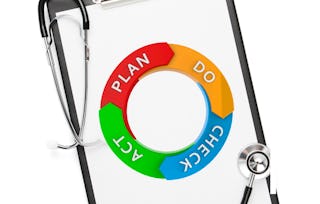
This module explores the principles and practices of quality improvement in healthcare settings and the tools used to measure and enhance patient outcomes. Students will examine effective teaching and learning strategies for patient education and professional development, as well as the role of technology and informatics in supporting quality care delivery and data-driven decision-making. The module emphasizes healthcare quality improvement methodologies, including systematic approaches to identifying and addressing gaps in care. Students will learn to interpret healthcare quality measures and quality indicators used to assess organizational performance, patient outcomes, and adherence to evidence-based standards. Through this exploration, learners will develop the competencies necessary to participate in quality improvement initiatives, utilize technology effectively, and contribute to the delivery of high-quality, safe, and efficient patient care.
What's included
5 videos5 readings3 assignments
Show info about module content
5 videos•Total 33 minutes
Teaching and Learning•10 minutes
Technology and Informatics•8 minutes
Health Care Quality Improvement•5 minutes
Health Care Quality Measures•5 minutes
Health Care Quality Indicators•5 minutes
5 readings•Total 150 minutes
Teaching and Learning: Slides•30 minutes
Technology and Informatics: Slides•30 minutes
Health Care Quality Improvement: Slides•30 minutes
Health Care Quality Measures: Slides•30 minutes
Health Care Quality Indicators: Slides•30 minutes
3 assignments•Total 50 minutes
Health Care Quality – Final Quiz•30 minutes
Building Capacity Through Learning and Innovation: Quiz•10 minutes
Health Care Quality and Performance: Quiz•10 minutes
Earn a career certificate
Add this credential to your LinkedIn profile, resume, or CV. Share it on social media and in your performance review.
Lecturio empowers students and faculty with proven learning tools, transforming nursing education to ensure true mastery and prepare nurses to deliver exceptional patient care and meet evolving healthcare challenges.
When will I have access to the lectures and assignments?
To access the course materials, assignments and to earn a Certificate, you will need to purchase the Certificate experience when you enroll in a course. You can try a Free Trial instead, or apply for Financial Aid. The course may offer 'Full Course, No Certificate' instead. This option lets you see all course materials, submit required assessments, and get a final grade. This also means that you will not be able to purchase a Certificate experience.
What will I get if I subscribe to this Specialization?
When you enroll in the course, you get access to all of the courses in the Specialization, and you earn a certificate when you complete the work. Your electronic Certificate will be added to your Accomplishments page - from there, you can print your Certificate or add it to your LinkedIn profile.
Is financial aid available?
Yes. In select learning programs, you can apply for financial aid or a scholarship if you can’t afford the enrollment fee. If fin aid or scholarship is available for your learning program selection, you’ll find a link to apply on the description page.