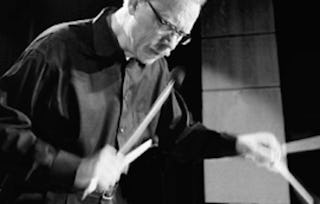
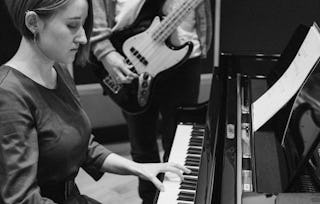
Learn and practice the basic principles of running an effective music ensemble rehearsal. Techniques and strategies are applicable to a variety of ensembles, including bands, orchestras, choirs, and chamber groups.
This week, Module 1, we’ll discuss basic philosophical issues such as: What we do in rehearsals, what skills are needed, and the idea of the conductor as “the composer’s advocate.” I will also introduce the concept of Macro-Micro-Macro, which serves as the overarching principle of rehearsals. Then we will move on to basic conducting technique.
What's included
21 videos1 assignment
Show info about module content
21 videos•Total 167 minutes
Introduction•4 minutes
What Do We Do in Rehearsals?•10 minutes
What Skills Do We Need?•3 minutes
Calibrating Your Ears•7 minutes
Serving as the Composer’s Advocate•15 minutes
A Choral Perspective: The Rehearsal Process•5 minutes
An Orchestral Perspective: Three Categories of Conducting•11 minutes
Introduction to Conducting•5 minutes
Basic Set-Up•5 minutes
Conducting without a Baton•5 minutes
Baton Grip•5 minutes
Basic Patterns•21 minutes
Active and Passive Beats•7 minutes
Starting Pieces•8 minutes
Ending Pieces•7 minutes
The Ensembles that Appear in this Course•1 minute
Macro-Micro-Macro: The Basic Process•6 minutes
Examples of Macro-Micro-Macro: Breaking Things Down•7 minutes
A Choral Perspective: Teaching Notes•8 minutes
Rehearsal Demos: Macro-Micro-Macro•24 minutes
Conclusion•1 minute
1 assignment•Total 30 minutes
Module 1 Quiz•30 minutes
Communicating with the Ensemble
Module 2•2 hours to complete
Module details
Module 2 begins with a discussion about repertoire: how to define quality music and how to choose a balanced, musically nourishing program. Building on the topics of Module 1, this week’s conducting technique videos focus on the grammar for starting and stopping pieces. In the rehearsal technique videos, the overarching topic is how to communicate with the ensemble to convey musical intent. Essentially, the idea is to give musical instruction, but there are a range of strategies we must master to be effective in all situations.This week introduces those strategies and organizes them according to modes of instruction, including performance technique, adjectives, analogy, and modeling.
What's included
17 videos1 assignment
Show info about module content
17 videos•Total 114 minutes
Introduction•1 minute
Finding Quality•10 minutes
Choosing Repertoire: The Musical Meal•7 minutes
A Choral and Orchestral Perspective: Repertoire•25 minutes
Count-offs: Additional Ways to Begin a Piece•4 minutes
Rehearsal Examples: Starting on Various Beats within a Measure•5 minutes
Stopping the Group•4 minutes
Changing the Size of the Pattern Based on the Music•5 minutes
Introduction to Rehearsal Segments•1 minute
Directing People's Attention in Rehearsal•4 minutes
Who, Where, What / Measure Numbers / "Count with Me"•6 minutes
Using "I" and "We"•6 minutes
Insisting on What You Want•2 minutes
Strategies for Communicating Musical Ideas•10 minutes
Communicating with Various Modes of Instruction•9 minutes
A Choral and Orchestral Perspective (Multiple Topics)•15 minutes
Conclusion•1 minute
1 assignment•Total 30 minutes
Module 2 Quiz•30 minutes
Introducing the Rehearsal Toolkit
Module 3•5 hours to complete
Module details
Week 3’s material begins with more left hand technique, expanding on the concepts introduced in Module 2 and continuing with gestures to show dynamics. The section on rehearsal technique begins with an explanation of the ‘Rehearsal Toolkit,” a collection of ideas, or “tools,” each designed to fix a musical issue. Rehearsal tools are meant to supplement the modes of instruction that were discussed last week. In other words, in addition to using direct vocabulary, modeling, and metaphor and analogy, these tools can elicit musical responses when gesture and words fail. A caveat: all of these approaches depend on the musicians having the technique required to perform the repertoire. This may seem obvious, but the fanciest baton twirl and colorful analogy are meaningless to help, say, a trumpeter, perform staccato if he does not tongue properly and employ good embouchure. Fundamentals must be taught, either in or out of the rehearsal, and the appropriate method depends on the level and age of the musician in the ensemble.Module 3 concludes with multi-purpose tools, including singing and “bopping.” These are the Swiss-Army knives of rehearsal technique, each useful for a variety of issues, from articulation to balance to rhythm. As you acquire the tools discussed in this module, also consider what else you can put in your toolbox. What techniques do you currently use? What tools can you borrow from other musicians? The more options we have in rehearsal the more likely we will be to solve a musical problem.
What's included
25 videos1 assignment1 peer review
Show info about module content
25 videos•Total 183 minutes
Introduction•1 minute
Introduction to Left Hand Technique: Statue and Mirroring•4 minutes
More Left Hand Technique: Statue, Mirroring, and Independence•6 minutes
Demos of the Left Hand in Rehearsal•2 minutes
Showing Dynamics and Dynamic Changes•13 minutes
The Importance of Technique as a Foundation•5 minutes
The Rehearsal Toolkit: Rhythm•2 minutes
Teaching Subdivision: Filling in the Rests•3 minutes
Thinking in Rhythmic Subdivisions•12 minutes
“Playing” without Sound: Active Resting and Handoffs•8 minutes
Working with Contrasting Rhythmic Layers•6 minutes
Cleaning Up Sloppy Entrances•2 minutes
Rests as Elements of Expression•2 minutes
Rushing•6 minutes
Meter, Accents, and Perception•11 minutes
Rhythmic Compression•6 minutes
A Choral and Orchestral Perspective: Rhythm•17 minutes
Multi-Purpose Techniques•5 minutes
Rehearsal Demos: Bopping Part I•12 minutes
Rehearsal Demos: Bopping Part II•8 minutes
Rehearsal Demos: Using Singing•7 minutes
Rehearsal Demos: Slowing Down the Tempo for Rhythm and Accuracy•21 minutes
Rehearsal Demos: Slowing Down the Tempo for Intonation and Balance•8 minutes
Rehearsal Demos: Slowing Down the Tempo for Articulation and Style•15 minutes
Conclusion•1 minute
1 assignment•Total 30 minutes
Module 3 Quiz•30 minutes
1 peer review•Total 60 minutes
Peer Assessment•60 minutes
Articulation, Balance, and Tone
Module 4•5 hours to complete
Module details
Module 4 begins with perhaps the most crucial task a conductor undertakes: score study. Score study is the umbrella term for the process of thoroughly learning a score-- not just knowing how to sing the melody or memorizing phrases and meters--but learning every aspect of the music that may come to bear on our ability to interpret, conduct, rehearse, and perform it. Unlike many grammatical aspects of conducting, score study is a time-consuming, immersive activity for which it is normal to develop one’s own process, assuming the end result is a deep understanding of the work.
After score study, Module 4 moves back to the grammar of conducting, particularly technique for conducting articulations. Please note that this week also contains a very brief introduction to the three types of fermatas. In Module 5 we’ll cover them in detail. These are topics for which regular practice and self-evaluation will be necessary to develop gestures that are clear to the ensemble and second-nature to the conductor.
Finally, we will return to “The Rehearsal Toolkit” and explore strategies for rehearsing articulation, balance, and tone. This final topic includes a video on using the piano to demonstrate harmonies and other musical features to the ensemble. Particularly in educational settings, it is important for the conductor to do more than treat the ensemble as his personal musical instrument. Instead, find opportunities to lead ensembles to an understanding of the music it is performing, a goal that only score study makes possible.
What's included
28 videos1 assignment
Show info about module content
28 videos•Total 273 minutes
Introduction•1 minute
Score Study•23 minutes
Applying Your Score Study•9 minutes
A Choral and Orchestral Perspective: Score Study•23 minutes
Applying Score Study to a Rehearsal•27 minutes
Cues•14 minutes
Conducting Articulations: Legato•7 minutes
Conducting Articulations: Two Variations on Legato•2 minutes
Conducting Articulations: Staccato and Accents•8 minutes
Conducting Fermatas and Rubato•2 minutes
Specific Choral Conducting Techniques•16 minutes
Specific String Conducting Techniques•8 minutes
Review: Two Themes of the Course•3 minutes
Exaggerating Style and Expressive Details•5 minutes
The Vocabulary of Articulation•10 minutes
Articulation: Accentuation through Emphasis and De-Emphasis•3 minutes
Bopping for Articulation•2 minutes
Developing a Legato Style•4 minutes
19th-Century Style with 21st-Century Ensembles•8 minutes
Additional Articulation Techniques•10 minutes
A Choral Perspective: Articulation and Diction•12 minutes
An Orchestral Perspective: String Articulation and Bowing•16 minutes
Balance and Tone•16 minutes
A Choral & Orchestral Perspective: Balance and Tone•22 minutes
Working with Dissonance•3 minutes
Using the Piano to Demonstrate Complex Harmonies•8 minutes
Where to Begin When You Don’t Know Where to Begin•8 minutes
Conclusion•1 minute
1 assignment•Total 30 minutes
Module 4 Quiz•30 minutes
Phrasing
Module 5•3 hours to complete
Module details
Module 5 begins with a discussion about score marking, a topic that is controversial by some ways of thinking. One school of thought suggests that scores should never be marked with cues and other information, since doing so reflects a deficit in score study on the piece. Another school believes that judicious marking enhances our efficiency in rehearsal and allows for better connection with the ensemble. This module also includes detailed explanations of the three types of fermatas that were introduced in Module 4: caesura, release-in-tempo, and continuation. It is worth spending extra time on these techniques, as the skills involved in preparing, sustaining, and releasing each one apply to a variety of conducting situations, including cues, rubato, and accompanimental conducting. For rehearsal strategies and the rehearsal toolkit our topics are phrasing and dynamics. As with many other topics in this class we can only touch the surface in terms of depth, but I hope there will be a few ideas to begin filling your rehearsal toolkit.
What's included
26 videos1 assignment
Show info about module content
26 videos•Total 156 minutes
Introduction•1 minute
Score Marking•15 minutes
An Orchestral Perspective: Score Marking•8 minutes
Caesura Fermatas•11 minutes
Release-in-Tempo Fermatas•11 minutes
Continuation Fermatas•9 minutes
Introduction to Phrasing•1 minute
Conducting Phrases•8 minutes
Phrasing: Shaping a Melody•4 minutes
Shaping an Accompaniment•4 minutes
Four-Measure Phrases•16 minutes
Phrasing and Accentuating Rhythmic Accompaniment Lines•4 minutes
Trade-offs: Matching Style and Musicianship•3 minutes
Smoothing Melodic Leaps and Developing a Legato Sound•5 minutes
More Phrasing Ideas•14 minutes
Chamber Group Mentality within the Large Ensemble•3 minutes
Orchestral Perspective: Phrasing•3 minutes
Working on Dynamic Contrasts•5 minutes
Emphasizing Style and Dynamic Changes•4 minutes
Dynamics vs. Orchestration•2 minutes
Conservation of Dynamics: Creating the Illusion of a Longer Crescendo Through Micro Crescendos•1 minute
Bringing Out Melodic Details: Contrapuntal Dynamics•1 minute
Improving Crescendos and the Subito Piano•5 minutes
Refining the Fortepiano•2 minutes
A Choral and Orchestral Perspective: Dynamics•15 minutes
Conclusion•1 minute
1 assignment•Total 30 minutes
Module 5 Quiz•30 minutes
Accompanimental Conducting and Intonation
Module 6•3 hours to complete
Module details
Module 6 (our final week!) begins with a brief discussion about planning rehearsals, moves to techniques for accompanimental conducting, and then dips into the Rehearsal Toolkit for intonation strategies. The intonation section includes an introduction to overtones, harmonics, and temperaments. These are acoustic concepts for which at least a basic understanding is useful for knowing how to achieve good pitch. It’s a fascinating topic, and a great example of how we can apply science to art. The final few videos cover a miscellanea of rehearsal topics, including protecting one’s ears, the use of a podium, and set-up issues.
What's included
21 videos2 readings1 assignment
Show info about module content
21 videos•Total 144 minutes
Introduction•1 minute
Planning Rehearsals•8 minutes
Communicating the Rehearsal Plan to the Group•4 minutes
Using Recordings in Rehearsal•5 minutes
Accompanimental Conducting•5 minutes
An Orchestral Perspective: Accompanimental Conducting Issues•8 minutes
Additional Issues for Conducting Soloists: Float & Drop, Over-conducting!•7 minutes
Working with an Accompanist•8 minutes
Overtones, Temperaments, and Drones•16 minutes
General Tips for Improving Intonation•5 minutes
Addressing Intonation Issues•11 minutes
Additional Rehearsal Techniques for Improving Intonation: Part I•5 minutes
Additional Rehearsal Techniques for Improving Intonation: Part II•15 minutes
Additional Thoughts About Intonation•5 minutes
A Choral Perspective: Intonation•12 minutes
An Orchestral Perspective: Intonation•6 minutes
Set-up Strategies•6 minutes
Using Your Voice in Rehearsal•5 minutes
Health issues: Protecting Your Ears•7 minutes
Podium Talk•5 minutes
Conclusion•1 minute
2 readings•Total 20 minutes
Biographies•10 minutes
Additional Resources•10 minutes
1 assignment•Total 30 minutes
Module 6 Quiz•30 minutes
Instructor
Instructor ratings
Instructor ratings
We asked all learners to give feedback on our instructors based on the quality of their teaching style.
The University of North Carolina at Chapel Hill, the nation’s first public university, is known around the world for innovative teaching and research. Regularly ranked as the nation’s best value for academic quality, UNC has produced the most Rhodes Scholars for the past 25 years among U.S. public research universities.
"To be able to take courses at my own pace and rhythm has been an amazing experience. I can learn whenever it fits my schedule and mood."
Jennifer J.
Learner since 2020
"I directly applied the concepts and skills I learned from my courses to an exciting new project at work."
Larry W.
Learner since 2021
"When I need courses on topics that my university doesn't offer, Coursera is one of the best places to go."
Chaitanya A.
"Learning isn't just about being better at your job: it's so much more than that. Coursera allows me to learn without limits."
Learner reviews
4.9
420 reviews
5 stars
87.82%
4 stars
10.97%
3 stars
0.95%
2 stars
0.23%
1 star
0%
Showing 3 of 420
R
RR
5·
Reviewed on Aug 8, 2019
Greate course to show the bassics of conducting. Also you get a lot of ideas for beign a better teacher as many things on aproaching an ensemble can be apllied to an instrument class.
D
DL
5·
Reviewed on Nov 12, 2015
Really Enjoyed Dr Feldmans lectures and personality, this was a great class and learned quite a bit!
I
IJ
5·
Reviewed on Jun 20, 2025
was an excellent course. I applied what I learned in the choir at my church it helped me a lot. Thanks so much
When will I have access to the lectures and assignments?
To access the course materials, assignments and to earn a Certificate, you will need to purchase the Certificate experience when you enroll in a course. You can try a Free Trial instead, or apply for Financial Aid. The course may offer 'Full Course, No Certificate' instead. This option lets you see all course materials, submit required assessments, and get a final grade. This also means that you will not be able to purchase a Certificate experience.
What will I get if I purchase the Certificate?
When you purchase a Certificate you get access to all course materials, including graded assignments. Upon completing the course, your electronic Certificate will be added to your Accomplishments page - from there, you can print your Certificate or add it to your LinkedIn profile.
Is financial aid available?
Yes. In select learning programs, you can apply for financial aid or a scholarship if you can’t afford the enrollment fee. If fin aid or scholarship is available for your learning program selection, you’ll find a link to apply on the description page.