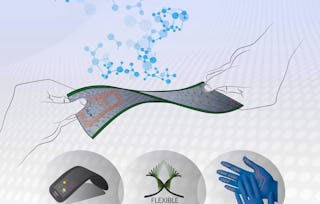
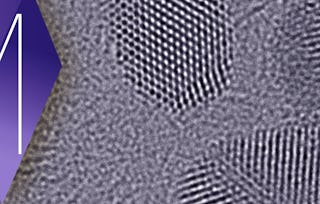
How can we create nano-structures that are 10,000 times smaller than the diameter of a human hair? How can we “see” at the nano-scale? Through instruction and lab demonstrations, in this course you will obtain a rich understanding of the capabilities of nanotechnology tools, and how to use this equipment for nano-scale fabrication and characterization. The nanoscale is the next frontier of the Maker culture, where designs become reality. To become a Nanotechnology Maker pioneer, we will introduce you to the practical knowledge, skills, and tools that can turn your nanotechnology ideas into physical form and that enable you to image objects at the nano-scale.
This course has been developed by faculty and staff experts in nano-fabrication, electron beam microscopy, and nano-characterization through the Research Triangle Nanotechnology Network (RTNN). The RTNN offers training and use of the tools demonstrated in this course to schools and industry through the United States National Nanotechnology Coordinated Infrastructure program. The tools demonstrated in this course are available to the public through the RTNN.
Welcome to Nanotechnology! In this module, you will learn some of the basics of nanofabrication and nanocharacterization techniques as well as specific applications of nanotechnology in commercial products. You’ll be able to explain why a cleanroom and vacuum environment are necessary for creating nanotechnology products. Finally, you will be able to explain how we use light, x-rays, and electron beams to characterize objects at the nanoscale. For more detailed learning objectives for each video, please see the first reading.
What's included
10 videos4 readings3 assignments
Show info about module content
10 videos•Total 55 minutes
Welcome to the Course•4 minutes
Introduction to RTNN•3 minutes
What is Nanotechnology?•7 minutes
Introduction to Nano Measurement Tools•6 minutes
Introduction to Nano Fabrication Tools•12 minutes
Essential Technologies for Nano: Cleanroom•6 minutes
Essential Technologies for Nano: Vacuum Systems•5 minutes
Essential Technologies for Nano: Electromagnetic Spectrum•5 minutes
Essential Technologies for Nano: Electron Beams•6 minutes
Accessing RTNN Facilities•0 minutes
4 readings•Total 40 minutes
Learning Objectives for Introduction•10 minutes
Report a problem with the course•10 minutes
Learning Objectives for Essential Technologies for Nano•10 minutes
Research Triangle Nanotechnology Network•10 minutes
3 assignments•Total 90 minutes
Practice Quiz for Introduction•30 minutes
Practice Quiz for Essential Technologies for Nano•30 minutes
Introduction and Essential Technologies for Nano•30 minutes
Nano Measurement and Characterization Tools: Scanning Electron Microscopy and Energy-Dispersive X-ray Spectroscopy
Module 2•3 hours to complete
Module details
After this module, you will be able to explain sample preparation and imaging techniques used in scanning electron microscopy. You will also be able to explain the benefits of environmental scanning electron microscopy. Furthermore, you will discover how energy-dispersive x-ray spectroscopy can be paired with scanning electron microscopy to gain elemental information about samples.
What's included
8 videos3 readings3 assignments
Show info about module content
8 videos•Total 30 minutes
Scanning Electron Microscopy: Basic Function•7 minutes
Scanning Electron Microscopy: Sample Preparation Demonstration•3 minutes
Scanning Electron Microscopy: Measurement Demonstration•6 minutes
Learning Objectives for Scanning Electron Microscopy•10 minutes
Learning objectives for Energy-dispersive X-ray Spectroscopy•10 minutes
Research Triangle Nanotechnology Network•10 minutes
3 assignments•Total 90 minutes
Practice Quiz for Scanning Electron Microscopy•30 minutes
Practice Quiz on Energy-dispersive X-ray Spectroscopy•30 minutes
Nano Measurement and Characterization Tools: Scanning Electron Microscopy and Energy-Dispersive X-ray Spectroscopy•30 minutes
Nano Measurement and Characterization Tools: Transmission Electron Microscopy
Module 3•3 hours to complete
Module details
In this module, we will look at transmission electron microscopy and cryo-transmission electron microscopy. You will learn to describe the basic function of the equipment as well as how samples are prepared and imaged using these techniques.
What's included
7 videos3 readings3 assignments
Show info about module content
7 videos•Total 33 minutes
Transmission Electron Microscopy: Basic Function•7 minutes
Transmission Electron Microscopy: Sample Preparation Demonstration•5 minutes
Transmission Electron Microscopy: Measurement Demonstration•4 minutes
Cryo-Transmission Electron Microscopy: Basic Function•6 minutes
Cryo-Transmission Electron Microscopy: Sample Preparation Demonstration•7 minutes
Introduction to RTNN•3 minutes
Accessing RTNN Facilities•0 minutes
3 readings•Total 30 minutes
Learning Objectives for Transmission Electron Microscopy•10 minutes
Learning Objectives for Cryo-Transmission Electron Microscopy•10 minutes
Research Triangle Nanotechnology Network•10 minutes
3 assignments•Total 90 minutes
Practice quiz on Transmission Electron Microscopy•30 minutes
Practice Quiz on Cryo-Transmission Electron Microscopy•30 minutes
Nano Measurement and Characterization Tools: Transmission Electron Microscopy•30 minutes
Nano Measurement and Characterization Tools: X-ray and Optical Characterization
Module 4•4 hours to complete
Module details
In this module, we will see demonstrations of micro-computed tomography, X-ray photoelectron spectroscopy, and optical spectroscopy. You will learn the basic function of the equipment and how samples are prepared and measured.
Learning Objectives for Micro Computed Tomography•10 minutes
Learning Objectives for X-ray Photoelectron Spectroscopy•10 minutes
Learning Objectives for Optical Spectroscopy•10 minutes
Research Triangle Nanotechnology Network•10 minutes
4 assignments•Total 120 minutes
Practice Quiz on Micro Computed Tomography•30 minutes
Practice Quiz on X-ray Photoelectron Spectroscopy•30 minutes
Practice Quiz on Optical Spectroscopy•30 minutes
Nano Measurement and Characterization Tools: X-ray and Optical Characterization•30 minutes
Nanofabrication: Vacuum Pumps and Thin Film Vacuum Deposition
Module 5•3 hours to complete
Module details
In this module, we will discover how and why a vacuum environment is required in nanofabrication, compare the operation of three types of vacuum pumps, and look at vacuum deposition of thin films using three different methods: sputter evaporation, e-beam evaporation and thermal evaporation.
Learning Objectives for Vacuum Systems in Depth•10 minutes
Learning Objectives for Thin Film Vacuum Deposition•10 minutes
Research Triangle Nanotechnology Network•10 minutes
3 assignments•Total 90 minutes
Practice Quiz on Vacuum Systems in Depth•30 minutes
Practice Quiz on Thin Film Vacuum Deposition•30 minutes
Nanofabrication: Vacuum Pumps and Thin Film Vacuum Deposition•30 minutes
Nanofabrication: Vapor Deposition
Module 6•3 hours to complete
Module details
We will look at some techniques for making things with nanotechnology using thin film techniques; in this module you will learn to describe and compare atomic layer deposition, chemical vapor deposition, and plasma-enhanced chemical vapor deposition.
What's included
8 videos4 readings4 assignments
Show info about module content
8 videos•Total 38 minutes
Atomic Layer Deposition: Basic Function•6 minutes
Atomic Layer Deposition: Process Demonstration•4 minutes
Chemical Vapor Deposition: Basic Function•8 minutes
Chemical Vapor Deposition: Process Demonstration•7 minutes
Plasma Enhanced Chemical Vapor Deposition: Basic Function•5 minutes
Plasma Enhanced Chemical Vapor Deposition: Sample Deposition Demonstration•6 minutes
Introduction to RTNN•3 minutes
Accessing RTNN Facilities•0 minutes
4 readings•Total 40 minutes
Learning Objectives for Atomic Layer Deposition•10 minutes
Learning Objectives for Chemical Vapor Deposition•10 minutes
Learning Objectives for Plasma Enhanced Chemical Vapor Deposition•10 minutes
Research Triangle Nanotechnology Network•10 minutes
4 assignments•Total 120 minutes
Practice Quiz on Atomic Layer Deposition•30 minutes
Practice Quiz on Chemical Vapor Deposition•30 minutes
Practice Quiz on Plasma Enhanced Chemical Vapor Deposition•30 minutes
Nanofabrication: Vapor Deposition•30 minutes
Nanofabrication: Patterning and Self-Assembly
Module 7•5 hours to complete
Module details
In this module, we will investigate 5 different methods used in nanotechnology for patterning. You will be able to explain the basic processes of photolithography, e-beam lithography, ion beam lithography, hot embossing, and self-assembly.
Ion Beam: Milling and Sectioning Demonstration•10 minutes
Hot Embossing: Basic Function•6 minutes
Hot Embossing: Sample Patterning Demonstration•6 minutes
Self-Assembly•7 minutes
Introduction to RTNN•3 minutes
Accessing RTNN Facilities•0 minutes
6 readings•Total 60 minutes
Learning Objectives for Photolithography•10 minutes
Learning Objectives for Electron-beam Lithography•10 minutes
Learning Objectives for Ion Beam•10 minutes
Learning Objectives for Hot Embossing•10 minutes
Learning Objectives for Self-Assembly•10 minutes
Research Triangle Nanotechnology Network•10 minutes
6 assignments•Total 180 minutes
Practice Quiz on Photolithography•30 minutes
Practice Quiz on Electron-beam Lithography•30 minutes
Practice Quiz on Ion Beam•30 minutes
Practice Quiz on Hot Embossing•30 minutes
Practice Quiz on Self-Assembly•30 minutes
Nanofabrication: Patterning and Self-Assembly•30 minutes
Nanofabrication: Etching
Module 8•3 hours to complete
Module details
In this module, you will learn to describe and compare wet and dry etching processes. These processes are used to selectively remove material in nanofabrication.
What's included
7 videos4 readings4 assignments
Show info about module content
7 videos•Total 29 minutes
Etching: Basic Function•4 minutes
Chemical Wet Etching: Basic Function•4 minutes
Chemical Wet Etching: Demonstration•4 minutes
Dry Etching: Basic Function•7 minutes
Dry Etching: Demonstration•6 minutes
Introduction to RTNN•3 minutes
Accessing RTNN Facilities•0 minutes
4 readings•Total 40 minutes
Learning Objectives for Etching•10 minutes
Learning Objectives for Chemical Wet Etching•10 minutes
Learning Objectives for Dry Etching•10 minutes
Research Triangle Nanotechnology Network•10 minutes
4 assignments•Total 120 minutes
Practice Quiz on Etching•30 minutes
Practice Quiz on Chemical Wet Etching•30 minutes
Practice Quiz on Dry Etching•30 minutes
Nanofabrication: Etching•30 minutes
Closing
Module 9•11 minutes to complete
Module details
What's included
1 video1 reading
Show info about module content
1 video•Total 1 minute
Closing video•1 minute
1 reading•Total 10 minutes
Share your learning experience•10 minutes
Instructors
Instructor ratings
Instructor ratings
We asked all learners to give feedback on our instructors based on the quality of their teaching style.
Duke University has about 13,000 undergraduate and graduate students and a world-class faculty helping to expand the frontiers of knowledge. The university has a strong commitment to applying knowledge in service to society, both near its North Carolina campus and around the world.
NC State was founded with a purpose: to create economic, societal and intellectual prosperity for the people of North Carolina and the country. We began as a land-grant institution teaching the agricultural and mechanical arts. Today, we’re a pre-eminent research enterprise that excels in science, technology, engineering, math, design, the humanities and social sciences, textiles and veterinary medicine.
The University of North Carolina at Chapel Hill, the nation’s first public university, is known around the world for innovative teaching and research. Regularly ranked as the nation’s best value for academic quality, UNC has produced the most Rhodes Scholars for the past 25 years among U.S. public research universities.
"To be able to take courses at my own pace and rhythm has been an amazing experience. I can learn whenever it fits my schedule and mood."
Jennifer J.
Learner since 2020
"I directly applied the concepts and skills I learned from my courses to an exciting new project at work."
Larry W.
Learner since 2021
"When I need courses on topics that my university doesn't offer, Coursera is one of the best places to go."
Chaitanya A.
"Learning isn't just about being better at your job: it's so much more than that. Coursera allows me to learn without limits."
Learner reviews
4.8
3,127 reviews
5 stars
84.23%
4 stars
14.16%
3 stars
1.31%
2 stars
0.15%
1 star
0.12%
Showing 3 of 3127
M
MN
5·
Reviewed on Feb 18, 2022
English language training to know quantum motion and quantum energies
I also enjoyed the team of doctors as they are friendly and helpful and it is easy to receive information ...thanks..
D
D
5·
Reviewed on Aug 1, 2020
it was highly insightful course to learn things about nano fabrication as it provided useful demonstration of all the equipment used for film deposition, patterning and etching on wafers.
S
SJ
5·
Reviewed on Jun 10, 2020
Extremely dedicated teachers!High levels of engagement, clear explanations and high quality teaching!!All demonstrations are well demonstrated and explained. Truly helped a beginner like me.
What background is necessary to be successful in this course?
Learners will need to have taken a course in high school (secondary school) physics or chemistry
Will I receive a transcript from Duke University for completing this course?
No. Completion of a Coursera course does not earn you academic credit from Duke; therefore, Duke is not able to provide you with a university transcript. However, your electronic Certificate will be added to your Accomplishments page - from there, you can print your Certificate or add it to your LinkedIn profile.
When will I have access to the lectures and assignments?
To access the course materials, assignments and to earn a Certificate, you will need to purchase the Certificate experience when you enroll in a course. You can try a Free Trial instead, or apply for Financial Aid. The course may offer 'Full Course, No Certificate' instead. This option lets you see all course materials, submit required assessments, and get a final grade. This also means that you will not be able to purchase a Certificate experience.
What will I get if I purchase the Certificate?
When you purchase a Certificate you get access to all course materials, including graded assignments. Upon completing the course, your electronic Certificate will be added to your Accomplishments page - from there, you can print your Certificate or add it to your LinkedIn profile.
Is financial aid available?
Yes. In select learning programs, you can apply for financial aid or a scholarship if you can’t afford the enrollment fee. If fin aid or scholarship is available for your learning program selection, you’ll find a link to apply on the description page.