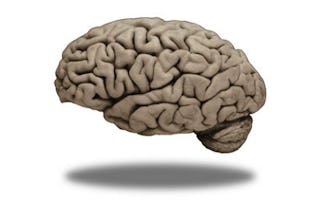
Learn how the nervous system produces behavior, how we use our brain every day, and how neuroscience can explain the common problems afflicting people today. We will study functional human neuroanatomy and neuronal communication, and then use this information to understand how we perceive the outside world, move our bodies voluntarily, stay alive, and play well with others.
Neurobiology is a rapidly growing area of scientific research, and is becoming increasingly prevalent in the news and popular culture. In this course, we will study of the nervous system from a biological perspective by exploring the fundamental concepts in neurobiology, including how we sense the world, how we act in the world, and common neurological disorders.
What's included
17 videos3 readings1 assignment
Show info about module content
17 videos•Total 85 minutes
Introduction: The Bauby Story•6 minutes
Ethics and Brain Science•1 minute
I Am a Patient•1 minute
The Four Functions•6 minutes
Central Anatomy•7 minutes
Meet the Stars: Neurons•2 minutes
Parts of the Neuron•4 minutes
Neuronal Uniqueness: Stars of the Sky•9 minutes
Glial Cells•7 minutes
Myelin•5 minutes
Demyelinating Diseases•3 minutes
Meninges•6 minutes
Peripheral Diseases•6 minutes
Brain Tumors•6 minutes
The Brain and the Spinal Cord•3 minutes
Meninges•7 minutes
Brain Tumors•5 minutes
3 readings•Total 30 minutes
In-Video Quiz Questions and Answers•10 minutes
Clinical Vignette: Brain Tumor•10 minutes
Additional Resources•10 minutes
1 assignment•Total 22 minutes
The Nervous System•22 minutes
Neural Communication + Embodied Emotion
Module 2•3 hours to complete
Module details
Neurons are the cells of the nervous system responsible for communicating, relaying, and integrating information. Neurons "talk" to other neurons through a special type of language that involves electrical signaling within individual neurons, and the use of chemical compounds known as neurotransmitters to communicate between neurons. In this module, you will learn more about how a neuron functions at rest, how information is relayed within a neuron, and how neurons relay information to other neurons or target tissues.
In the second half of this module, you will be learning about how the body and emotions work together to produce our everyday emotional experiences. We will look at the enteric nervous system and learn how to discern whether the sympathetic or parasympathetic system is impacting our current emotional state.
What's included
17 videos3 readings1 assignment
Show info about module content
17 videos•Total 99 minutes
Electrical Language•8 minutes
Electricity Review•4 minutes
Action Potential•5 minutes
Neurotransmitter Synthesis•5 minutes
Neurotransmitter Release•6 minutes
Clostridial Toxins: Botox•6 minutes
Signal Termination•7 minutes
Receptors•8 minutes
Metabotropic Receptors•7 minutes
Wrap-Up: Neurocommunication•2 minutes
Introduction to Embodied Emotion•4 minutes
Enteric Nervous System•6 minutes
Parasympathetics & Sympathetics•7 minutes
Parasympathetic/Sympathetic Balance•4 minutes
Autonomic Pharmacology: Adjusting the PS/S System•7 minutes
Spinal Cord Injury•8 minutes
Wrap-Up: Embodied Emotion•6 minutes
3 readings•Total 30 minutes
In-Video Quiz Questions and Answers•10 minutes
Additional Resources•10 minutes
Optional Survey on MOOCs•10 minutes
1 assignment•Total 30 minutes
Neurocommunications•30 minutes
Neuroanatomy
Module 3•4 hours to complete
Module details
Neuroanatomy tells us how the nervous system is organized. Understanding the form of the brain is essential to understanding its function. By comparing the structure of the brain with a patient's symptoms, neurologists are able to identify the location of certain disorders. Studying how the human brain develops provides insight to why it is organized as it is. This module, you will learn about how the brain develops during gestation, some major pathways in the nervous system, and what can go wrong!
What's included
26 videos2 readings1 assignment
Show info about module content
26 videos•Total 206 minutes
Introduction to Neuroanatomy•8 minutes
Neural Tube Formation•5 minutes
Neural Tube Defects•11 minutes
Brain Vesicles•8 minutes
Expansion of the Cerebral Cortex•12 minutes
Two Forebrain Tracts•9 minutes
Cerebral Palsy•10 minutes
Nerves•11 minutes
CNS Regional Functions•13 minutes
Hemisphere Functions•4 minutes
Aphasia•8 minutes
Language Circuits•10 minutes
Making a Flat Schematic of the Brain•5 minutes
Oxygen and Cerebral Blood Flow•7 minutes
Blood Supply•6 minutes
Strokes and Tumors•8 minutes
Bleeds•7 minutes
Spinal Cord•8 minutes
Inside the Cranium•6 minutes
Telencephalon•5 minutes
Cortex•8 minutes
Cerebellum•6 minutes
Visual Pathway•7 minutes
Pituitary Tumors•6 minutes
Blood Supply•10 minutes
Hippocampus & Alzheimer's Disease•10 minutes
2 readings•Total 20 minutes
In-Video Quiz Questions and Answers•10 minutes
Additional Resource•10 minutes
1 assignment•Total 30 minutes
Neuroanatomy•30 minutes
Perception and Vision
Module 4•4 hours to complete
Module details
Perception is how the brain interprets incoming stimuli. Not all stimuli that can be sensed are perceivable, and sometimes those that can be perceived play tricks on us. The systematic ways that stimuli are interpreted (or misinterpreted) show how well the brain can understand our surroundings, sometimes with limited information. This module we will explore perception and vision.This module contains a lot of material, so be sure to start early so that you have time to finish!
The sound of birds chirping in the morning, a babbling brook or crashing waves on the beach, or warm conversation with the ones you love. The experience of all these things requires the ability to hear. Arguably the most important sense for human communication, it is also the most commonly impaired of our senses. In this module, you will learn how the human ear is artfully designed to enhance our ability to hear the human voice. You will follow sound waves as they travel from the external world, to the eardrum, through the bones of the middle ear, and to the cochlea that transduces sound information into neural impulses.
What's included
16 videos3 readings1 assignment
Show info about module content
16 videos•Total 80 minutes
Introduction to Hearing•3 minutes
Experiences of Hearing Loss•9 minutes
Hearing Pathways•5 minutes
External Ear•5 minutes
Rinne Test•2 minutes
Middle Ear•6 minutes
Inner Ear•7 minutes
Cochlear Amplifier•3 minutes
Outer Hair Cell Motility•6 minutes
Otoacoustic Emissions•3 minutes
Hearing Loss•7 minutes
Weber and Rinne•8 minutes
Expectation: Interpreting Sound•4 minutes
Prosody•6 minutes
Communication•3 minutes
Wrap-up: Hearing•2 minutes
3 readings•Total 30 minutes
In-Video Quiz Questions and Answers•10 minutes
Clinical Vignette: One Man's Story of Hearing•10 minutes
Additional Resources•10 minutes
1 assignment•Total 30 minutes
Hearing•30 minutes
The Vestibular Sense & Gaze
Module 6•2 hours to complete
Module details
The vestibular system and gaze control give us so much but are grossly under appreciated. They are so fundamental that we discount them, assuming that they will always be there. When the vestibular system fails us, its importance dominates our lives. Living with either a vestibular or an eye movement disorder is very disruptive to everyday life. In this module, you will learn how the inner ear is designed to detect and respond to head movements. You will learn about the circuit that connects the inner ear to the motoneurons that control the location of your eyes, allowing us to reflexively maintain our view of an object even as we move about in the world. Finally, we will talk about how you can modify this reflexive control of the eyes and how you can control where you are looking.
What's included
16 videos2 readings1 assignment
Show info about module content
16 videos•Total 82 minutes
Introduction to Vestibular Sense•4 minutes
The Vestibular Stimulus•5 minutes
Canals and Otoconial Masses•8 minutes
Hair Cell Orientation•6 minutes
Yoked End Organs, Part 1•5 minutes
Yoked End Organs, Part 2•4 minutes
Otoconial Disorders•6 minutes
Visual Integration•4 minutes
The VOR Is Fast•5 minutes
Horizontal VOR Circuitry•5 minutes
Nystagmus•5 minutes
Adapting the VOR•5 minutes
Eye Movements•5 minutes
Saccades•6 minutes
Saccade Circuits•5 minutes
Controlling Saccades•6 minutes
2 readings•Total 20 minutes
In-Video Quiz Questions and Answers•10 minutes
Additional Resources•10 minutes
1 assignment•Total 30 minutes
The Vestibular Sense & Gaze•30 minutes
Voluntary Movements
Module 7•2 hours to complete
Module details
"Voluntary movements are how we interact with the world. The organization of the motor system has implications for how we move, and the types of movements we can make. This module we'll start to explore the organization of the motor system, from neurons to muscles.
This module contains a lot of material, so be sure to start early so that you have time to finish!"
What's included
18 videos2 readings1 assignment
Show info about module content
18 videos•Total 89 minutes
Introduction to Voluntary Movement•3 minutes
Motor Hierarchy•5 minutes
Problems with Motor Hierarchy•5 minutes
Motor Modulation•7 minutes
Fast and Slow Fibers•5 minutes
Motoneuron Types•4 minutes
Orderly Recruitment•8 minutes
Exercise and Muscle Mass•3 minutes
Monosynaptic Reflex•5 minutes
Co-activation•4 minutes
Gamma Reflex Loop•5 minutes
Posture•5 minutes
Postural Control•6 minutes
Central Pattern Generator•8 minutes
Intro to Self-Generated Movements•3 minutes
Praxis•4 minutes
Emotional Movements•7 minutes
Wrap-up•2 minutes
2 readings•Total 20 minutes
In-Video Quiz Questions and Answers•10 minutes
Additional Resources•10 minutes
1 assignment•Total 30 minutes
Voluntary Movements•30 minutes
Motor Modulation
Module 8•2 hours to complete
Module details
You should now have an understanding of how muscles function to initiate movements. However, the brain requires more than just the cerebral cortex to determine what movements to perform and to make those movements smooth and guided. This module, we'll explore the cerebellum and the basal ganglia, fascinating structures that play a major role in movement. You'll also learn how these brain regions are involved in motor learning and disease.
Cerebellum and Basal Ganglia Cooperation•6 minutes
Wrap-Up: Voluntary Movement, part 2•2 minutes
2 readings•Total 20 minutes
In-Video Quiz Questions and Answers•10 minutes
Additional Resources•10 minutes
1 assignment•Total 30 minutes
Motor Modulation•30 minutes
Homeostasis
Module 9•2 hours to complete
Module details
Although our bodies are very robust and we can live in a range of environments, our brain requires very specific conditions to function properly. Homeostasis is the active process by which our nervous system regulates internal conditions, such as blood pressure and temperature. This module we will explore what homeostasis does, and how it functions in everyday life.
What's included
13 videos2 readings1 assignment
Show info about module content
13 videos•Total 73 minutes
Introduction to Homeostasis•3 minutes
Hypothalamic Anatomy•4 minutes
Pituitary Gland & Gigantism•5 minutes
Post-Partum Mood Disorders•7 minutes
Thermoregulation•9 minutes
Hyperthermia•3 minutes
Fever and Hot Flashes•10 minutes
Breathing•5 minutes
Urination•6 minutes
Problems with the Urination System•6 minutes
Sleep Phenomenology•7 minutes
Sleep Mechanisms•6 minutes
Wrap-Up: Homeostasis•2 minutes
2 readings•Total 20 minutes
In-Video Quiz Questions and Answers•10 minutes
Additional Resources•10 minutes
1 assignment•Total 30 minutes
Homeostasis•30 minutes
Abstract Function
Module 10•4 hours to complete
Module details
You've now learned an incredible amount about the way the brain functions to perceive and act upon the world we live in. You've gained an understanding of neurobiology on a cellular level, and how many diseases and disorders of the nervous system can affect our bodies and minds. In our final module, we will journey into the realms of emotion, attention, memory, and language. By the end of this module, you will have a greater understanding of the more abstract cognitive functions the brain.
What's included
18 videos2 readings1 assignment1 peer review
Show info about module content
18 videos•Total 99 minutes
Introduction to Abstract Function•3 minutes
Bauby and Emotion•4 minutes
Thalamic Attention•6 minutes
Mushroom Hunting•5 minutes
Memory Types•8 minutes
PTSD•6 minutes
Semantic Memories•3 minutes
Episodic Memories•6 minutes
The Story of H.M.•5 minutes
Memory Formation Circuitry•7 minutes
Hollywood Amnesia•7 minutes
Clinical Amnesia•6 minutes
Introduction to Language•4 minutes
Aphasias•7 minutes
Prosody•6 minutes
Intellectual Disability•6 minutes
Your Brain, Your Illness•6 minutes
Future Challenges•6 minutes
2 readings•Total 20 minutes
In-Video Quiz Questions and Answers•10 minutes
Additional Resources•10 minutes
1 assignment•Total 30 minutes
Introduction to Abstract Function•30 minutes
1 peer review•Total 120 minutes
Final Project•120 minutes
Instructor
Instructor ratings
Instructor ratings
We asked all learners to give feedback on our instructors based on the quality of their teaching style.
One of the world's premier academic and research institutions, the University of Chicago has driven new ways of thinking since our 1890 founding. Today, UChicago is an intellectual destination that draws inspired scholars to our Hyde Park and international campuses, keeping UChicago at the nexus of ideas that challenge and change the world.
"To be able to take courses at my own pace and rhythm has been an amazing experience. I can learn whenever it fits my schedule and mood."
Jennifer J.
Learner since 2020
"I directly applied the concepts and skills I learned from my courses to an exciting new project at work."
Larry W.
Learner since 2021
"When I need courses on topics that my university doesn't offer, Coursera is one of the best places to go."
Chaitanya A.
"Learning isn't just about being better at your job: it's so much more than that. Coursera allows me to learn without limits."
Learner reviews
4.9
3,259 reviews
5 stars
90.89%
4 stars
7.29%
3 stars
0.79%
2 stars
0.55%
1 star
0.45%
Showing 3 of 3259
M
MA
5·
Reviewed on May 15, 2022
I benefited greatly from this course. I felt that Professor Mason was part of my family. It's great and her explanation is excellent. Thank you from the bottom of my heart professor mason.
R
RN
5·
Reviewed on Jun 22, 2020
I absolutely loved being a part of prof. mason's class! I have gathered alot of information that is going to help me build my future! And this course made me like neurobiology even more! Thank you
T
TS
5·
Reviewed on Nov 3, 2022
The course is a really comprehensive introduction to neurobiology, which helped me to supplment my studies to biological psychology, also as a great beginning to my pursue in neuroscience studies !
When will I have access to the lectures and assignments?
To access the course materials, assignments and to earn a Certificate, you will need to purchase the Certificate experience when you enroll in a course. You can try a Free Trial instead, or apply for Financial Aid. The course may offer 'Full Course, No Certificate' instead. This option lets you see all course materials, submit required assessments, and get a final grade. This also means that you will not be able to purchase a Certificate experience.
What will I get if I purchase the Certificate?
When you purchase a Certificate you get access to all course materials, including graded assignments. Upon completing the course, your electronic Certificate will be added to your Accomplishments page - from there, you can print your Certificate or add it to your LinkedIn profile.
Is financial aid available?
Yes. In select learning programs, you can apply for financial aid or a scholarship if you can’t afford the enrollment fee. If fin aid or scholarship is available for your learning program selection, you’ll find a link to apply on the description page.