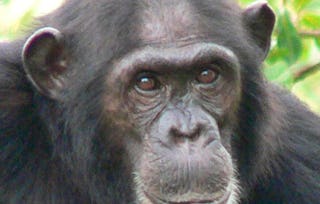
We are presently facing a potential extinction crisis for the order Primates (and many other life forms). In this course we will learn about threats to primate conservation globally. We will be using the, “Primates in Peril: The World’s 25 Most Endangered Primates 2018-2020” by Schwitzer et al. (2019) as a basis for the discussion of global primate populations. We will investigate conservation status, threats to conservations, success and failures within protecting our closest evolutionary cousins.
In the first module, I will introduce myself and begin defining the Order Primates. Many people have a ‘love’ of ‘monkeys’ without really understanding how incredibly diverse our Order is! This module starts with a definition of primates and then shows where the current radiation of primates still live.
This module will begin by introducing the IUCN (International Union for the Conservation of Nature), the IUCN RedList, and how species are designated in threat categories. We will also discuss different types of threats to primates globally.
What's included
8 videos1 reading1 assignment1 discussion prompt
Show info about module content
8 videos•Total 106 minutes
2.1 Introduction to the IUCN•13 minutes
2.2 IUCN Criteria for Threatened Taxa•19 minutes
2.3 Overview of Conservation Concerns•3 minutes
2.4 Hunting•12 minutes
2.5 Deforestation•17 minutes
2.6 Non-Forest Timber Products / Traditional Medicine•11 minutes
2.7 Illegal Animal Trade•17 minutes
2.8 Protected Areas•14 minutes
1 reading•Total 30 minutes
Impending Extinction Crisis of the World's Primates: Why Primates Matter•30 minutes
1 assignment•Total 30 minutes
Quiz for Module 2•30 minutes
1 discussion prompt•Total 15 minutes
Reflecting on Conservation Threats•15 minutes
Exploring Primates throughout Various Regions
Module 3•2 hours to complete
Module details
In this module, we will focus on the Top 25 Most Endangered Primates list. We will go region to region to learn about the primates and the threats they face toward the possibility of extinction.
What's included
6 videos1 reading1 assignment1 discussion prompt
Show info about module content
6 videos•Total 55 minutes
3.1 Introduction to Module 3•5 minutes
3.2 Neotropics•11 minutes
3.3 Species in Asia•11 minutes
3.4 Species in Africa•11 minutes
3.5 Madagascar -- A Natural Laboratory! •9 minutes
3.6 Other Species for Consideration•7 minutes
1 reading•Total 30 minutes
Primates in Peril: The World's 25 Most Endangered Primates 2018-2020•30 minutes
1 assignment•Total 30 minutes
Quiz for Module 3•30 minutes
1 discussion prompt•Total 15 minutes
Reflecting on Possible Extinction Events•15 minutes
Conservation Organizations
Module 4•2 hours to complete
Module details
This module will address conservation organizations in multiple contexts. We will learn about 'in situ' and 'ex situ' conservation methodology. Finally, we will look at a number of conservation organizations and think about ways that the public can get involved.
What's included
3 videos1 assignment1 peer review
Show info about module content
3 videos•Total 38 minutes
4.1 Introduction to Conservation Organizations•2 minutes
4.2 Define In Situ and Ex Situ Conservation Efforts•9 minutes
4.3 Conservation Organizations and What You Can Do!•28 minutes
Vietnam is home to an incredible diversity of primates. There are currently 25 species and subspecies living in this tropical country (Covert et al., 2017). In this module, we will discuss the diversity of primates, threats to conservation, and the groups that are helping to conserve these animals (and landscapes!).
What's included
5 videos1 reading1 assignment1 discussion prompt
Show info about module content
5 videos•Total 42 minutes
5.1 Introduction to the Case Study•7 minutes
5.2 Primate Biodiversity of Vietnam•6 minutes
5.3 Threats to Primates in Vietnam•8 minutes
5.4 Conservation Stories•18 minutes
5.5 Some Concluding Thoughts•4 minutes
1 reading•Total 20 minutes
Primates of Vietnam: Conservation in a Rapidly Developing Country•20 minutes
1 assignment•Total 30 minutes
Module 5 Quiz•30 minutes
1 discussion prompt•Total 10 minutes
Reflecting on Conservation•10 minutes
Instructor
Instructor ratings
Instructor ratings
We asked all learners to give feedback on our instructors based on the quality of their teaching style.
CU Boulder is a dynamic community of scholars and learners on one of the most spectacular college campuses in the country. As one of 34 U.S. public institutions in the prestigious Association of American Universities (AAU), we have a proud tradition of academic excellence, with five Nobel laureates and more than 50 members of prestigious academic academies.
When will I have access to the lectures and assignments?
To access the course materials, assignments and to earn a Certificate, you will need to purchase the Certificate experience when you enroll in a course. You can try a Free Trial instead, or apply for Financial Aid. The course may offer 'Full Course, No Certificate' instead. This option lets you see all course materials, submit required assessments, and get a final grade. This also means that you will not be able to purchase a Certificate experience.
What will I get if I purchase the Certificate?
When you purchase a Certificate you get access to all course materials, including graded assignments. Upon completing the course, your electronic Certificate will be added to your Accomplishments page - from there, you can print your Certificate or add it to your LinkedIn profile.
Is financial aid available?
Yes. In select learning programs, you can apply for financial aid or a scholarship if you can’t afford the enrollment fee. If fin aid or scholarship is available for your learning program selection, you’ll find a link to apply on the description page.