Mechanics Courses
Mechanics courses can help you learn the principles of motion, forces, energy, and momentum, along with their applications in practical work. You can build skills in problem-solving, analytical thinking, and mathematical modeling, that support understanding complex systems. Many courses introduce tools such as simulation software and graphing calculators, which aid in visualizing concepts and performing calculations, allowing you to apply mechanics in fields like engineering, robotics, and physics.
Popular Mechanics Courses and Certifications
 Status: Preview
Georgia Institute of Technology
Skills you'll gain: Engineering Analysis, Mechanics, Torque (Physics), Engineering Calculations, Mechanical Engineering, Engineering, Civil Engineering, Structural Analysis, Applied Mathematics, Trigonometry
 Status: Free Trial
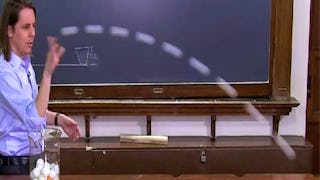
Rice University
Skills you'll gain: Mechanics, Torque (Physics), Physics, Problem Solving, Mechanical Engineering, Engineering Calculations, Calculus, Engineering Analysis, Graphing, Physical Science, Mathematical Modeling, Algebra, Applied Mathematics, Geometry, Trigonometry
 Status: Preview
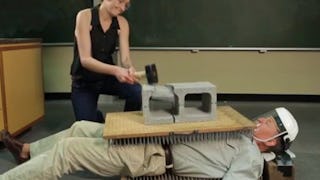
UNSW Sydney (The University of New South Wales)
Skills you'll gain: Mechanics, Physics, Experimentation, Engineering Calculations, Applied Mathematics, Physical Science, Systems Of Measurement, Engineering Analysis, Mathematical Modeling, Estimation
 Status: Free Trial
ISAE-SUPAERO
Skills you'll gain: Mechanics, Thermal Management, Energy and Utilities, Hazard Analysis, Risk Control, Physical Science, Simulations, Applied Mathematics, Control Systems, Systems Of Measurement, Vibrations, Engineering Analysis, Engineering Calculations, Physics, Engineering, Mathematical Modeling
 Status: Preview
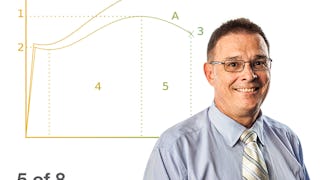
Georgia Institute of Technology
Skills you'll gain: Structural Analysis, Mechanical Engineering, Failure Analysis, Engineering Analysis, Mechanics, Materials science, Engineering Calculations, Civil Engineering, Mathematical Modeling, Trigonometry
 Status: Free Trial
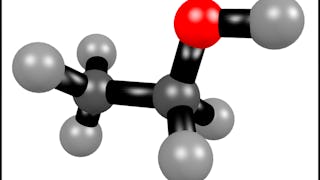
University of Colorado Boulder
Skills you'll gain: Quantitative Research, Engineering Calculations, Mechanical Engineering, Numerical Analysis, Chemistry, Physics, Simulation and Simulation Software, Mathematical Modeling, Differential Equations
What brings you to Coursera today?
 Status: Free Trial
Northwestern University
Skills you'll gain: Robotics, Machine Controls, Control Systems, Automation Engineering, Mathematical Modeling, Mathematical Software, Simulation and Simulation Software, Engineering Calculations, Engineering, Mechanics, Mechanical Engineering, Artificial Intelligence, Vibrations, Applied Mathematics, Engineering Analysis, Automation, Virtual Environment, Torque (Physics), Graph Theory, Matlab
Skills you'll gain: Simulation and Simulation Software, Engineering Analysis, Engineering, Prototyping, Computer-Aided Design, Cloud Computing
 Status: Free Trial
University of Colorado Boulder
Skills you'll gain: Electrical Engineering, Numerical Analysis, Linear Algebra, Physics, Angular, Applied Mathematics, Advanced Mathematics, Mathematical Modeling, Engineering Analysis, Calculus, Differential Equations, Simulations, Physical Science
 Status: Free
École normale supérieure
Skills you'll gain: Sampling (Statistics), Physics, Simulations, Computational Logic, Numerical Analysis, Markov Model, Quantitative Research, Algorithms, Applied Mathematics, Linear Algebra, Integral Calculus
 Status: Free Trial
Rice University
Skills you'll gain: Mechanics, Problem Solving, Physics, Graphing, Mathematical Modeling, Algebra, Calculus, Physical Science, Applied Mathematics, Mechanical Engineering, Geometry, Trigonometry
 Status: Free
University of Minnesota
Skills you'll gain: Hydraulics, Mechanical Engineering, Schematic Diagrams, Simulation and Simulation Software, Power Electronics, Engineering, Model Based Systems Engineering, Simulations, Engineering Analysis, Control Systems, Automation Engineering, Engineering Calculations, Mechanics, Mathematical Modeling, Matlab
Searches related to mechanics
In summary, here are 10 of our most popular mechanics courses
- Introduction to Engineering Mechanics: Georgia Institute of Technology
- Introduction to Mechanics: Rice University
- Mechanics: Motion, Forces, Energy and Gravity, from Particles to Planets: UNSW Sydney (The University of New South Wales)
- Fundamentals of Flight mechanics: ISAE-SUPAERO
- Mechanics of Materials I: Fundamentals of Stress & Strain and Axial Loading: Georgia Institute of Technology
- Quantum Mechanics: University of Colorado Boulder
- Modern Robotics: Mechanics, Planning, and Control: Northwestern University
- Computational Fluid Mechanics - Airflow Around a Spoiler: Coursera
- Quantum Mechanics for Engineers: University of Colorado Boulder
- Statistical Mechanics: Algorithms and Computations: École normale supérieure










