Vital Signs Courses
Vital signs courses can help you learn how to measure heart rate, blood pressure, respiratory rate, and temperature, along with understanding their significance in patient assessment. You can build skills in interpreting vital sign trends, recognizing abnormal readings, and applying critical thinking in emergency situations. Many courses introduce tools like sphygmomanometers for blood pressure measurement, thermometers for temperature, and pulse oximeters for oxygen saturation, all of that support effective monitoring and patient care.
Popular Vital Signs Courses and Certifications
 Status: Free Trial
Rice University
Skills you'll gain: Anatomy, Endocrinology, Physiology, Neurology, Clinical Practices, Medical Terminology
 Status: Free Trial
American Council on Exercise
Skills you'll gain: Mindfulness, Nutrition and Diet, Stress Management, Nutrition Education, Personal Care, Clinical Nutrition, Health And Wellness Coaching, Exercise Science, Public Health and Disease Prevention, Preventative Care, Substance Abuse, Chronic Diseases, Meditation & Breathwork, Health Promotion, Mental Health, Behavioral Health
 Status: Preview
National Academy of Sports Medicine
Skills you'll gain: Nutrition and Diet, Clinical Nutrition, Nutrition Education, Medical Nutrition Therapy, Chronic Diseases
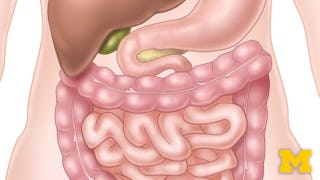 Status: Free Trial
University of Michigan
Skills you'll gain: Anatomy, Endocrinology, Obstetrics And Gynecology, Physiology, Urology, Pathology, Neurology, Biology
 Status: Free Trial
Skills you'll gain: Habit Formation, Stress Management, Positivity, Personal Care, Mindfulness, Meditation & Breathwork, Preventative Care, Mental and Behavioral Health, Behavioral Health, Personal Development, Self-Motivation, Behavioral Management, Self-Awareness, Mental Health, Resilience, Behavior Management, Assertiveness
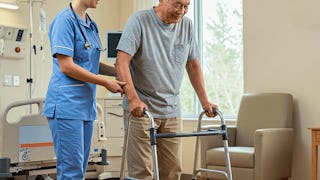 Status: Free Trial
Cinematic Health
Skills you'll gain: Respiratory Care, Patient Communication, Respiratory Therapy, Patient Education And Counseling, Geriatrics, Hospice, Nursing and Patient Care, Chronic Diseases, Infection Control, Endocrinology, Patient-centered Care, Caregiving, Patient Safety, Clinical Nursing, Basic Patient Care, Nursing Care, Long Term Care, Cultural Sensitivity, Dignity in Care, Patient Observation
 Status: Preview
University of Michigan
Skills you'll gain: Substance Abuse, Mental Health, Respiration, Psychiatry, Neurology, Mathematical Modeling, Patient Safety, Physiology, Internal Medicine, Injury Prevention, Life Sciences, Cardiology, Mental Health Diseases and Disorders, Accident Prevention, General Medicine, Economics, Policy, and Social Studies, Public Health, Pharmacology, Public Health and Disease Prevention, Molecular Biology
 Status: Free Trial
Rice University
Skills you'll gain: Medical History Documentation, Medical Terminology, Pulmonology, Cardiology, Electronic Medical Record System, Medical Records, Endocrinology, Respiratory Care, Respiration, Hematology, Anatomy, Immunology, Diagnostic Tests
 Status: Free Trial
Skills you'll gain: Phlebotomy, Blood Collection, Urinalysis, Geriatrics, Laboratory Testing, Venipuncture, Electocardiography, Pediatrics, Specimen Collection, Patient Education and Support, Medical Laboratory, Cardiology, Child Health, Medical Assistance, Patient Preparation, Cardiac Dysrhythmia, Diagnostic Tests, Basic Patient Care, Patient Communication, Infection Control
 Status: Preview
Universitat de Barcelona
Skills you'll gain: Emergency and Intensive Care, Medical Emergency, Acute Care, Triage, Emergency Medical Services, Patient Evaluation, Emergency Departments, Neurology, Intravenous Therapy, Health Assessment, Clinical Assessment, Interventional Radiology, Patient Treatment, Patient Referral
 Status: Preview
University of Michigan
Skills you'll gain: Speech Language Pathology, Pediatrics, Speech Therapy, Communication Disorders, Language Disorders, Child Health, Parent Communication, Disabilities, Developmental Disabilities, Childhood Education and Development, Neurology, Sensory Systems Analysis, Public Health, Child Development, Rehabilitation, Diagnostic Tests, Public Health and Disease Prevention, Patient Treatment, Special Education, Clinical Assessment
 Status: Preview
University of Zurich
Skills you'll gain: Cardiology, Electocardiography, Acute Care, Chronic Diseases, Rehabilitation, Diagnostic Tests, Hemodynamics, Anatomy, Preventative Care, Neurology, Behavioral Health, Physiology, Pharmacotherapy
In summary, here are 10 of our most popular vital signs courses
- Anatomy & Physiology: Regulation, Integration, & Control: Rice University
- Lifestyle & Wellness Strategies: American Council on Exercise
- Optimal Nutrition After 40: National Academy of Sports Medicine
- Anatomy: Gastrointestinal, Reproductive and Endocrine Systems: University of Michigan
- Well Being & Self Care: for Physical and Mental Health: Coursera
- Job Demand, Essential Technical Skills, & Dementia Care: Cinematic Health
- Sleep: Neurobiology, Medicine, and Society: University of Michigan
- Medical Terminology II: Rice University
- Pediatric, Geriatric, Phlebotomy, and Cardiology Assisting: MedCerts
- ÉCHELLE RACE: Dépistage préhospitalier de l’AVC impliquant une occlusion de gros vaisseaux cérébraux: Universitat de Barcelona










