Mechanical Engineering Courses
Mechanical engineering courses can help you learn thermodynamics, fluid mechanics, materials science, and dynamics. You can build skills in computer-aided design (CAD), system modeling, and project management. Many courses introduce tools like SolidWorks and MATLAB, that support designing components and analyzing systems, allowing you to apply your knowledge in practical settings. You'll also explore areas such as robotics, manufacturing processes, and energy systems, equipping you with a versatile skill set for various engineering challenges.
Popular Mechanical Engineering Courses and Certifications
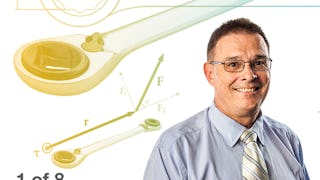
Georgia Institute of Technology
Skills you'll gain: Engineering Analysis, Mechanics, Torque (Physics), Engineering Calculations, Mechanical Engineering, Engineering, Engineering Practices, Structural Analysis, Mathematical Modeling, Applied Mathematics, Trigonometry
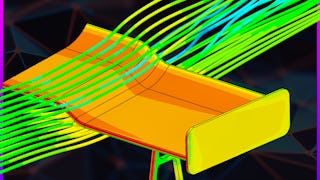
Skills you'll gain: Simulation and Simulation Software, Engineering Analysis, Finite Element Methods, Simulations, Engineering, Computer-Aided Design, Cloud Technologies, Engineering Design Process, Cloud Computing
University of Michigan
Skills you'll gain: Machine Learning Methods, Artificial Intelligence and Machine Learning (AI/ML), AI Enablement, AI powered creativity, Precision Medicine, Generative AI, Machine Learning, AI literacy, Artificial Intelligence, Machine Learning Algorithms, Transfer Learning, Biomedical Engineering, Control Systems, Model Optimization, Energy and Utilities, Image Analysis, AI Workflows, Robotics, Deep Learning, Medical Imaging

Dassault Systèmes
Skills you'll gain: Computer Aided Three-Dimensional Interactive Application (CATIA), Drafting and Engineering Design, Mechanical Design, Engineering Drawings, Issue Tracking, Technical Drawing, 3D Modeling, Computer-Aided Design, Mechanical Drawings, Assembly Drawing, Collaborative Software, Document Management, Mechanical Engineering, Product Lifecycle Management, Product Family Engineering, Microsoft Office, Workflow Management, Cross-Functional Collaboration, Driving engagement, Design Software
Northwestern University
Skills you'll gain: Robotics, Machine Controls, Control Systems, Mathematical Modeling, Mathematical Software, Simulation and Simulation Software, Engineering, Mechanics, Mechanical Engineering, Torque (Physics), Applied Mathematics, Numerical Analysis, Simulations, Engineering Calculations, Process Control, Engineering Analysis, Virtual Environment, Graph Theory, Matlab, Algorithms

What brings you to Coursera today?
University of Michigan
Skills you'll gain: Electric Power Systems, Mechanical Engineering, Thermal Management, Engineering, Energy and Utilities, Physics, Engineering Analysis, Plant Operations and Management, Physical Science, Process Analysis, Engineering Calculations, Chemistry, Environmental Issue

Arizona State University
Skills you'll gain: Engineering Design Process, Engineering Drawings, Prototyping, Assembly Drawing, Product Design, Drafting and Engineering Design, Product Development, Hardware Design, Technical Drawing

Skills you'll gain: Finite Element Methods, Engineering Analysis, Simulation and Simulation Software, Simulations, Mechanical Design, Mathematical Modeling, Structural Engineering, Structural Analysis, 3D Modeling

Rice University
Skills you'll gain: Mechanics, Torque (Physics), Physics, Problem Solving, Mechanical Engineering, Calculus, Graphing, Physical Science, Mathematical Modeling, Algebra, Applied Mathematics, Trigonometry

University of Colorado Boulder
Skills you'll gain: Prompt Engineering, New Product Development, Model Based Systems Engineering, Model Evaluation, Generative AI, Financial Statement Analysis, Agile Project Management, Sustainable Business, Data Mining, Field-Programmable Gate Array (FPGA), Strategic Decision-Making, Delegation Skills, Real-Time Operating Systems, Object Oriented Design, Sampling (Statistics), Failure Analysis, Data Ethics, Goal Setting, Database Design, Data Visualization

L&T EduTech
Skills you'll gain: Engineering Drawings, Construction Engineering, Mechanical Drawings, Structural Analysis, Design Specifications, Hydraulics, Mechanical Design, Petroleum Industry, Building Codes, Technical Drawing, Process Flow Diagrams, Civil Engineering, Oil and Gas, Construction Inspection, Construction, Engineering Analysis, Engineering Calculations, Mechanical Engineering, Chemical Engineering, Process Engineering

Dartmouth College
Skills you'll gain: Structural Analysis, Structural Engineering, Civil Engineering, Vibrations, Architectural Engineering, Engineering Calculations, Construction, Architecture and Construction, SketchUp (3D Modeling Software), Building Design, Mechanics, Engineering Analysis, Materials science, Mathematical Modeling, Failure Analysis, Construction Engineering, Engineering Design Process, Engineering, Design, 3D Modeling
What brings you to Coursera today?
Best free Mechanical Engineering courses
High-quality free Mechanical Engineering courses you can start today.
- Introduction to Engineering MechanicsGeorgia Institute of TechnologyMixed1 - 3 MonthsFree
- Computational Fluid Mechanics - Airflow Around a SpoilerCourseraBeginnerLess Than 2 HoursFree
- FEM - Linear, Nonlinear Analysis & Post-ProcessingCourseraIntermediateLess Than 2 HoursFree
Best Mechanical Engineering certificate programs
Earn a certificate in Mechanical Engineering from top universities and companies.
- AI for Mechanical EngineersUniversity of MichiganIntermediate1 - 3 MonthsSpecialization
- CATIA - Perform as a Mechanical DesignerDassault SystèmesBeginner1 - 3 MonthsSpecialization
- Modern Robotics: Mechanics, Planning, and ControlNorthwestern UniversityIntermediate3 - 6 MonthsSpecialization
Best Mechanical Engineering courses for beginners
Top-rated beginner-friendly Mechanical Engineering courses with no prerequisites.
- Introduction to Thermodynamics: Transferring Energy from Here to ThereUniversity of MichiganBeginner1 - 3 MonthsNo prerequisites
- Engineering and Product Design ProcessesArizona State UniversityBeginner1 - 4 WeeksNo prerequisites
- The Engineering of Structures Around UsDartmouth CollegeBeginner3 - 6 MonthsNo prerequisites










