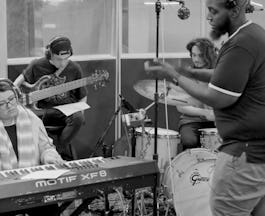
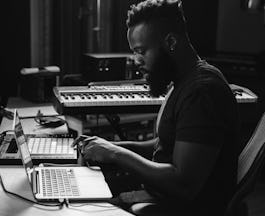
Music technology courses can help you learn audio production, sound design, mixing techniques, and music composition. You can build skills in using digital audio workstations (DAWs), creating electronic music, and understanding audio effects and synthesis. Many courses introduce tools like Ableton Live, Logic Pro, and Pro Tools, that support recording and editing music, allowing you to apply your skills in practical projects and collaborations.

Skills you'll gain: Music, Media Production, Post-Production, Collaborative Software, Digital Signal Processing, Computer Hardware, Editing
Beginner · Course · 1 - 3 Months

Universitat Pompeu Fabra of Barcelona
Skills you'll gain: Digital Signal Processing, Music, Open Source Technology, Python Programming, Software Visualization, Classification Algorithms, Algorithms
Intermediate · Course · 1 - 3 Months

University of Michigan
Skills you'll gain: Payment Systems, FinTech, Blockchain, Payment Processing, Financial Inclusion, Mobile Banking, Fundraising and Crowdsourcing, Credit/Debit Card Processing, Banking Services, Emerging Technologies, Investment Management, Wealth Management, Asset Management, Investments, Banking, Capital Markets, Retail Banking, Consumer Lending, Market Dynamics, Digital Assets
Beginner · Specialization · 3 - 6 Months

Berklee
Skills you'll gain: Intellectual Property, Entrepreneurship, Music History, Contract Negotiation, Fundraising and Crowdsourcing, Creativity, Team Building, Creative Problem-Solving, Creative Thinking, Presentations, Innovation, Lawsuits, Court Systems, Music, Brand Strategy, Branding, Project Planning, Music Performance, Business, Social Media
Beginner · Specialization · 3 - 6 Months

Berklee
Skills you'll gain: Post-Production, Music, Musical Composition, Peer Review, Media Production, Music Performance, Automation, Editing, File Management, Collaborative Software, Digital Signal Processing, Writing, Timelines, Coordination, Data Import/Export, Computer Hardware, Electronic Media
Beginner · Specialization · 3 - 6 Months

Sage Publications
Skills you'll gain: Public Relations, Marketing and Public Relations, Media Relations, Marketing Management, Marketing, Music, Marketing Materials, Event Management, Marketing Planning, Branding, Event Marketing, Social Media Management, Brand Management, Promotional Strategies, Fiscal Management, Marketing Budgets, Business Marketing, Revenue Management, Financial Planning, Music History
Intermediate · Course · 1 - 3 Months

University at Buffalo
Skills you'll gain: Model Based Systems Engineering, Peer Review, Programmable Logic Controllers, Systems Engineering, Product Lifecycle Management, Intrusion Detection and Prevention, Security Controls, Performance Measurement, Collaborative Software, Control Systems, Continuous Monitoring, Anomaly Detection, Manufacturing and Production, Machine Controls, Incident Response, Digital Transformation, Cyber Attacks, Vulnerability Assessments, Cybersecurity, Manufacturing Operations
Beginner · Specialization · 3 - 6 Months

Berklee
Skills you'll gain: Music, Musical Composition, Peer Review, Post-Production, Media Production, Writing
Intermediate · Course · 1 - 4 Weeks

Berklee
Skills you'll gain: File Management, Musical Composition, Music Performance, Music, Media Production, Performing Arts, Music Theory, Post-Production, Instrumental Music, Collaborative Software, Digital Signal Processing, Electronic Media, Automation, Editing, Design Software, Computer Hardware, Patch Management, Creativity, System Requirements
Intermediate · Specialization · 3 - 6 Months

Skills you'll gain: Musical Composition, Music, Music Theory, Music Performance, Instrumental Music, Choral Music, Classical Music, Performing Arts, Post-Production, Writing and Editing, Media Production, Editing, Creativity
Beginner · Specialization · 3 - 6 Months

Skills you'll gain: Musical Composition, Music Theory, Music, Peer Review, Music Performance, Post-Production, Storytelling, Instrumental Music, Media Production, Writing and Editing, Editing, Oral Expression, Organizational Skills, Writing
Beginner · Specialization · 3 - 6 Months

Berklee
Skills you'll gain: Music Theory, Musical Composition, Music, Developing Training Materials, Instrumental Music, Peer Review, Education Software and Technology, Music Performance, Teaching, Classroom Management, Performing Arts, Storytelling, Digital pedagogy, Cultural Responsiveness, Post-Production, Media Production, Active Listening, Writing, Creativity, Empowerment
Intermediate · Specialization · 3 - 6 Months
Music technology refers to the tools and techniques used to create, record, and manipulate sound. It encompasses a wide range of practices, from traditional music production to modern digital audio workstations (DAWs) and software synthesizers. Understanding music technology is crucial in today's music industry, as it allows artists and producers to enhance their creative expression, improve sound quality, and reach wider audiences through various platforms.
Careers in music technology are diverse and can include roles such as audio engineer, music producer, sound designer, and music software developer. These positions often require a blend of technical skills and creative insight, allowing professionals to work in various settings, including recording studios, live events, and multimedia production companies.
To thrive in music technology, you should develop skills in audio editing, mixing, and mastering, as well as familiarity with DAWs like Ableton Live or Pro Tools. Understanding music theory, sound design, and acoustics can also be beneficial. Additionally, knowledge of programming languages can enhance your ability to create custom software or plugins.
Some of the best online courses in music technology include The Technology of Music Production, which covers essential production techniques and tools. Other courses may focus on specific software or aspects of sound engineering, providing a comprehensive foundation for aspiring music technologists.
To learn music technology, start by exploring online courses that match your interests and skill level. Engage with hands-on projects, practice using software tools, and collaborate with others in the field. Additionally, consider joining online communities or forums to share experiences and seek advice.
Typical topics covered in music technology courses include audio recording techniques, sound synthesis, music production workflows, and the use of various software tools. Courses may also explore the impact of technology on music distribution and consumption, providing a well-rounded understanding of the industry.
For training and upskilling employees in music technology, courses like The Technology of Music Production can be particularly beneficial. These programs equip learners with practical skills that can be directly applied in professional settings, enhancing their contributions to the workforce.