• For Individuals
  • For Businesses
  • For Universities
  • For Governments
Degrees
Log In
Join for Free
  • Browse
  • Nervous System

Nervous System Courses

Nervous system courses can help you learn the structure and function of neurons, the roles of neurotransmitters, and the intricacies of brain regions. You can build skills in analyzing neural pathways, understanding sensory processing, and exploring the impact of the nervous system on behavior and cognition. Many courses introduce tools like neuroimaging techniques and electrophysiological methods, that support studying brain activity and diagnosing neurological conditions.


Popular Nervous System Courses and Certifications


  • Status: Preview
    Preview
    T

    The University of Chicago

    Understanding the Brain: The Neurobiology of Everyday Life

    Skills you'll gain: Neurology, Physiology, Anatomy, Behavioral Health, Mental and Behavioral Health, Mental Health Diseases and Disorders, Vital Signs, Control Systems, Coordination, Biology, Communication Systems

    4.9
    Rating, 4.9 out of 5 stars
    ·
    3.2K reviews

    Beginner · Course · 1 - 3 Months

  • Status: Free Trial
    Free Trial
    U

    University of Michigan

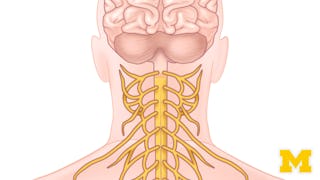
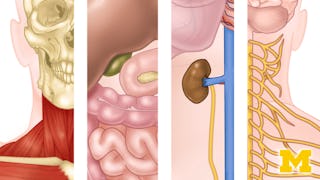
    Anatomy

    Skills you'll gain: Human Musculoskeletal System, Anatomy, Endocrinology, Pulmonology, Cardiology, Respiration, Gynecology, Hematology, Obstetrics And Gynecology, Orthopedics, Neurology, Urology, Nephrology, Kinesiology, Physiology, Medical Imaging, Sports Medicine, Biology, Medical Terminology, Cell Biology

    4.8
    Rating, 4.8 out of 5 stars
    ·
    4K reviews

    Beginner · Specialization · 3 - 6 Months

  • Status: New
    New
    Status: Preview
    Preview
    B

    Berklee

    The Neuroscience of Music and Emotion

    Skills you'll gain: Music, World Music, Culture, Psychology, Neurology, Anatomy, Science and Research

    Beginner · Course · 1 - 4 Weeks

  • Status: Free Trial
    Free Trial
    U

    University of Michigan

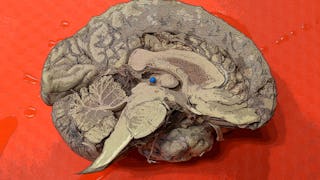
    Anatomy: Human Neuroanatomy

    Skills you'll gain: Anatomy, Neurology, Physiology, Medical Terminology

    4.9
    Rating, 4.9 out of 5 stars
    ·
    999 reviews

    Beginner · Course · 1 - 3 Months

  • Status: Free Trial
    Free Trial
    R

    Rice University

    Human Anatomy & Physiology I

    Skills you'll gain: Human Musculoskeletal System, Anatomy, Endocrinology, Orthopedics, Kinesiology, Physiology, Neurology, Medical Terminology, Cell Biology, Biology, Chemistry, Clinical Practices, Sports Medicine, Physical Therapy, Molecular, Cellular, and Microbiology, Life Sciences, Lifelong Learning

    4.7
    Rating, 4.7 out of 5 stars
    ·
    160 reviews

    Intermediate · Specialization · 3 - 6 Months

  • Status: Preview
    Preview
    D

    Duke University

    Medical Neuroscience

    Skills you'll gain: Neurology, Physiology, Anatomy, Cell Biology, Psychology, Pathology, Molecular Biology

    4.9
    Rating, 4.9 out of 5 stars
    ·
    3K reviews

    Advanced · Course · 3 - 6 Months

What brings you to Coursera today?

  • Status: Preview
    Preview
    D

    Duke University

    Introductory Human Physiology

    Skills you'll gain: Physiology, Pulmonology, Respiration, Anatomy, Endocrinology, Cardiology, Human Musculoskeletal System, Kinesiology, Nephrology, Biology, Vital Signs, Blood Pressure, Neurology, Urinalysis

    4.8
    Rating, 4.8 out of 5 stars
    ·
    5.3K reviews

    Beginner · Course · 1 - 3 Months

  • Status: Free Trial
    Free Trial
    U

    University of Colorado Boulder

    The Science of Movement

    Skills you'll gain: Kinesiology, Electrophysiology, Rehabilitation, Exercise Science, Human Musculoskeletal System, Sports Medicine, Exercise Therapy, Physical Therapy, Neurology, Physiology, Geriatrics, Control Systems, Coordination, Anatomy, Cell Biology, Biology

    4.7
    Rating, 4.7 out of 5 stars
    ·
    15 reviews

    Intermediate · Specialization · 1 - 3 Months

  • Status: New
    New
    Status: Free Trial
    Free Trial
    L

    Lecturio

    Cardiovascular System: Anatomy & Physiology

    Skills you'll gain: Electocardiography, Hemodynamics, Cardiac Dysrhythmia, Cardiology, Patient Observation, Basic Nursing Skills, Clinical Practices, Patient Evaluation, Medical Emergency, Clinical Experience, Anatomy, Blood Pressure, Physiology, Vital Signs, Clinical Nursing

    Intermediate · Course · 1 - 4 Weeks

  • Status: Free Trial
    Free Trial
    U

    University of Colorado Boulder

    Introduction to Systems Engineering

    Skills you'll gain: Systems Engineering, Failure Analysis, Model Based Systems Engineering, Engineering Management, Scope Management, Design Reviews, Requirements Analysis, Project Scoping, Root Cause Analysis, Test Engineering, Program Management, Systems Thinking, Cost Management, Requirements Management, Contract Management, Product Lifecycle Management, Project Risk Management, Functional Design, Risk Management Framework, Risk Management

    Build toward a degree

    4.8
    Rating, 4.8 out of 5 stars
    ·
    140 reviews

    Beginner · Specialization · 3 - 6 Months

  • Status: Free Trial
    Free Trial
    I

    IBM

    Operating Systems: Overview, Administration, and Security

    Skills you'll gain: Operating System Administration, Cloud Computing, Linux Commands, Linux Administration, Linux Servers, Cloud Security, Operating Systems, Windows PowerShell, Windows Servers, File Systems, System Software, Mac OS, Command-Line Interface, Active Directory, Computer Systems, Virtual Machines, Firewall, Virtualization, Containerization, User Accounts

    4.6
    Rating, 4.6 out of 5 stars
    ·
    5.7K reviews

    Beginner · Course · 1 - 3 Months

  • Status: New
    New
    Status: Free Trial
    Free Trial
    I

    Illinois Tech

    Mastering Operating Systems

    Skills you'll gain: Open Source Technology, Linux, Package and Software Management, Shell Script, Linux Administration, Ubuntu, Microsoft Windows, Linux Commands, Unix Shell, Windows PowerShell, User Accounts, Bash (Scripting Language), Command-Line Interface, Unix, Operating Systems, Scripting, Red Hat Enterprise Linux, Systems Administration, Windows Servers, Security Management

    Build toward a degree

    4.5
    Rating, 4.5 out of 5 stars
    ·
    151 reviews

    Intermediate · Specialization · 3 - 6 Months

1234…491

In summary, here are 10 of our most popular nervous system courses

  • Understanding the Brain: The Neurobiology of Everyday Life: The University of Chicago
  • Anatomy: University of Michigan
  • The Neuroscience of Music and Emotion: Berklee
  • Anatomy: Human Neuroanatomy: University of Michigan
  • Human Anatomy & Physiology I: Rice University
  • Medical Neuroscience: Duke University
  • Introductory Human Physiology: Duke University
  • The Science of Movement: University of Colorado Boulder
  • Cardiovascular System: Anatomy & Physiology: Lecturio
  • Introduction to Systems Engineering: University of Colorado Boulder

Frequently Asked Questions about Nervous System

The nervous system is a complex network of nerves and cells that transmit signals between different parts of the body. It is responsible for coordinating and controlling various bodily functions, including sensory perception, motor coordination, and cognitive processes. The nervous system can be divided into two main parts: the central nervous system (CNS), which includes the brain and spinal cord, and the peripheral nervous system (PNS), which consists of nerves that extend throughout the body. Understanding the nervous system is crucial in various fields, including medicine, psychology, and neuroscience.‎

To study the Nervous System, you will need to learn the following skills:

  1. Anatomy and Physiology: Gain a deep understanding of the structure and function of the brain, spinal cord, and peripheral nerves.

  2. Neurobiology: Familiarize yourself with the intricacies of the nervous system at a molecular and cellular level, including neuron communication and synaptic transmission.

  3. Neuroanatomy: Learn about the different regions and structures of the brain, as well as their functions and connections.

  4. Neuroscience Research Methods: Acquire knowledge of various techniques and methodologies used in studying the nervous system, such as electrophysiology, neuroimaging, and animal models.

  5. Neuropharmacology: Understand how different drugs and chemicals interact with the nervous system, affecting neuronal communication and overall function.

  6. Neurological Disorders: Explore different neurological diseases and disorders, their causes, symptoms, and treatment options.

  7. Critical Thinking and Problem-Solving: Develop analytical skills to analyze complex neurological concepts, interpret research findings, and make well-informed conclusions.

  8. Communication and Presentation Skills: Learn to effectively communicate complex neuroscience concepts to both scientific and non-scientific audiences.

  9. Ethics in Neuroscience: Understand the ethical considerations and challenges faced in neuroscience research and healthcare.

  10. Lifelong Learning: As the field of neuroscience is constantly evolving, develop a passion for continual learning and staying updated with the latest research and discoveries.‎

There are several job opportunities available for individuals with Nervous System skills. Some of the potential careers include:

  1. Neurologist: As a neurologist, you would diagnose and treat disorders related to the nervous system, such as epilepsy, stroke, multiple sclerosis, or Parkinson's disease.

  2. Neurosurgeon: Neurosurgeons perform surgical procedures to treat conditions affecting the nervous system, such as tumors, injuries, or spinal cord disorders.

  3. Neuropsychologist: A neuropsychologist specializes in assessing and treating cognitive and behavioral problems arising from brain injuries or disorders.

  4. Neuroscientist: Neuroscientists study the structure and function of the nervous system, conduct research, and contribute to advancements in neuroscience.

  5. Clinical Psychologist: With knowledge of the nervous system, you can work as a clinical psychologist focusing on mental health disorders like depression, anxiety, or schizophrenia.

  6. Rehabilitation Specialist: Rehabilitation specialists help individuals recovering from brain or spinal cord injuries regain motor control, mobility, and restore their nervous system function.

  7. Research Scientist: As a research scientist specializing in the nervous system, you can contribute to scientific advancements and discoveries in various institutions, government agencies, or pharmaceutical companies.

  8. Neurophysiologist: Neurophysiologists study the electrical activity of the nervous system and may work in research, diagnosis, and treatment of conditions like epilepsy or sleep disorders.

  9. Neuroscience Educator: With expertise in the nervous system, you can work as an educator, teaching neuroscience courses at universities, colleges, or educational institutions.

  10. Biomedical Engineer: Biomedical engineers develop medical devices or technologies to diagnose, treat, or monitor nervous system-related disorders.

Remember, these are just a few examples, and the field of neuroscience offers diverse career paths. It's essential to further explore specific interests and consider specialized areas within neuroscience for more job opportunities.‎

People who are interested in biology, anatomy, and physiology are best suited for studying the Nervous System. Additionally, individuals who have a strong curiosity about how the brain and nervous system function, and how they impact human behavior and health, would find studying the Nervous System fascinating.‎

There are several topics that you can study related to the Nervous System. Here are some suggestions:

  1. Neuroscience: Study the structure, function, and disorders of the nervous system.

  2. Neuroanatomy: Learn about the anatomy of the nervous system, including the brain, spinal cord, and peripheral nerves.

  3. Neurophysiology: Explore the electrical and chemical processes that enable the nervous system to function.

  4. Neuropharmacology: Examine the effects of drugs and medications on the nervous system.

  5. Neurological Disorders: Study various disorders and conditions that affect the nervous system, such as Alzheimer's disease, Parkinson's disease, multiple sclerosis, etc.

  6. Neurodevelopment: Learn about the development of the nervous system from embryonic stages to adulthood.

  7. Neuroimaging: Explore the different imaging techniques used to visualize and study the brain and other parts of the nervous system, such as MRI, CT scans, fMRI, etc.

  8. Neuroplasticity: Investigate the brain's ability to reorganize and adapt its structure and function in response to experiences and learning.

  9. Neurological Assessment: Understand the methods and tools used to assess and diagnose neurological conditions.

  10. Neurosurgery: Gain knowledge about surgical procedures performed on the nervous system, including brain surgery, spinal surgery, and peripheral nerve surgery.

These topics provide a wide range of areas to study and specialize in when it comes to the Nervous System.‎

Online Nervous System courses offer a convenient and flexible way to enhance your knowledge or learn new The nervous system is a complex network of nerves and cells that transmit signals between different parts of the body. It is responsible for coordinating and controlling various bodily functions, including sensory perception, motor coordination, and cognitive processes. The nervous system can be divided into two main parts: the central nervous system (CNS), which includes the brain and spinal cord, and the peripheral nervous system (PNS), which consists of nerves that extend throughout the body. Understanding the nervous system is crucial in various fields, including medicine, psychology, and neuroscience. skills. Choose from a wide range of Nervous System courses offered by top universities and industry leaders tailored to various skill levels.‎

When looking to enhance your workforce's skills in Nervous System, it's crucial to select a course that aligns with their current abilities and learning objectives. Our Skills Dashboard is an invaluable tool for identifying skill gaps and choosing the most appropriate course for effective upskilling. For a comprehensive understanding of how our courses can benefit your employees, explore the enterprise solutions we offer. Discover more about our tailored programs at Coursera for Business here.‎

This FAQ content has been made available for informational purposes only. Learners are advised to conduct additional research to ensure that courses and other credentials pursued meet their personal, professional, and financial goals.

Other topics to explore

Arts and Humanities
338 courses
Business
1095 courses
Computer Science
668 courses
Data Science
425 courses
Information Technology
145 courses
Health
471 courses
Math and Logic
70 courses
Personal Development
137 courses
Physical Science and Engineering
413 courses
Social Sciences
401 courses
Language Learning
150 courses

Coursera Footer

Skills

  • Artificial Intelligence (AI)
  • Cybersecurity
  • Data Analytics
  • Digital Marketing
  • English Speaking
  • Generative AI (GenAI)
  • Microsoft Excel
  • Microsoft Power BI
  • Project Management
  • Python

Certificates & Programs

  • Google Cybersecurity Certificate
  • Google Data Analytics Certificate
  • Google IT Support Certificate
  • Google Project Management Certificate
  • Google UX Design Certificate
  • IBM Data Analyst Certificate
  • IBM Data Science Certificate
  • Machine Learning Certificate
  • Microsoft Power BI Data Analyst Certificate
  • UI / UX Design Certificate

Industries & Careers

  • Business
  • Computer Science
  • Data Science
  • Education & Teaching
  • Engineering
  • Finance
  • Healthcare
  • Human Resources (HR)
  • Information Technology (IT)
  • Marketing

Career Resources

  • Career Aptitude Test
  • Examples of Strengths and Weaknesses for Job Interviews
  • High-Income Skills to Learn
  • How Does Cryptocurrency Work?
  • How to Highlight Duplicates in Google Sheets
  • How to Learn Artificial Intelligence
  • Popular Cybersecurity Certifications
  • Preparing for the PMP Certification
  • Signs You Will Get the Job After an Interview
  • What Is Artificial Intelligence?

Coursera

  • About
  • What We Offer
  • Leadership
  • Careers
  • Catalog
  • Coursera Plus
  • Professional Certificates
  • MasterTrack® Certificates
  • Degrees
  • For Enterprise
  • For Government
  • For Campus
  • Become a Partner
  • Social Impact
  • Free Courses
  • Share your Coursera learning story

Community

  • Learners
  • Partners
  • Beta Testers
  • Blog
  • The Coursera Podcast
  • Tech Blog

More

  • Press
  • Investors
  • Terms
  • Privacy
  • Help
  • Accessibility
  • Contact
  • Articles
  • Directory
  • Affiliates
  • Modern Slavery Statement
  • Do Not Sell/Share
Learn Anywhere
Download on the App Store
Get it on Google Play
Logo of Certified B Corporation
© 2025 Coursera Inc. All rights reserved.
  • Coursera Facebook
  • Coursera Linkedin
  • Coursera Twitter
  • Coursera YouTube
  • Coursera Instagram
  • Coursera TikTok