• For Individuals
  • For Businesses
  • For Universities
  • For Governments
Degrees
​
Log In
Join for Free
  • Browse
  • Sensor Fusion

Sensor Fusion Courses

Sensor fusion courses can help you learn the integration of data from multiple sensors, algorithms for data processing, and techniques for improving accuracy in measurements. You can build skills in analyzing sensor data, optimizing sensor placement, and implementing real-time data fusion strategies. Many courses introduce tools like MATLAB, Python libraries, and various simulation software, that support developing applications in robotics, autonomous vehicles, and smart devices.


Popular Sensor Fusion Courses and Certifications

  • Status: Free Trial
    Free Trial
    U

    University of Toronto

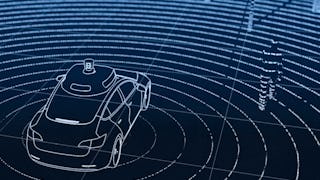
    State Estimation and Localization for Self-Driving Cars

    Skills you'll gain: Global Positioning Systems, Estimation, Robotics, Deep Learning, Machine Learning Methods, Computer Vision, Control Systems, Mathematical Modeling, Applied Mathematics, Linear Algebra
    4.7
    Rating, 4.7 out of 5 stars
    ·
    839 reviews

    Advanced · Course · 1 - 3 Months

  • Status: Free Trial
    Free Trial
    P

    Packt

    Arduino Programming and Project Development

    Skills you'll gain: Object Oriented Programming (OOP), Object Oriented Design, Basic Electrical Systems, Wireless Networks, C and C++, Computer Programming, Control Systems, Interactive Design, Software Installation, Electronic Components, C++ (Programming Language), Electronics, Display Devices, Embedded Software, Embedded Systems, Robotics, Computer Programming Tools, Development Environment, Integrated Development Environments, Electrical Wiring

    4.7
    Rating, 4.7 out of 5 stars
    ·
    18 reviews

    Intermediate · Specialization · 3 - 6 Months

  • Status: New
    New
    Status: Free Trial
    Free Trial
    C

    Coursera

    End-to-End Multimodal AI: Fine-Tuning, Fusion, and MLOps

    Skills you'll gain: API Design, MLOps (Machine Learning Operations), Restful API, OAuth, Model Deployment, Model Evaluation, Transfer Learning, Vision Transformer (ViT), Artificial Intelligence and Machine Learning (AI/ML), Tensorflow, Stakeholder Communications, PyTorch (Machine Learning Library), Machine Learning Software, Applied Machine Learning, Artificial Intelligence, Solution Architecture, Machine Learning, Data Architecture, Machine Learning Algorithms, Data Science

    Intermediate · Course · 3 - 6 Months

  • Status: New
    New
    Status: Free Trial
    Free Trial
    C

    Coursera

    Vision & Audio AI Systems

    Skills you'll gain: Apache Airflow, Data Validation, Image Analysis, Transfer Learning, Data Preprocessing, Data Integrity, Model Evaluation, Debugging, Computer Vision, PyTorch (Machine Learning Library), Data Pipelines, Feature Engineering, MLOps (Machine Learning Operations), Tensorflow, Algorithms, Embeddings, Applied Machine Learning, Performance Tuning, Deep Learning, Digital Signal Processing

    Advanced · Specialization · 3 - 6 Months

  • Status: New
    New
    Status: Free Trial
    Free Trial
    E

    Edge Impulse

    Edge AI for Microcontrollers

    Skills you'll gain: Computer Vision, Convolutional Neural Networks, Applied Machine Learning, Embedded Software, Embedded Systems, MLOps (Machine Learning Operations), Machine Learning, Artificial Intelligence and Machine Learning (AI/ML), Artificial Intelligence, Machine Learning Methods, Anomaly Detection, AI Product Strategy, Cloud Computing, Internet Of Things, Product Engineering, Prototyping, Industrial Engineering, Product Development, Data Science

    4.8
    Rating, 4.8 out of 5 stars
    ·
    887 reviews

    Intermediate · Specialization · 1 - 3 Months

  • U

    University of Colorado Boulder

    Master of Science in Electrical and Computer Engineering

    Skills you'll gain: Prompt Engineering, User Story, New Product Development, Model Based Systems Engineering, Model Evaluation, Failure Analysis, Sustainable Business, Data Mining, Field-Programmable Gate Array (FPGA), Delegation Skills, Real-Time Operating Systems, Object Oriented Design, Sampling (Statistics), Proposal Writing, Accountability, Data Ethics, Sustainability Reporting, Database Design, Supervised Learning, Sustainable Design

    Earn a degree

    Degree · 1 - 4 Years

What brings you to Coursera today?

  • Status: Free
    Free
    A

    Amazon Web Services

    Securely Connecting AWS IoT Devices to the Cloud V01.00.00

    Skills you'll gain: Internet Of Things, Amazon Web Services, Cloud Hosting, Cloud Security, Real Time Data

    4.5
    Rating, 4.5 out of 5 stars
    ·
    14 reviews

    Beginner · Course · 1 - 4 Weeks

  • Status: Free
    Free
    C

    Coursera

    Python Development with ChatGPT: Fullstack App Development

    Skills you'll gain: Application Programming Interface (API), Restful API, ChatGPT, Generative AI, JSON, Full-Stack Web Development, Application Deployment, Secure Coding, User Interface (UI), Python Programming, User Interface (UI) Design, Application Development, Back-End Web Development, Debugging

    3.6
    Rating, 3.6 out of 5 stars
    ·
    14 reviews

    Intermediate · Guided Project · Less Than 2 Hours

  • Status: Free Trial
    Free Trial
    L

    LearnQuest

    IoT Systems and Industrial Applications with Design Thinking

    Skills you'll gain: User Research, Internet Of Things, Usability Testing, Prototyping, Design Thinking, Ideation, Automation, Advanced Analytics, User Experience Design, Big Data, User Centered Design, IT Security Architecture, Interaction Design, Data-Driven Decision-Making, Human Centered Design, Data Management, Robotics, Control Systems, Hardware Architecture, Manufacturing Processes

    4.5
    Rating, 4.5 out of 5 stars
    ·
    54 reviews

    Beginner · Specialization · 1 - 3 Months

  • Status: Free Trial
    Free Trial
    I

    Indian Institute of Science

    Sensor Technologies for Biomedical Applications

    Skills you'll gain: Engineering Documentation, Biomedical Engineering, Medical Devices, Medical Equipment and Technology, Vital Signs, Technical Documentation, Electronic Systems, Electronic Components, Electronics, Chemistry, Technical Communication, Semiconductors, ISO 13485 Standard, Materials science, Internet Of Things, Embedded Systems, Diagnostic Tests, Electrophysiology, Biology, Chemical Engineering

    4.7
    Rating, 4.7 out of 5 stars
    ·
    23 reviews

    Beginner · Specialization · 3 - 6 Months

  • Status: Free Trial
    Free Trial
    U

    University of Colorado Boulder

    Embedding Sensors and Motors

    Skills you'll gain: Control Systems, Machine Controls, Engineering, Scientific, and Technical Instruments, Process Control, Embedded Systems, Embedded Software, Real Time Data, Laboratory Experience, Electronic Systems, Electronics, Power Electronics, Electronic Hardware, Manufacturing Processes, Three-Phase, Automation Engineering, Electrical Equipment, Thermal Management, Hardware Design, Electrical Engineering, Electronics Engineering

    Build toward a degree

    4.6
    Rating, 4.6 out of 5 stars
    ·
    2.9K reviews

    Intermediate · Specialization · 3 - 6 Months

  • Status: New
    New
    Status: Free Trial
    Free Trial
    C

    Coursera

    Pixels, Waveforms & Words: Engineering Multimodal AI Systems

    Skills you'll gain: Image Analysis, Transfer Learning, Multimodal Prompts, Model Evaluation, Data Preprocessing, Debugging, Computer Vision, PyTorch (Machine Learning Library), Feature Engineering, Tensorflow, Algorithms, Embeddings, Model Deployment, Real Time Data, Visualization (Computer Graphics), Applied Machine Learning, Ethical Standards And Conduct, Root Cause Analysis, Deep Learning, Systems Design

    Intermediate · Specialization · 3 - 6 Months

1234…14

In summary, here are 10 of our most popular sensor fusion courses

  • State Estimation and Localization for Self-Driving Cars: University of Toronto
  • Arduino Programming and Project Development: Packt
  • End-to-End Multimodal AI: Fine-Tuning, Fusion, and MLOps: Coursera
  • Vision & Audio AI Systems: Coursera
  • Edge AI for Microcontrollers: Edge Impulse
  • Master of Science in Electrical and Computer Engineering: University of Colorado Boulder
  • Securely Connecting AWS IoT Devices to the Cloud V01.00.00: Amazon Web Services
  • Python Development with ChatGPT: Fullstack App Development: Coursera
  • IoT Systems and Industrial Applications with Design Thinking: LearnQuest
  • Sensor Technologies for Biomedical Applications: Indian Institute of Science

Frequently Asked Questions about Sensor Fusion

Sensor fusion is the process of integrating data from multiple sensors to produce more accurate, reliable, and comprehensive information than could be obtained from any single sensor alone. This technique is crucial in various fields, including robotics, autonomous vehicles, and healthcare, as it enhances decision-making and improves system performance. By combining data from different sources, sensor fusion helps mitigate the limitations of individual sensors, such as noise and inaccuracies, leading to better outcomes in applications like navigation, environmental monitoring, and medical diagnostics.‎

A career in sensor fusion can lead to various job opportunities across multiple industries. Positions may include roles such as sensor fusion engineer, robotics engineer, data scientist, and systems engineer. These professionals work on developing algorithms and systems that integrate sensor data for applications in autonomous vehicles, drones, and smart devices. Additionally, industries like healthcare and manufacturing are increasingly seeking experts in sensor fusion to enhance their products and services, making this a promising field for job seekers.‎

To excel in sensor fusion, you will need a combination of technical and analytical skills. Key areas of knowledge include signal processing, machine learning, and data analysis. Familiarity with programming languages such as Python or MATLAB is also beneficial, as these tools are often used for developing algorithms. Understanding sensor technologies and their characteristics is crucial, as is the ability to work with large datasets. Additionally, problem-solving skills and a strong foundation in mathematics will support your learning and application of sensor fusion techniques.‎

There are several online courses available that focus on sensor fusion. For instance, the Sensor Technologies for Biomedical Applications Specialization offers insights into how sensors are used in healthcare. Other courses may cover specific applications, such as robotics or autonomous systems, providing a comprehensive understanding of the field. Exploring these options can help you find the right fit for your learning goals.‎

Yes. You can start learning sensor fusion on Coursera for free in two ways:

  1. Preview the first module of many sensor fusion courses at no cost. This includes video lessons, readings, graded assignments, and Coursera Coach (where available).
  2. Start a 7-day free trial for Specializations or Coursera Plus. This gives you full access to all course content across eligible programs within the timeframe of your trial.

If you want to keep learning, earn a certificate in sensor fusion, or unlock full course access after the preview or trial, you can upgrade or apply for financial aid.‎

To learn sensor fusion effectively, start by identifying your current knowledge base and the specific areas you want to explore. Enroll in online courses that cover the fundamentals of sensor technologies, data analysis, and machine learning. Engage with practical projects to apply what you've learned, and consider joining online forums or study groups to connect with others in the field. Consistent practice and seeking feedback will help reinforce your understanding and skills in sensor fusion.‎

Typical topics covered in sensor fusion courses include the principles of sensor operation, data acquisition techniques, algorithms for data integration, and applications in various fields. Courses may also explore specific methodologies such as Kalman filtering, Bayesian networks, and machine learning approaches. Understanding these concepts will provide a solid foundation for applying sensor fusion in real-world scenarios.‎

For training and upskilling employees in sensor fusion, courses that focus on practical applications and hands-on projects are ideal. Look for programs that offer case studies and real-world scenarios, as these can help learners apply their knowledge effectively. The Sensor Technologies for Biomedical Applications Specialization is an example of a course that could benefit professionals looking to enhance their skills in this area.‎

This FAQ content has been made available for informational purposes only. Learners are advised to conduct additional research to ensure that courses and other credentials pursued meet their personal, professional, and financial goals.

Other topics to explore

Arts and Humanities
338 courses
Business
1095 courses
Computer Science
668 courses
Data Science
425 courses
Information Technology
145 courses
Health
471 courses
Math and Logic
70 courses
Personal Development
137 courses
Physical Science and Engineering
413 courses
Social Sciences
401 courses
Language Learning
150 courses

Coursera Footer

Skills

  • Accounting
  • Artificial Intelligence (AI)
  • Cybersecurity
  • Data Analytics
  • Digital Marketing
  • Human Resources (HR)
  • Microsoft Excel
  • Project Management
  • Python
  • SQL

Professional Certificates

  • Google AI Certificate
  • Google Cybersecurity Certificate
  • Google Data Analytics Certificate
  • Google IT Support Certificate
  • Google Project Management Certificate
  • Google UX Design Certificate
  • IBM AI Engineering Certificate
  • IBM AI Product Manager Certificate
  • IBM Data Science Certificate
  • Intuit Academy Bookkeeping Certificate

Courses & Specializations

  • AI Essentials Specialization
  • AI For Business Specialization
  • AI For Everyone Course
  • AI in Healthcare Specialization
  • Deep Learning Specialization
  • Excel Skills for Business Specialization
  • Financial Markets Course
  • Machine Learning Specialization
  • Prompt Engineering for ChatGPT Course
  • Python for Everybody Specialization

Career Resources

  • Career Aptitude Test
  • CAPM Certification Requirements
  • CompTIA A+ Certification Requirements
  • CompTIA Security+ Certification Requirements
  • Essential IT Certifications
  • Free IT Certifications and Courses
  • High-Income Skills to Learn
  • How to Learn Artificial Intelligence
  • PMP Certification Requirements
  • Popular Cybersecurity Certifications

Coursera

  • About
  • What We Offer
  • Leadership
  • Careers
  • Catalog
  • Coursera Plus
  • Professional Certificates
  • MasterTrack® Certificates
  • Degrees
  • For Enterprise
  • For Government
  • For Campus
  • Become a Partner
  • Social Impact
  • Free Courses
  • Share your Coursera learning story

Community

  • Learners
  • Partners
  • Beta Testers
  • Blog
  • The Coursera Podcast
  • Tech Blog

More

  • Press
  • Investors
  • Terms
  • Privacy
  • Help
  • Accessibility
  • Contact
  • Articles
  • Directory
  • Affiliates
  • Modern Slavery Statement
  • Do Not Sell/Share
Learn Anywhere
Download on the App Store
Get it on Google Play
Logo of Certified B Corporation
© 2026 Coursera Inc. All rights reserved.
  • Coursera Facebook
  • Coursera Linkedin
  • Coursera Twitter
  • Coursera YouTube
  • Coursera Instagram
  • Coursera TikTok