Sentiment Analysis Courses
Sentiment analysis courses can help you learn text processing, natural language understanding, and emotion detection techniques. You can build skills in data visualization, feature extraction, and model evaluation, which are crucial for interpreting sentiment trends. Many courses introduce tools like Python, R, and specialized libraries such as NLTK or TextBlob, which facilitate the application of sentiment analysis in various contexts, from social media monitoring to customer feedback analysis.
Popular Sentiment Analysis Courses and Certifications

Skills you'll gain: Machine Learning Algorithms, Natural Language Processing, Machine Learning Methods, Text Mining, Data Manipulation, Data Cleansing, Computer Programming Tools, Python Programming, Development Environment, Software Development Tools
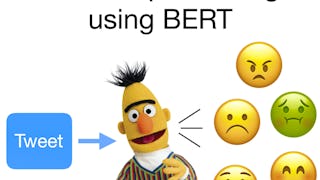
Skills you'll gain: Model Optimization, Model Evaluation, Large Language Modeling, Data Preprocessing, Model Training, Fine-tuning, Data Cleansing, PyTorch (Machine Learning Library), Transfer Learning, Deep Learning, Natural Language Processing, Exploratory Data Analysis, Test Data, Machine Learning

Coursera
Skills you'll gain: Model Evaluation, Model Training, Exploratory Data Analysis, Data Cleansing, Text Mining, Scikit Learn (Machine Learning Library), Probability & Statistics, Natural Language Processing, Data Preprocessing, Social Media Analytics, Data Analysis, Classification Algorithms, Python Programming, Applied Machine Learning, Predictive Analytics, Machine Learning, Automation

Vanderbilt University
Skills you'll gain: Prompt Engineering, ChatGPT, Prompt Patterns, Spreadsheet Software, AI powered creativity, Data Presentation, Data Visualization, Data Analysis, AI Workflows, Productivity Software, LLM Application, Workflow Management, Document Management, Unstructured Data, Large Language Modeling, Editing, Text Mining, Debugging
Coursera
Skills you'll gain: Social Media Analytics, Social Media Marketing, Business Intelligence, Predictive Modeling, Dashboard Creation, Predictive Analytics, Customer Analysis, Case Studies, Advanced Analytics, Business Strategies

What brings you to Coursera today?

University of Illinois Urbana-Champaign
Skills you'll gain: Text Mining, Data Mining, Unstructured Data, Statistical Analysis, Natural Language Processing, Data-Driven Decision-Making, Analytics, Data Analysis, Statistical Machine Learning, Statistical Methods, Unsupervised Learning, Probability & Statistics, Correlation Analysis, Applied Machine Learning, Probability Distribution, Classification Algorithms, Model Optimization, Generative Model Architectures

Microsoft
Skills you'll gain: Customer Relationship Management, Customer Relationship Management (CRM) Software, Power BI, Customer Insights, Customer Analysis, Dashboard Creation, AI Personalization, Customer experience improvement, Microsoft Copilot, Customer Data Management, Customer Service, Personalized Service, Analytical Skills, Data Validation, Data Analysis, AI Integrations, Data Integrity, Performance Analysis, Data Quality, Customer Communications Management

Scrum Alliance
Skills you'll gain: Responsible AI, Data Ethics, Sprint Retrospectives, Slack (Software), AI Workflows, Collaborative Software, AI literacy, Scrum (Software Development), AI Personalization, Employee Coaching, AI Enablement, Team Performance Management, Agile Methodology, Agile Project Management, Team Management, Data-Driven Decision-Making, Performance Metric, Conflict Management, Internal Communications, Natural Language Processing

Skills you'll gain: Natural Language Processing, Large Language Modeling, Fine-tuning, Model Evaluation, Recurrent Neural Networks (RNNs), Data Ethics, Responsible AI, Text Mining, Transfer Learning, PyTorch (Machine Learning Library), Artificial Neural Networks, Data Preprocessing, Artificial Intelligence and Machine Learning (AI/ML), Deep Learning, Classification Algorithms, Applied Machine Learning, Data Processing, Machine Learning, Data Analysis, Data Cleansing

Skills you'll gain: Customer Analysis, User Feedback, Customer Insights, Data Presentation, Data Analysis, Data Visualization, Customer experience improvement, Business Intelligence, Hospitality, Text Mining, Marketing Analytics, Unstructured Data, Trend Analysis, Business Metrics, Key Performance Indicators (KPIs), Data Science, Natural Language Processing, Performance Measurement, Performance Metric

Universidad de Palermo
Skills you'll gain: Prompt Engineering, Business Intelligence, Data Presentation, Multimodal Prompts, ChatGPT, Business Analytics, Prompt Engineering Tools, Looker (Software), Data Ethics, Generative AI, Data-Driven Decision-Making, Data Governance, Artificial Intelligence, Data Management, Strategic Decision-Making, Data Analysis, Data Storytelling, Large Language Modeling, Data Visualization, Automation

Skills you'll gain: Pandas (Python Package), NumPy, Data Manipulation, Code Reusability, Data Preprocessing, Data Wrangling, Package and Software Management, Data Analysis, Data Processing, Data Integration, JSON, Object Oriented Programming (OOP), Data Science, Data Structures, Python Programming, Exploratory Data Analysis, Programming Principles, Data Import/Export, Data Storage, Computational Logic
What brings you to Coursera today?
Best Sentiment Analysis courses from Coursera
Top-rated Sentiment Analysis courses offered by Coursera on Coursera.
- Sentiment Analysis with Deep Learning using BERTCourseraIntermediateLess Than 2 HoursCoursera
- NLP: Twitter Sentiment AnalysisCourseraBeginnerLess Than 2 HoursCoursera
- Social Media Data AnalyticsCourseraIntermediate1 - 4 WeeksCoursera
Best Sentiment Analysis certificate programs
Earn a certificate in Sentiment Analysis from top universities and companies.
- Mastering NLP: Tokenization, Sentiment Analysis & Neural MTEdurekaIntermediate3 - 6 MonthsSpecialization
- IA generativa para analistas y líderes empresarialesUniversidad de PalermoBeginner3 - 6 MonthsSpecialization
- Google Data Analysis with PythonGoogleBeginner3 - 6 MonthsSpecialization
Best Sentiment Analysis courses for beginners
Top-rated beginner-friendly Sentiment Analysis courses with no prerequisites.
- Python Case Study - Sentiment AnalysisEDUCBABeginner1 - 4 WeeksNo prerequisites
- ChatGPT Advanced Data AnalysisVanderbilt UniversityBeginner1 - 3 MonthsNo prerequisites
- AI & Data InsightsMicrosoftBeginner1 - 3 MonthsNo prerequisites










