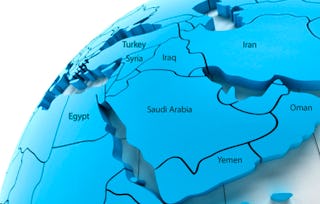
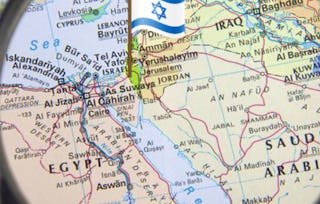
This course will discuss the developments in the Middle East from the early 20th century to the present. It will discuss the rise and retreat of Arab nationalism, the problems of internal cohesion of the Arab states, issues of religion and state, and the evolution of Islamist politics. It will also focus on the evolution of the Arab-Israeli conflict and its impact on the region and will conclude with an in depth analysis of the “Arab Spring” by placing these contemporary revolutionary events in their historical context.
Please note that this course builds upon a previous course - The Emergence of the Modern Middle East - Part I (https://www.coursera.org/learn/modern-middle-east-1/home/welcome)
Learn about the history of the Middle East for a deeper understanding of current regional developments!
This course will temporarily close for enrollment from March 1st, 2022 to August 31st, 2022. During this time, the course will be closed for new enrolments. All of the course materials will continue to be able available to previously enrolled learners; however, the course staff will not provide support in the Discussion Forums during this period.
Best,
The Tel Aviv University Team
Independence and revolutionary politics in the Arab world
What's included
14 videos3 readings1 plugin
Show info about module content
14 videos•Total 98 minutes
V. Arab Independence and Revolution•2 minutes
5.1.1 Egypt: Crisis and Revolution - Part 1•8 minutes
5.1.2 Egypt: Crisis and Revolution - Part 2•6 minutes
5.2.1 Iraq from the Overthrow of the Hashemites to Saddam Hussein - Part 1•8 minutes
5.2.2 Iraq from the Overthrow of the Hashemites to Saddam Hussein - Part 2•7 minutes
5.3.1 Syria's Prolonged Instability - Part 1•8 minutes
5.3.2 Syria's Prolonged Instability - Part 2•8 minutes
5.4.1 Lebanon's Civil Wars - Part 1•7 minutes
5.4.2 Lebanon's Civil Wars - Part 2•10 minutes
5.5. The Surprising Stability of the Arab Monarchies•4 minutes
5.5.1.1 The Surprising Stability of the Arab Monarchies: Jordan - Part 1•9 minutes
5.5.1.2 The Surprising Stability of the Arab Monarchies: Jordan - Part 2•8 minutes
5.5.2 The Surprising Stability of the Arab Monarchies: Saudi Arabia•8 minutes
5.6 The Arab Cold War•2 minutes
3 readings•Total 30 minutes
Before we begin•10 minutes
Suggested Readings•10 minutes
Lecture Transcript•10 minutes
1 plugin•Total 5 minutes
Opening survey•5 minutes
WEEK 2
Module 2•2 hours to complete
Module details
The beginnings of the Arab-Israeli conflict
What's included
15 videos2 readings
Show info about module content
15 videos•Total 112 minutes
6.1 Introduction: Contexts and Discourse•7 minutes
6.2 Early Zionism•10 minutes
6.3.1 Initial Arab Resistance - Part 1•7 minutes
6.3.2 Initial Arab Resistance - Part 2•8 minutes
6.4.1 The Arab Rebellion and the Jewish Response - Part 1•11 minutes
6.4.2 The Arab Rebellion and the Jewish Response - Part 2•7 minutes
6.4.3 The Arab Rebellion and the Jewish Response - Part 3•6 minutes
6.5 The Impact of World War II•10 minutes
6.6 The Anglo-American Committee of Inquiry•6 minutes
6.7.1 Partition and the First Phase of War - Part 1•5 minutes
6.7.2 Partition and the First Phase of War - Part 2•8 minutes
6.8 The Second Phase of the 1948 War•8 minutes
6.9.1 The Narratives of the 1948 War - Part 1•9 minutes
6.9.2 The Narratives of the 1948 War - Part 2•4 minutes
6.9.3 The Narratives of the 1948 War - Part 3•9 minutes
2 readings•Total 20 minutes
Suggested Readings•10 minutes
Lecture Transcript•10 minutes
WEEK 3
Module 3•2 hours to complete
Module details
The escalation and de-escalation of the Arab-Israeli conflict from 1948 to 1973
What's included
11 videos2 readings1 assignment
Show info about module content
11 videos•Total 84 minutes
7.1.1 From 1949 to the Suez War - Part 1•10 minutes
7.1.2 From 1949 to the Suez War - Part 2•6 minutes
7.1.3 From 1949 to the Suez War - Part 3•7 minutes
7.2.1 The Revival of the Palestinian Identity - Part 1•8 minutes
7.2.2 The Revival of the Palestinian Identity - Part 2•8 minutes
7.3.1 The Deterioration to War in 1967 - Part 1•9 minutes
7.3.2 The Deterioration to War in 1967 - Part 2•5 minutes
7.3.3 The Deterioration to War in 1967 - Part 3•10 minutes
7.4 The Palestinian Struggle from Jordan•6 minutes
7.5 Black September•8 minutes
7.6 The War of Attrition, 1968-70•8 minutes
2 readings•Total 20 minutes
Suggested Readings•10 minutes
Lecture Transcript•10 minutes
1 assignment•Total 30 minutes
Week 3 Quiz •30 minutes
WEEK 4
Module 4•2 hours to complete
Module details
The escalation and de-escalation of the Arab-Israeli conflict from 1973 to the present
What's included
13 videos2 readings
Show info about module content
13 videos•Total 86 minutes
8.1.1 The October Surprise - Part 1•6 minutes
8.1.2 The October Surprise - Part 2•5 minutes
8.2.1 The Egyptian-Israeli Peace - Part 1•7 minutes
8.2.2 The Egyptian-Israeli Peace - Part 2•6 minutes
8.3 The PLO and the 1982 War in Lebanon•4 minutes
8.4.1 The First Palestinian Intifada - Part 1•5 minutes
8.4.2 The First Palestinian Intifada - Part 2•6 minutes
8.5.1 The Oslo Accords - Part 1•7 minutes
8.5.2 The Oslo Accords - Part 2•9 minutes
8.6 The Jordanian-Israeli Peace•7 minutes
8.7.1 Camp David, 2000 - Part 1•7 minutes
8.7.2 Camp David, 2000 - Part 2•7 minutes
8.8 Unilateral Disengagement and Further Negotiations•11 minutes
2 readings•Total 20 minutes
Suggested Readings•10 minutes
Lecture Transcript•10 minutes
WEEK 5
Module 5•3 hours to complete
Module details
The Middle East from 1967 to the present including the Arab Spring
What's included
14 videos2 readings1 assignment1 plugin
Show info about module content
14 videos•Total 109 minutes
9.1.1 The Post-1967 Middle East: The Victory of State Interest - Part 1•10 minutes
9.1.2 The Post-1967 Middle East: The Victory of State Interest - Part 2•8 minutes
9.2 The Islamic Revival•9 minutes
9.2.1.1 The Islamic Revival in Egypt, Syria and Iraq - Part 1•5 minutes
9.2.1.2 The Islamic Revival in Egypt, Syria and Iraq - Part 2•7 minutes
9.2.2 The Examples of Jordan, Algeria and the Palestinians•8 minutes
9.3.1.1 The "Arab Spring": Modernity and Tradition - Part 1•5 minutes
9.3.1.2 The "Arab Spring": Modernity and Tradition - Part 2•12 minutes
9.3.2.1 The "Arab Spring": Egypt and Tunisia - Part 1•6 minutes
9.3.2.2 The "Arab Spring": Syria, Jordan, Yemen and Libya - Part 2•12 minutes
9.4.1 The Non-Arab Countries - The Republic of Turkey : From WWII to the Present•12 minutes
9.4.2.1 The Non-Arab Countries - Iran: From the Pahlavi Dynasty to the Islamic Republic - Part 1•7 minutes
9.4.2.2 The Non-Arab Countries - Iran: From the Pahlavi Dynasty to the Islamic Republic - Part 2•7 minutes
9.5 Concluding Overview•4 minutes
2 readings•Total 20 minutes
Suggested Readings•10 minutes
Lecture Transcript•10 minutes
1 assignment•Total 30 minutes
Final Test•30 minutes
1 plugin•Total 3 minutes
Post Course Survey•3 minutes
Instructor
Instructor ratings
Instructor ratings
We asked all learners to give feedback on our instructors based on the quality of their teaching style.
Tel Aviv University (TAU) is Israel's largest institution of higher learning – with over 30,000 students and more than 125 schools and departments in nine faculties. Global in outlook and impact, it is consistently ranked among the world's top 100 universities, as well as the top 20 institutions in terms of scientific citations. A spirit of openness and innovation is evident in all of TAU's teaching and research activities, breaking down barriers between disciplines, and boldly striving to address the twenty-first century's most pressing challenges.
"To be able to take courses at my own pace and rhythm has been an amazing experience. I can learn whenever it fits my schedule and mood."
Jennifer J.
Learner since 2020
"I directly applied the concepts and skills I learned from my courses to an exciting new project at work."
Larry W.
Learner since 2021
"When I need courses on topics that my university doesn't offer, Coursera is one of the best places to go."
Chaitanya A.
"Learning isn't just about being better at your job: it's so much more than that. Coursera allows me to learn without limits."
Learner reviews
4.8
519 reviews
5 stars
83.26%
4 stars
14.61%
3 stars
1.53%
2 stars
0.19%
1 star
0.38%
Showing 3 of 519
K
KD
5·
Reviewed on May 29, 2016
An excellent course for getting an understanding of what's happening in the Middle East today. It's a very balanced an comprehensive treatment of the subject.
A
AY
5·
Reviewed on Apr 26, 2020
Excellent course delivery. Both the lectures as well as the pdf transcript were of great quality. Thanks to Prof. Asher.
D
DE
5·
Reviewed on May 3, 2017
One of the very best courses available, the historical examination of continue changing in the Middle East, allows students think the pieces that derive in actual regional struggle.
When will I have access to the lectures and assignments?
To access the course materials, assignments and to earn a Certificate, you will need to purchase the Certificate experience when you enroll in a course. You can try a Free Trial instead, or apply for Financial Aid. The course may offer 'Full Course, No Certificate' instead. This option lets you see all course materials, submit required assessments, and get a final grade. This also means that you will not be able to purchase a Certificate experience.
What will I get if I purchase the Certificate?
When you purchase a Certificate you get access to all course materials, including graded assignments. Upon completing the course, your electronic Certificate will be added to your Accomplishments page - from there, you can print your Certificate or add it to your LinkedIn profile.
Is financial aid available?
Yes. In select learning programs, you can apply for financial aid or a scholarship if you can’t afford the enrollment fee. If fin aid or scholarship is available for your learning program selection, you’ll find a link to apply on the description page.