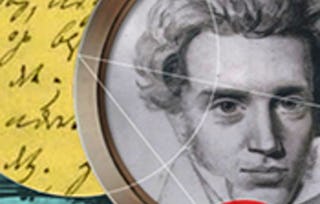
This course examines how the idea of "the modern" develops at the end of the 18th century in European philosophy and literature, and how being modern (or progressive, or hip) became one of the crucial criteria for understanding and evaluating cultural change. Are we still in modernity, or have we moved beyond the modern to the postmodern?
What's included
2 readings
Show info about module content
2 readings•Total 20 minutes
Syllabus•10 minutes
Course Logistics•10 minutes
Intensity and the Ordinary: Sex, Death, Aggression and Guilt
Module 2•1 hour to complete
Module details
With a focus on Civilization and its Discontents, we examine how Freud’s theories tried to expose profound instincts as they appeared in daily life.
What's included
4 videos1 reading
Show info about module content
4 videos•Total 49 minutes
Intensity and the Ordinary: Sex, Death, Aggression and Guilt I•13 minutes
Intensity and the Ordinary: Sex, Death, Aggression and Guilt II•14 minutes
Intensity and the Ordinary: Sex, Death, Aggression and Guilt III•13 minutes
Intensity and the Ordinary: Sex, Death, Aggression and Guilt IV•9 minutes
1 reading•Total 10 minutes
Intensity and the Ordinary: Sex, Death, Aggression and Guilt--Freud•10 minutes
Intensity and the Ordinary: Art, Loss, Forgiveness
Module 3•3 hours to complete
Module details
A reading of Virginia Woolf’s modernist novel To the Lighthouse shows how giving up the search for the “really real” can liberate one to attend to the everyday.
What's included
4 videos1 reading1 peer review
Show info about module content
4 videos•Total 57 minutes
Intensity and the Ordinary: Art, Loss, Forgiveness I•15 minutes
Intensity and the Ordinary: Art, Loss, Forgiveness II•13 minutes
Intensity and the Ordinary: Art, Loss, Forgiveness III•14 minutes
Intensity and the Ordinary: Art, Loss, Forgiveness IV•15 minutes
1 reading•Total 10 minutes
Intensity and the Ordinary: Art, Loss, Forgiveness--Woolf•10 minutes
1 peer review•Total 120 minutes
First Writing Assignment•120 minutes
The Postmodern Everyday
Module 4•2 hours to complete
Module details
We go back to Ralph Waldo Emerson and forward to Ludwig Wittgenstein to consider how forms of life and language games need to foundation to be compelling.
What's included
4 videos1 reading1 peer review
Show info about module content
4 videos•Total 54 minutes
The Postmodern Everyday I•12 minutes
The Postmodern Everyday II•13 minutes
The Postmodern Everyday III•16 minutes
The Postmodern Everyday IV•13 minutes
1 reading•Total 10 minutes
The Postmodern Everyday--Emerson and Wittgenstein•10 minutes
1 peer review•Total 60 minutes
Second Writing Assignment•60 minutes
From Critical Theory to Postmodernism
Module 5•2 hours to complete
Module details
Through a consideration of Max Horkheimer & Theodor Adorno along with Michel Foucault, we confront the philosophical effort to escape from totality in order to understand the politics of control.
What's included
4 videos1 reading1 peer review
Show info about module content
4 videos•Total 58 minutes
From Critical Theory to Postmodernism I•14 minutes
From Critical Theory to Postmodernism II•14 minutes
From Critical Theory to Postmodernism III•17 minutes
From Critical Theory to Postmodernism IV•14 minutes
1 reading•Total 10 minutes
From Critical Theory to Postmodernism•10 minutes
1 peer review•Total 60 minutes
Third Writing Assignment•60 minutes
Paintings II
Module 6•1 hour to complete
Module details
A very brief consideration of how artists are responding to the loss of foundations to produce work that redefines art.
What's included
2 videos
Show info about module content
2 videos•Total 36 minutes
Paintings II, Part I•17 minutes
Paintings II, Part II•20 minutes
Postmodern Identities
Module 7•2 hours to complete
Module details
We examine short pieces by Judith Butler and Slavjo Zizek to understand how identities get formed (and performed) in a world without foundations.
What's included
4 videos1 reading1 peer review
Show info about module content
4 videos•Total 58 minutes
Postmodern Identities I•13 minutes
Postmodern Identities II•12 minutes
Postmodern Identities III•14 minutes
Postmodern Identities IV•19 minutes
1 reading•Total 10 minutes
Postmodern Identities--Butler and Zizek•10 minutes
1 peer review•Total 60 minutes
Fourth Writing Assignment•60 minutes
Late-term Review
Module 8•1 hour to complete
Module details
Review of all the thinkers we have studied in Parts I and II of the class, along with some complementary material.
What's included
4 videos
Show info about module content
4 videos•Total 46 minutes
Late-term Review I•12 minutes
Late-term Review II•12 minutes
Late-term Review III•12 minutes
Late-term Review IV•10 minutes
Postmodern Pragmatisms
Module 9•2 hours to complete
Module details
After postmodern playfulness, or alongside it, we see the resurgence of the pragmatic impulse to return philosophy to real human problems.
What's included
3 videos1 reading1 peer review
Show info about module content
3 videos•Total 56 minutes
Postmodern Pragmatisms I•16 minutes
Postmodern Pragmatisms II•18 minutes
Postmodern Pragmatisms III•22 minutes
1 reading•Total 10 minutes
Postmodern Pragmatisms•10 minutes
1 peer review•Total 60 minutes
Fifth Writing Assignment•60 minutes
Extra (Optional) Writing Assignment
Module 10•1 hour to complete
Module details
What's included
1 peer review
Show info about module content
1 peer review•Total 60 minutes
Extra (Optional) Writing Assignment•60 minutes
Instructor
Instructor ratings
Instructor ratings
We asked all learners to give feedback on our instructors based on the quality of their teaching style.
Wesleyan University, founded in 1831, is a diverse, energetic liberal arts community where critical thinking and practical idealism go hand in hand. With our distinctive scholar-teacher culture, creative programming, and commitment to interdisciplinary learning, Wesleyan challenges students to explore new ideas and change the world. Our graduates go on to lead and innovate in a wide variety of industries, including government, business, entertainment, and science.
"To be able to take courses at my own pace and rhythm has been an amazing experience. I can learn whenever it fits my schedule and mood."
Jennifer J.
Learner since 2020
"I directly applied the concepts and skills I learned from my courses to an exciting new project at work."
Larry W.
Learner since 2021
"When I need courses on topics that my university doesn't offer, Coursera is one of the best places to go."
Chaitanya A.
"Learning isn't just about being better at your job: it's so much more than that. Coursera allows me to learn without limits."
Learner reviews
4.7
374 reviews
5 stars
82.88%
4 stars
12.29%
3 stars
2.67%
2 stars
0.53%
1 star
1.60%
Showing 3 of 374
E
ET
5·
Reviewed on Jun 13, 2021
This is a great philosophy course because you get written assignments, which is necessary in any philosophy course in my opinion.
N
NN
5·
Reviewed on Jun 18, 2020
It was an exceptional experience. I wish there was more, say a third part. thanks Coursera, Wesleyan University, and most importantly Michael Roth. It was truly a learning
P
PF
5·
Reviewed on Dec 15, 2018
Excellent course from an accomplished scholar, presents insights about his subject matter from all different points of view.
When will I have access to the lectures and assignments?
To access the course materials, assignments and to earn a Certificate, you will need to purchase the Certificate experience when you enroll in a course. You can try a Free Trial instead, or apply for Financial Aid. The course may offer 'Full Course, No Certificate' instead. This option lets you see all course materials, submit required assessments, and get a final grade. This also means that you will not be able to purchase a Certificate experience.
What will I get if I purchase the Certificate?
When you purchase a Certificate you get access to all course materials, including graded assignments. Upon completing the course, your electronic Certificate will be added to your Accomplishments page - from there, you can print your Certificate or add it to your LinkedIn profile.
Is financial aid available?
Yes. In select learning programs, you can apply for financial aid or a scholarship if you can’t afford the enrollment fee. If fin aid or scholarship is available for your learning program selection, you’ll find a link to apply on the description page.