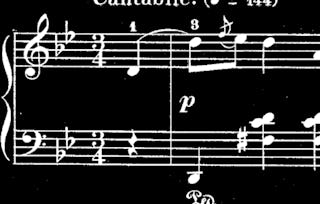
This course shares insights into the process of composing music, all with the aim of developing your skills and confidence as a composer. You might be a musician looking to take your composition skills to the next level, or you might be a teacher in a secondary school searching for new techniques to share with your own students.
You might already have a developed working knowledge of tonality, in which case, we will complement that knowledge by introducing alternative scales and chord structures. We’ll be focussing on everything involved in writing for live acoustic instruments, using some form of notation. We’ll look at ways to push the boundaries of traditional notation, as well as introducing alternative approaches, such as graphic notation and indeterminacy. We’ll explore ways to maximise the effects you can create using instruments as well as to expand your rhythmic palette. A feature of the course will be to introduce the concept of gesture as a key tool in your working method. It also presents ways to tap into your imagination as part of your process which has the potential to transform the way that you compose.
Musical examples are brought to life in this course in performances by Scotland’s foremost contemporary music ensemble, Red Note Ensemble.
This module will explore composing working methods, introduce the idea of musical gesture and composing with 5 notes.
What's included
9 videos16 readings4 assignments
Show info about module content
9 videos•Total 42 minutes
Welcome to the Course•2 minutes
Instrumentation and Ensemble Design•7 minutes
Working method (insight)•6 minutes
Working methods (established composers)•9 minutes
Working methods (emerging composers)•3 minutes
Tour of tools•3 minutes
Composer insight - gesture•7 minutes
5 note composition•6 minutes
Starting a gesture bank•1 minute
16 readings•Total 181 minutes
Structure of this course•10 minutes
Meet your instructor•3 minutes
Glossary of terms•30 minutes
Introducing Coursea Coach•10 minutes
Considering the brief•10 minutes
Past briefs•10 minutes
Imagery blog•10 minutes
Your working methods•20 minutes
Impetus for a piece•10 minutes
What is a Gesture?•10 minutes
Understanding gesture•10 minutes
Creating your first gesture•10 minutes
Summary of 5 note video (ornamentation, rhythm, form)•10 minutes
Composing a micro piece using 5 notes•10 minutes
Summary•8 minutes
Gesture Bank template with guidelines•10 minutes
4 assignments•Total 60 minutes
End of Module 1 Quiz•30 minutes
Practice Quiz 1 (Module 1)•10 minutes
Practice Quiz 2 (Module 1)•10 minutes
Practice Quiz 3 (Module 1)•10 minutes
Ways to Start a Piece
Module 2•3 hours to complete
Module details
This module will cover strategies for starting a piece, explore ways to develop your harmonic language, and deepen your understanding of intervals, scales and modes. Central to this will be the goal of designing your own personalised chords and scales.
What's included
9 videos8 readings4 assignments
Show info about module content
9 videos•Total 67 minutes
Welcome to Module 2•1 minute
Ways to start a piece•8 minutes
Staff roundtable: ways to start a piece•6 minutes
Setting parameters for a piece•8 minutes
Starting with chords•5 minutes
Analysing Intervals•20 minutes
Starting with a scale•10 minutes
Analysis of Voiles by Debussy•5 minutes
Performance of Debussy's "Voiles" by Rolf Hind (Red Note Ensemble)•4 minutes
8 readings•Total 80 minutes
Documenting your musical language•10 minutes
Reflection on documenting your musical language•10 minutes
Basics of post-tonal harmony•10 minutes
Reflecting on your harmonic language•10 minutes
Designing your Signature Chord•10 minutes
Basics of voice leading •10 minutes
Contour and scale exercise•10 minutes
Analysing relationships between some gestures in your gesture bank•10 minutes
4 assignments•Total 60 minutes
End of Module 2 Quiz•30 minutes
Practice Quiz 1 (Module 2)•10 minutes
Practice Quiz 2 (Module 2)•10 minutes
Practice Quiz 3 (Module 2)•10 minutes
Notation
Module 3•4 hours to complete
Module details
This module explores various forms of notation, including advanced techniques in staff notation and graphic notation. A key principle explored in the context of expanded staff notation is finding ways to use push traditional boundaries of this system to capture your individual musical ideas. The world of graphic notation is also introduced, highlighting the breadth of approaches on offer and how the creative agency within the roles of composer and performer can vary.
What's included
9 videos8 readings4 assignments
Show info about module content
9 videos•Total 72 minutes
Welcome to Module 3•1 minute
Pushing the boundaries of traditional notation•11 minutes
Indeterminacy•6 minutes
Graphic notation•10 minutes
Introduction to Jon Ramsay's piece•3 minutes
Performance of Jon Ramsay's Treat-ize/Treat-ease for organ by Kevin Bowye•7 minutes
Round table on notation with staff•15 minutes
The performer's perspective on notation•8 minutes
Should we still teach notation?•11 minutes
8 readings•Total 80 minutes
Principles of notation•10 minutes
Pushing the boundaries of traditional notation - Further reading•10 minutes
Indeterminacy•10 minutes
Analysing Treat-ize/Treat-ease•10 minutes
Composition activity: Graphic Notation•10 minutes
Composition task: Notate a gesture in three different ways•10 minutes
The challenge of writing down what we hear in our imagination•10 minutes
Transcription exercise•10 minutes
4 assignments•Total 60 minutes
End of Module 3 Quiz•30 minutes
Practice Quiz 1 (Module 3)•10 minutes
Practice Quiz 2 (Module 3)•10 minutes
Practice Quiz 3 (Module 3)•10 minutes
Instrumentation
Module 4•2 hours to complete
Module details
This week will explore ways to write for instruments which takes full advantage of their expressive and technical strengths. Through a study of specific examples, we will consider some general principles to do with sonic exploration of instruments. Key concepts to emerge this module will be timbre, idiomatic and extended performing techniques, register, and ways to combine (orchestrate) various instruments.
What's included
9 videos4 readings4 assignments
Show info about module content
9 videos•Total 50 minutes
Welcome to Module 4 - Instrumentation•1 minute
Making the most of instrumental resources•7 minutes
Composer insight: Bill Sweeney - writing for clarinet•3 minutes
The University of Glasgow has been changing the world since 1451. It is a world top 100 university (THE, QS) with one of the largest research bases in the UK.
We are a member of the prestigious Russell Group of leading UK Universities with annual research income of more than £179m.
The University’s #TeamUofG community is truly international with over 8000 staff and 28,0000 students from more than 140 countries.
A 2019 Time Out survey placed Glasgow in the top ten cities in the world. Ranked between Berlin and Paris, Glasgow was voted number one for both friendliness and affordability.
Right now our dedicated community of staff, students and alumni is working to address the challenges of Covid-19 and understand how we can make life safer for everyone.
When will I have access to the lectures and assignments?
To access the course materials, assignments and to earn a Certificate, you will need to purchase the Certificate experience when you enroll in a course. You can try a Free Trial instead, or apply for Financial Aid. The course may offer 'Full Course, No Certificate' instead. This option lets you see all course materials, submit required assessments, and get a final grade. This also means that you will not be able to purchase a Certificate experience.
What will I get if I purchase the Certificate?
When you purchase a Certificate you get access to all course materials, including graded assignments. Upon completing the course, your electronic Certificate will be added to your Accomplishments page - from there, you can print your Certificate or add it to your LinkedIn profile.
Is financial aid available?
Yes. In select learning programs, you can apply for financial aid or a scholarship if you can’t afford the enrollment fee. If fin aid or scholarship is available for your learning program selection, you’ll find a link to apply on the description page.