There is a lot of hype around Web3 and blockchain. As with any disruptive technology, there are many competing sources of information. But if we look beyond the hype and mania—not to mention the fear, uncertainty, and doubt—we see something profound happening. We are witnessing one of the largest transformations of wealth in human history—from paper-based analog assets to digital ones. Blockchain represents the first native digital medium for value, and is foundational to the next generation of the Internet—also known as Web3.
In this short course you’ll learn what Web3 is, and how it differs from Web1 and Web2 in important ways. You’ll explore blockchain as the foundational technology for the Web3 era, and will learn about key concepts, such as digital assets (tokens), smart contracts, decentralized autonomous organizations (DAOs), and the blockchain “trilemma.” You will be able to describe seven principles for the design of blockchain-based systems, and seven challenge areas associated with implementing blockchain technology. You will be able to identify the questions one must consider when deciding whether or not blockchain is appropriate for a particular problem or use-case, and you will be able to describe some real-world examples of companies that have integrated blockchain into their business models.
This course is non-technical (i.e. no coding required) and is intended for a broad audience. The video material for these courses includes content from our “Blockchain Revolution Specialization” and “Web3 and Blockchain in Global Commerce Specialization,” which has been remixed and re-edited for the purposes of this short course.
In this module, you’ll learn what Web3 is, and how it differs from Web1 and Web2 in important ways. You’ll explore blockchain as the foundational technology for the Web3 era, and will learn about key concepts such as digital assets (tokens), smart contracts, decentralized autonomous organizations (DAOs), and the blockchain “trilemma.” By the end of this module, you’ll be able to describe seven blockchain design principles, as well as seven challenge areas associated with implementing blockchain technology. You’ll be able to identify the questions one must consider when determining whether blockchain is appropriate for a particular business problem or use-case. You’ll also be able to describe some real-world examples of companies that have integrated blockchain into their business models.
As one of the world's leading and largest graduate business schools, INSEAD brings together people, cultures and ideas to develop responsible leaders who transform business and society.
INSEAD's multi-campus format and unmatched diversity deliver a truly global educational experience. Its 160 renowned faculty members from 40 countries inspire students through degree and PhD programmes, while every year more than 18,000 executives participate in its Executive Education programmes, both on campus and online.
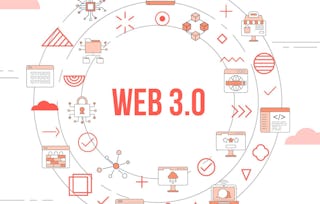
Web3 is term that represents a collection of technologies, a decentralized network, the ability to digitize assets, and new multi-party business models. Blockchain is the foundation of Web3. On top of that foundation Web3 includes the prediction and decision support of AI, the measurements and actuation of IoT, and the spatial UX of AR/VR/Metaverse.
Previous foundational technologies such as railroads, electrical grids, telecommunication networks, and the internet have all defined eras. They have enabled new ways of conducting business and interacting with governments. Entirely new business and civil society models became possible. They have all been characterized by accelerated economic growth and significant improvements in the efficiency of the means of production. The era enabled by blockchain has been labeled the Web3 era.
The Web3 era will be characterized by smaller economic actors coordinating their activities to generate value with great efficiency. It will feature accelerated rates of innovation, a proliferation of new business models and configurations, and new ways of delivering public services.
What is Blockchain?
A common authoritative record of transactions, and the data that describes those transactions, is fundamental to all business interactions. Traditionally the data, and the state of the data, has been maintained in databases and ledgers controlled by companies or governments who rely on auditors, trusted third parties and the legal enforceability of contracts to support confidence in transactional interactions and the related business velocity.
Blockchain makes data, transaction records, and the business logic that can manipulate the data a fundamental characteristic of a decentralized network. This is a revolutionary capability.
Blockchain is the foundational technology for the Web3 era. It is the database and operating system of the networked economy. As the world’s businesses and governments continue to digitize, their systems will run on blockchain.
When will I have access to the lectures and assignments?
To access the course materials, assignments and to earn a Certificate, you will need to purchase the Certificate experience when you enroll in a course. You can try a Free Trial instead, or apply for Financial Aid. The course may offer 'Full Course, No Certificate' instead. This option lets you see all course materials, submit required assessments, and get a final grade. This also means that you will not be able to purchase a Certificate experience.
What will I get if I purchase the Certificate?
When you purchase a Certificate you get access to all course materials, including graded assignments. Upon completing the course, your electronic Certificate will be added to your Accomplishments page - from there, you can print your Certificate or add it to your LinkedIn profile.
Is financial aid available?
Yes. In select learning programs, you can apply for financial aid or a scholarship if you can’t afford the enrollment fee. If fin aid or scholarship is available for your learning program selection, you’ll find a link to apply on the description page.